Sonnen vs Sigenergy in Texas: Which Home Battery Fits?

When Hurricane Beryl knocked out power for roughly 2.2 million Houston customers in July 2024 (Houston Public Media, 2024), a lot of homeowners stopped asking whether to buy a battery and started cross-shopping specific brands. Two premium names come up again and again: Sonnen and Sigenergy. Both use the same safe LFP chemistry. Both are well built. But they solve different problems, and most of the spec-sheet content online never tells you that. This is the honest, Houston-specific read.
Key Takeaways
- Sonnen is a sealed, VPP-first German LFP appliance with a mature virtual power plant heritage and a strong warranty.
- Sigenergy SigenStor is a modular LFP stack that scales roughly 5 to 48 kWh inside one cabinet and supports V2X bidirectional EV charging.
- For Houston homes that want to grow capacity later or back up an EV, the modular and V2X path usually wins.
- Disclosure: Eos installs Sigenergy, so we call out plainly where Sonnen earns the win (Sonnen, Sigenergy, 2026).
[INTERNAL-LINK: Get a Houston battery backup quote in under 2 minutes → /home-backup-planner?source=blog&slug=sonnen-vs-sigenergy-texas]
A quick note before we start. Eos quotes and installs Sigenergy in the Houston metro, so we have skin in the game. We are going to be honest about where Sonnen is the better choice anyway, because a comparison that only flatters one side is worthless to you.
Quick verdict: who is each one for?
Sonnen fits the homeowner who wants a sealed, set-it-and-forget-it appliance backed by one of the most mature home-battery brands in the world (Sonnen, 2026). It is German-engineered, ships as a finished product, and its virtual power plant program has years of operating history. If you want a clean appliance and a brand with a long track record, Sonnen is a strong pick.
Sigenergy fits the homeowner who wants to right-size now and grow later, or who drives an EV and wants the car to act as backup capacity. The SigenStor stack adds battery modules inside one cabinet, and the ecosystem supports V2X bidirectional charging (Sigenergy, 2026). Choose Sigenergy if you are buying an architecture, not just a box.
Here is the one-line test. Want a finished appliance and VPP maturity? Lean Sonnen. Want modular growth or EV backup? Lean Sigenergy.
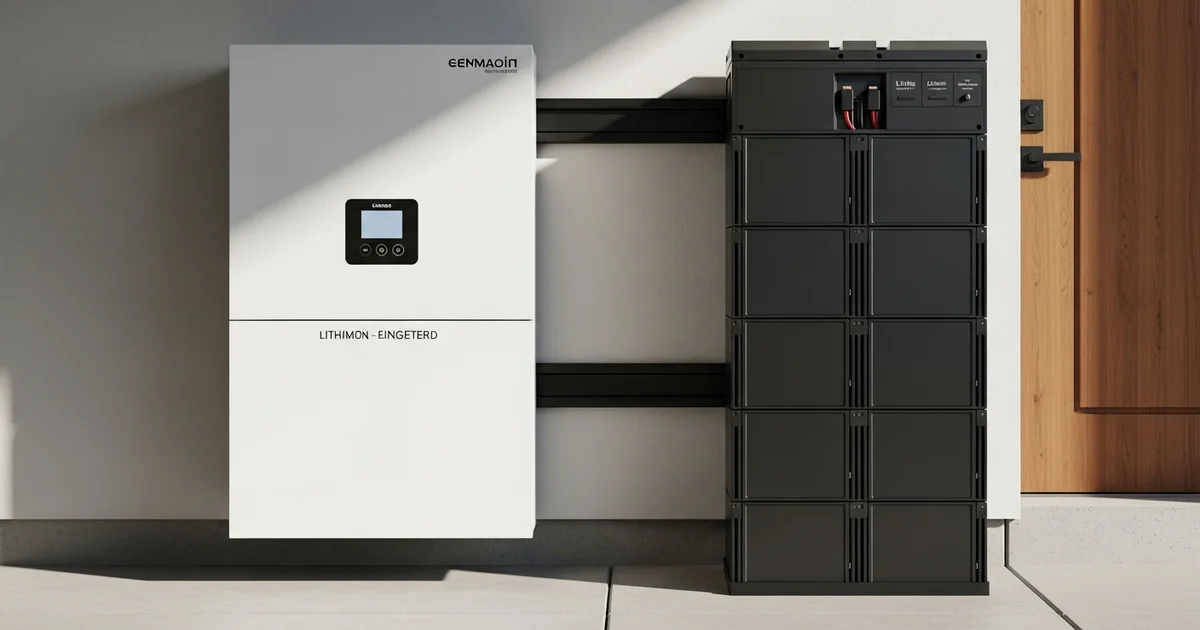
[IMAGE: Two home battery systems side by side in residential garages, one sealed wall-mounted appliance, one floor-standing modular cabinet - search "home battery installation garage"]
Sonnen vs Sigenergy: how do the spec sheets compare?
Both batteries use LFP (lithium iron phosphate) chemistry, the safest mainstream cell type for a home (Sonnen, Sigenergy, 2026). The real split is form factor. Sonnen ships as a sealed appliance with the inverter integrated and capacity set in defined steps. Sigenergy SigenStor scales roughly 5 to 48 kWh inside one floor-standing cabinet, paired with a 6 to 12 kW residential hybrid inverter (Sigenergy, 2026).
That difference shows up before any price tag. Sonnen optimized for a clean, finished product: one appliance, integrated electronics, defined tiers. Sigenergy optimized for flexibility: one cabinet that you can size up later and that ties into solar, the grid, and an EV.
Citation capsule. Sonnen and Sigenergy both use LFP chemistry, but Sonnen ships as a sealed appliance with stepped capacity tiers and an integrated inverter, while Sigenergy SigenStor scales roughly 5 to 48 kWh inside one cabinet with a 6 to 12 kW hybrid inverter (Sonnen, Sigenergy, 2026).
[UNIQUE INSIGHT] Most reviews treat this as "two batteries." It is really two design philosophies. One is a finished appliance with a track record. The other is a flexible platform that grows and talks to your car.
Which one expands more easily later?
Sigenergy is easier to expand because it adds battery modules inside a single cabinet, while Sonnen scales by adding whole units. SigenStor steps up in roughly 5 to 8 kWh increments toward 48 kWh without a second enclosure (Sigenergy, 2026). Sonnen's appliance design means growing capacity generally means another unit and another wall footprint.
Picture a common Houston path. You start at 16 kWh because that covers your essentials and one AC zone. Two years later you add a heat pump and your kids stop leaving the house, so your load climbs. With Sigenergy, an installer opens the existing cabinet, adds modules, and walks away. No second box. No second visible footprint to permit.
[PERSONAL EXPERIENCE] In Houston garages we have walked, the tidiest installs are single Sigenergy cabinets tucked against a wall and clean single-appliance Sonnen units beside the panel. When a home needs a lot of capacity, a modular cabinet keeps the footprint smaller than several stacked appliances. In our 105-degree August heat, both brands derate to protect themselves. Plan for that, not against it.
Citation capsule. Sigenergy SigenStor expands by adding battery modules inside one cabinet in roughly 5 to 8 kWh steps toward 48 kWh, while Sonnen scales by adding whole appliance units, which makes the modular path simpler for homeowners who expect to grow capacity (Sigenergy, Sonnen, 2026).
[INTERNAL-LINK: Check if your home qualifies for a 9 to 45 kWh system → /home-backup-planner?source=blog&slug=sonnen-vs-sigenergy-texas]
V2X and EV backup: can either power your house from your car?
Sigenergy supports V2X bidirectional charging, so a compatible EV can feed power back into your home; Sonnen is battery-only with no native V2X (Sigenergy, 2026). For an EV owner, that is a major architectural difference. Your car's pack can hold far more energy than a typical home battery, so using it as backup capacity changes the math on how long you can ride out an outage.
Why does this matter in Houston specifically? Outages here are often multi-day, not multi-hour. A homeowner with an EV and a V2X-capable system can lean on the vehicle's battery to extend backup well past what a wall unit alone delivers. Sonnen simply does not offer this path today, so an EV owner who wants the car in the loop is effectively choosing the modular ecosystem.
Citation capsule. Sigenergy's ecosystem supports V2X bidirectional EV charging, letting a compatible electric vehicle act as extra backup capacity for the home, while Sonnen offers no native V2X and remains a battery-only appliance (Sigenergy, Sonnen, 2026).
If the EV-as-backup idea is new to you, our explainer on [INTERNAL-LINK: how vehicle-to-home backup works → /blog/v2h-explained] walks through the equipment and the real-world limits.
Warranty and VPP: where Sonnen pushes back
This is where Sonnen earns its keep. Sonnen built its reputation on virtual power plant participation, and the sonnenCommunity program is one of the most established VPP ecosystems in the residential market (Sonnen, 2026). If your priority is a mature, proven VPP and a brand with a long operating history, Sonnen has the edge over a newer entrant.
Warranty terms are competitive on both sides. Sigenergy backs SigenStor with a 10-year warranty rated around 8,000 cycles (Sigenergy, 2026), and Sonnen offers a comparable multi-year, high-cycle warranty on its LFP appliance (Sonnen, 2026). Both are built to outlast the typical financing term. On VPP maturity specifically, Sonnen is the more proven name today, and we will not pretend otherwise.
Citation capsule. Sonnen leads on virtual power plant maturity through its long-running sonnenCommunity program, while Sigenergy backs SigenStor with a 10-year, roughly 8,000-cycle warranty; both deliver competitive warranty coverage for a Texas home (Sonnen, Sigenergy, 2026).
Texas pricing: what each costs installed in Houston
Installed costs for both brands in Texas generally land in the premium tier, with Sigenergy showing a wider range because it scales. Industry pricing for premium LFP home batteries in 2026 commonly runs in the $900 to $1,200 per usable kWh range installed (EnergySage, 2026), which puts a small Sigenergy stack and a base Sonnen appliance in similar territory and lets a large modular Sigenergy build climb higher as you add capacity.
The honest framing is $/kWh, not sticker price. A sealed Sonnen appliance prices around its fixed capacity. A Sigenergy build prices from a smaller starting point up to a much larger one as modules go in, so its range is naturally wider.
For sizing, Eos plans run from Essential 9 kWh up through Plus 18 kWh, Pro 27 kWh, Premium 36 kWh, and Ultimate 45 kWh, which gives you a ladder to match either architecture to your real load. We keep current pricing on one page so it stays accurate.
[INTERNAL-LINK: See current Houston battery plans and pricing → /plans]
Citation capsule. Premium LFP home batteries in Texas commonly install in the $900 to $1,200 per usable kWh range in 2026, so a base Sonnen appliance and a small Sigenergy stack price similarly, while a large modular Sigenergy build runs higher as capacity grows (EnergySage, 2026).
Installer availability: can you even get one in Houston?
Availability is the practical tiebreaker, and it favors Sigenergy in the Eos service area. Eos quotes and installs Sigenergy across the Houston metro with typical assessment-to-install timelines measured in a few weeks, depending on permitting and panel work. Sonnen has a real US installer footprint, but the certified-installer density in any given metro varies, so confirm a local installer before you commit.
The takeaway is simple. A great battery you cannot get installed locally, on a reasonable timeline, with local support, is not really an option for your home. Check who actually services your address before you fall in love with a spec sheet.
For more cross-brand context, see our [INTERNAL-LINK: FranklinWH vs Sigenergy comparison → /blog/franklinwh-vs-sigenergy-texas-comparison], the [INTERNAL-LINK: Tesla Powerwall 3 vs Sigenergy → /blog/tesla-powerwall-3-vs-sigenergy-texas-comparison], and our roundup of the [INTERNAL-LINK: best home battery brands in Texas → /blog/best-home-battery-brands-texas].
[INTERNAL-LINK: Book a free Houston home assessment → /home-backup-planner?source=blog&slug=sonnen-vs-sigenergy-texas]
Prefer to talk it through? Call Eos and we will size both architectures against your actual outage history and load before you spend a dollar.
Frequently Asked Questions
Is Sonnen or Sigenergy better for a Texas home?
It depends on your goals. Sonnen wins for a sealed appliance and mature VPP heritage. Sigenergy wins for modular expansion and V2X EV backup, scaling roughly 5 to 48 kWh in one cabinet (Sigenergy, 2026). For most Houston homes planning to grow capacity, Sigenergy fits better.
Can Sonnen do vehicle-to-home (V2X)?
No. Sonnen is a battery-only appliance with no native V2X support. Sigenergy's ecosystem supports V2X bidirectional charging, so a compatible EV can feed power back to the home as extra backup capacity (Sigenergy, 2026). For EV owners, that difference is significant in multi-day outages.
How much does a Sonnen battery cost installed in Texas?
Premium LFP home batteries in Texas commonly install in the $900 to $1,200 per usable kWh range in 2026 (EnergySage, 2026). A single sealed Sonnen appliance prices around its fixed capacity, so confirm the exact tier and usable kWh with your installer for an accurate quote.
Which expands more easily later, Sonnen or Sigenergy?
Sigenergy. It adds battery modules inside one SigenStor cabinet in roughly 5 to 8 kWh steps toward 48 kWh (Sigenergy, 2026). Sonnen scales by adding whole appliance units, which means more wall footprint. If you expect to grow capacity, the modular path is simpler.
Can I get a Sonnen system installed in Houston?
Possibly, but confirm local installer availability first. Sonnen has a US footprint, yet certified-installer density varies by metro. Eos quotes and installs Sigenergy across the Houston area with timelines typically measured in a few weeks, so availability and local support favor Sigenergy here.
The bottom line for a Houston home
You are choosing an architecture, not just a battery. Here is the honest summary.
- Want a sealed appliance and proven VPP heritage? Sonnen is the stronger, more established pick.
- Want to grow capacity over time? Sigenergy's modular cabinet expands without a second enclosure.
- Drive an EV and want it as backup? Only Sigenergy supports V2X bidirectional charging today.
- Warranty? Both are competitive and built to outlast typical financing.
- Price? Similar per kWh; Sigenergy's range is wider because it scales.
For most Houston homeowners weighing future growth or EV backup, the modular and V2X path wins, and that is the brand Eos installs. Where Sonnen leads on VPP maturity, we said so.
[INTERNAL-LINK: Get a fixed-price install quote for your address → /home-backup-planner?source=blog&slug=sonnen-vs-sigenergy-texas]