Battery Backup for Houston Office Buildings: Continuity

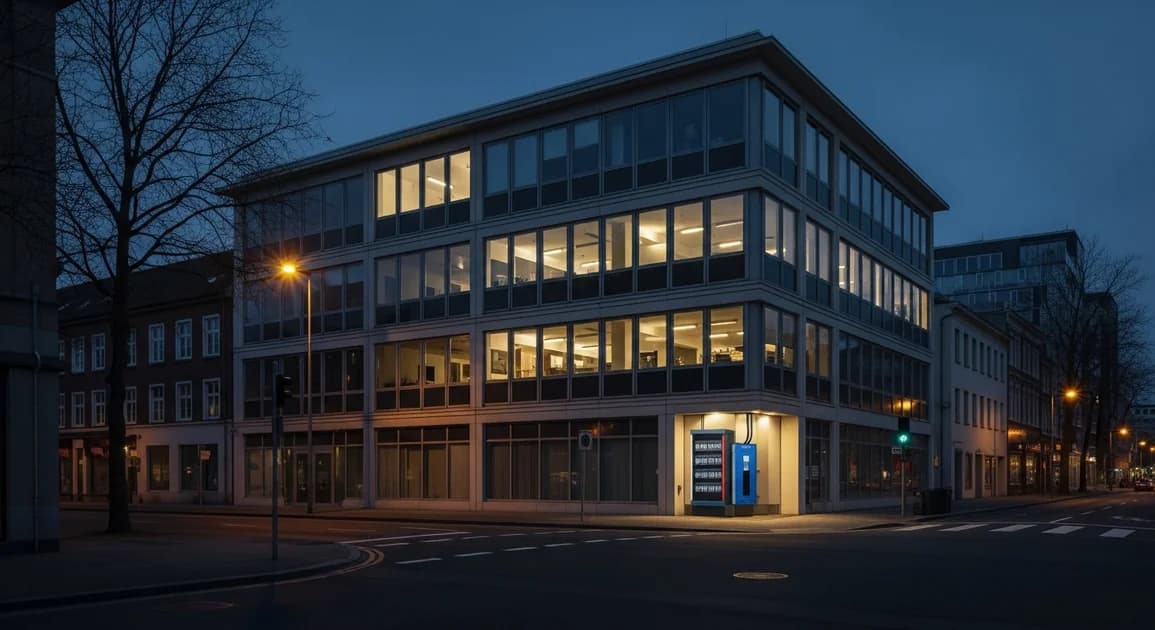
Battery Backup for Houston Office Buildings: Continuity Without a Generator
For an office building, a Houston outage is a continuity problem that touches every tenant at once. The servers and network go down, phones and internet drop, badge readers stop, elevators strand people between floors, and the emergency lights carry only enough charge to get everyone out. A server-room UPS buys minutes, not the hours or days a real Houston outage runs. Here is what battery backup can realistically protect in an office, and how to size it honestly.
Key Takeaways
- A server-room UPS is built to bridge only minutes, enough for a graceful shutdown or a generator to start, not to power a building for hours (Schneider Electric, 2020).
- Emergency egress lighting is required to stay lit for at least 90 minutes after power is lost (NFPA 101 via Consulting-Specifying Engineer), which is a life-safety floor, not business continuity.
- Hurricane Beryl left about 2.2 million CenterPoint customers without power on July 8, 2024 (Houston Public Media, 2024), with about 226,000 still out eight days later in 90-degree heat (Texas Tribune, 2024).
- Electricity is the dominant fuel in office buildings, led by HVAC, ventilation, and lighting (EIA CBECS, 2018), so whole-building backup is a large load.
- Honest sizing: one controller protects segmented critical loads. A whole building means multiple controllers or a commercial design.
[INTERNAL-LINK: get a commercial backup quote for your building → /home-backup-planner?source=blog&slug=battery-backup-houston-office-buildings]
Can a battery keep a Houston office building running in an outage?
Yes, for a segmented set of critical loads, sized to the building. A properly designed battery system can hold the server and network closet, emergency and egress lighting, badge access and security, a right-sized HVAC zone, and elevator recall to a safe landing. That keeps the business running and people safe. What one small unit will not do is power an entire multi-tenant building's HVAC and elevators at once, which is a much larger, multi-controller job.
That honesty shapes the design. We map the loads that must stay live, back those first, and scale from there. A generator is not the only answer, and for many buildings it is not the best one.
Why a server-room UPS is not building backup
Because a UPS is designed to bridge, not to sustain. An uninterruptible power supply in the server room is engineered to carry the IT load for minutes, long enough for a graceful shutdown or for a generator to start and stabilize (Schneider Electric, 2020). It was never meant to keep a room, let alone a building, running for the length of a Houston storm.
That gap is the whole point of a battery system. It picks up where the UPS leaves off, holding critical loads for hours, and recharging from the grid or solar when power returns. The chart shows how far apart these timescales really are.
What code covers, and what it does not
Life-safety code keeps people safe on the way out, not the business open. Under NFPA 101, the Life Safety Code, emergency egress lighting must remain illuminated for at least 90 minutes after normal power is lost (Consulting-Specifying Engineer). That is exactly what it is for: getting occupants out. It does nothing for the servers, the badge system, or a tenant's ability to keep working.
Elevators are the other gap. When normal power drops, cars can strand occupants, and code-required standby systems are about bringing a car to a landing, not running the building. A battery designed for continuity fills the space between what code guarantees and what a business actually needs to stay operational.
What Hurricane Beryl meant for Houston offices
It meant days, not minutes, of no power. Beryl knocked out electricity to about 2.2 million CenterPoint customers when it hit on July 8, 2024 (Houston Public Media, 2024), and about 226,000 were still without power eight days later, during 90-degree heat that state officials later tied to multiple deaths (Texas Tribune, 2024). For an office, that is more than a week of dark servers, dead phones, and empty desks.
An outage that long forces hard choices about remote work, lost billing, and tenants questioning the building. Our guide on [INTERNAL-LINK: the cost of business interruption from a Texas power outage → /blog/business-interruption-power-outage-cost-texas] covers that broader picture.
A composite look: a multi-tenant office through a multi-day outage
The following is a composite illustration, not a specific client, drawn from the loads we see at Houston offices. Picture a three-story multi-tenant building: a shared server and network closet, elevators, badge entry, emergency lighting, security cameras, and central HVAC serving every suite. When the grid drops, all of it stops, and every tenant feels it at the same moment.
With a battery system on a segmented critical plan, the building keeps its server closet and network alive, the emergency lighting and cameras live, badge access working, and an elevator able to reach a landing. Tenants can keep essential systems running or shut down cleanly, and the building keeps its reputation as a place that stays functional when the grid does not.
How much battery does an office building need?
Usually a lot, and almost always more than one unit. Electricity is the dominant fuel in office buildings, led by HVAC, ventilation, and lighting (EIA CBECS, 2018), so backing an entire multi-tenant building is a large, segmented job. The realistic approach protects the critical subset first, then scales across multiple controllers for broader coverage.
Here is the honest hardware picture. Our modular system uses 9 kWh nominal battery modules (8.76 kWh usable each), stacking to 45 kWh on one controller rated 11.5 kW continuous and 17.1 kW surge, with a 10-year warranty on the battery and controller. One controller carries a critical-loads plan for a server closet, egress lighting, and access. A whole building typically needs a commercial design in the 100 to 500 kWh range, with loads segmented across multiple controllers.
[INTERNAL-LINK: see commercial battery options and sizing → /plans/commercial]
The right first question is which circuits must stay live, not how many kilowatt-hours. Our guide on [INTERNAL-LINK: commercial versus residential battery sizing and cost in Texas → /blog/commercial-vs-residential-battery-sizing-cost-texas] explains how commercial jobs scale, and [INTERNAL-LINK: commercial battery backup for Texas businesses → /blog/commercial-battery-backup-texas-businesses] covers the load-priority process.
Continuity without a generator
A battery earns the comparison. A generator can run for a long time on fuel, but it is noisy, needs on-site fuel and refueling during a storm, and demands maintenance and permitting for exhaust and sound. A battery system is silent, has no on-site fuel or emissions, switches over in a fraction of a second, and recharges automatically, which suits a tenant-occupied building where nobody wants a diesel engine running in the parking structure.
When we design for a Houston office, we start from the tenant-critical loads and the life-safety systems, then size up. For extended runtime, a battery can be paired with a generator, but for many buildings the battery alone covers the outages that actually happen. It protects continuity without becoming another thing for building management to babysit.
[INTERNAL-LINK: talk through an office backup plan → /home-backup-planner?source=blog&slug=battery-backup-houston-office-buildings]
Prefer to talk it through? Call Eos at 713-207-2222 for a same-week Houston commercial site survey.
Frequently asked questions
Isn't my server-room UPS already my backup?
No. A UPS is built to bridge minutes, enough for a graceful shutdown or a generator start, not to power a room or building for hours (Schneider Electric, 2020). A battery system picks up where the UPS ends and holds critical loads for far longer.
Doesn't emergency lighting mean my building is covered?
Only for evacuation. Emergency egress lighting must stay lit at least 90 minutes after power loss (NFPA 101 via CSE), which is a life-safety requirement to get people out. It does not keep servers, phones, or access control running, which is what a continuity battery is for.
How big a battery does an office building need?
It depends on which loads you protect. A segmented critical-loads plan can start with one 45 kWh controller for a server closet, egress lighting, and access. A whole multi-tenant building typically needs a commercial design in the 100 to 500 kWh range across multiple controllers. We size it to your building.
Is a battery better than a generator for an office?
Each has a role. A battery is silent, fuel-free, and instant, with runtime bounded by capacity. A generator runs longer on fuel but is noisy, needs refueling during a storm, and adds exhaust and maintenance. Many buildings use a battery for critical loads and add a generator only for extended runtime.
What happens to elevators in an outage?
Normal power loss can strand occupants, and code-required standby systems are designed to bring a car to a landing, not run the building. A continuity battery can support elevator recall as part of a segmented critical-loads plan, sized with your elevator contractor.
This article is general information for Houston office and building owners and reflects Eos specifications as of July 2026. The case is a composite illustration, not a specific client, and does not promise a specific runtime or continuity outcome. Confirm sizing, life-safety and elevator code, and permitting for your building with the appropriate professionals.