Best Home Battery Brands for Texas: Powerwall vs Enphase vs Generac (2026)

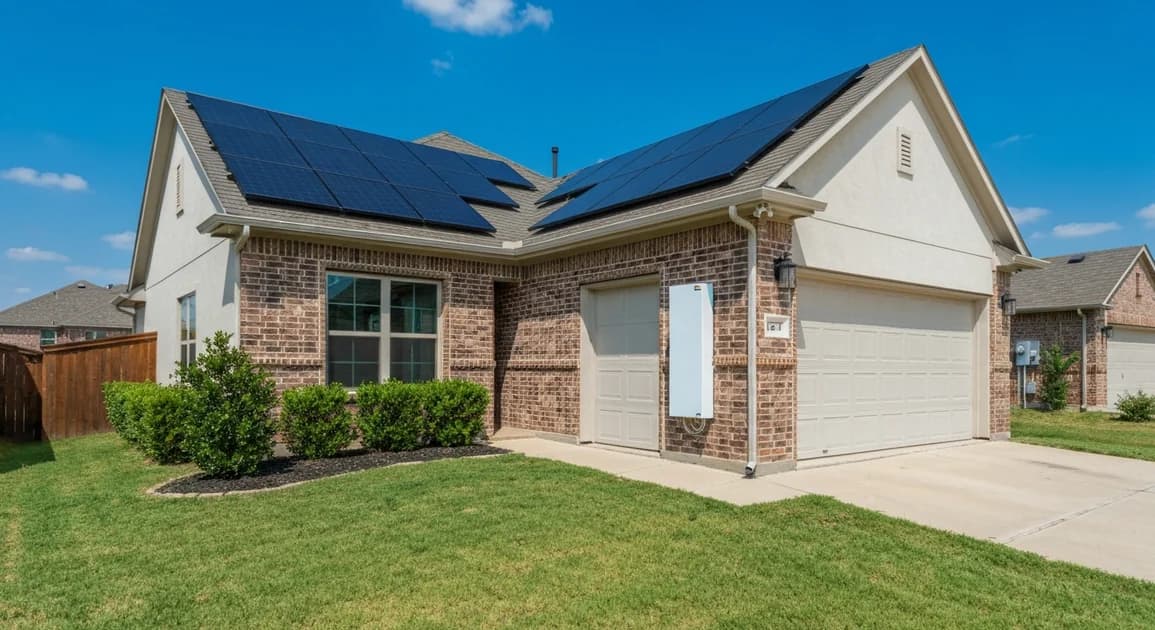
Hurricane Beryl made landfall near Houston in July 2024 and knocked out power to 2.2 million customers. Over 200,000 remained without power a full week later (Houston Public Media, 2024). When you call an installer for a quote, three brands come up almost every time: Tesla Powerwall 3, Enphase IQ Battery, and Generac PWRcell. They're all solid systems. But they make very different tradeoffs on heat tolerance, power output, generator compatibility, and cost, and those differences matter a lot more in Texas than they do in, say, Colorado.
This post compares all three on specs, Texas-specific performance, and installed cost. By the end, you'll know which one fits your home, your existing solar setup, and your outage risk.
Key Takeaways
- Texas averages 8.3 hours of annual outages per customer when major storm events are included, compared to 2.1 hours at the national everyday average (EIA-861, 2023).
- Tesla Powerwall held 59% of the U.S. home battery marketplace in H1 2025. Tesla and Enphase combined held 84%. (pv magazine USA, September 2025).
- Enphase IQ 5P has the highest operating temperature ceiling at 131°F, followed by Powerwall 3 at 122°F. Both use LFP chemistry, which tolerates sustained Texas heat better than NMC.
- Generac PWRcell is the only major residential battery that integrates natively with a standby generator, making it the right call for rural homeowners with multi-day outage risk.
- Average installed cost in Texas is $1,344/kWh, above the $855/kWh national median (EnergySage, April 2026).
[INTERNAL-LINK: compare Eos Backup and Battery battery plans for Houston homes → /plans]
Why Texas Is Harder on Home Batteries Than Most States
Texas averages 8.3 hours of annual outages per customer when major storm events are counted, compared to the national everyday average of 2.1 hours per year (EIA-861, 2023 data). That gap exists because of two compounding factors: grid design and climate.
LFP batteries degrade significantly above 45°C (113°F), with capacity fade accelerating during storage at temperatures above 35°C, according to research published in Applied Sciences (MDPI, 2025). That's a problem in a state where exterior wall temperatures on south-facing surfaces regularly exceed those thresholds from June through September. Brand spec sheets list operating ranges tested at standard conditions. Those numbers understate thermal risk in Houston, San Antonio, and anywhere else in Texas where summers arrive early and stay late.
Texas compounds the heat problem with a grid design unlike any other state. ERCOT operates without the interconnections that most U.S. grids rely on for emergency support from neighboring regions. When demand spikes or generation trips offline, Texas can't pull power from Louisiana or Oklahoma. That isolation means outages run longer and recovery is slower. Coastal homeowners face a third variable: salt air and humidity accelerate corrosion on battery enclosures mounted outdoors.
LFP vs NMC: The Chemistry Shortcut for Texas Buyers
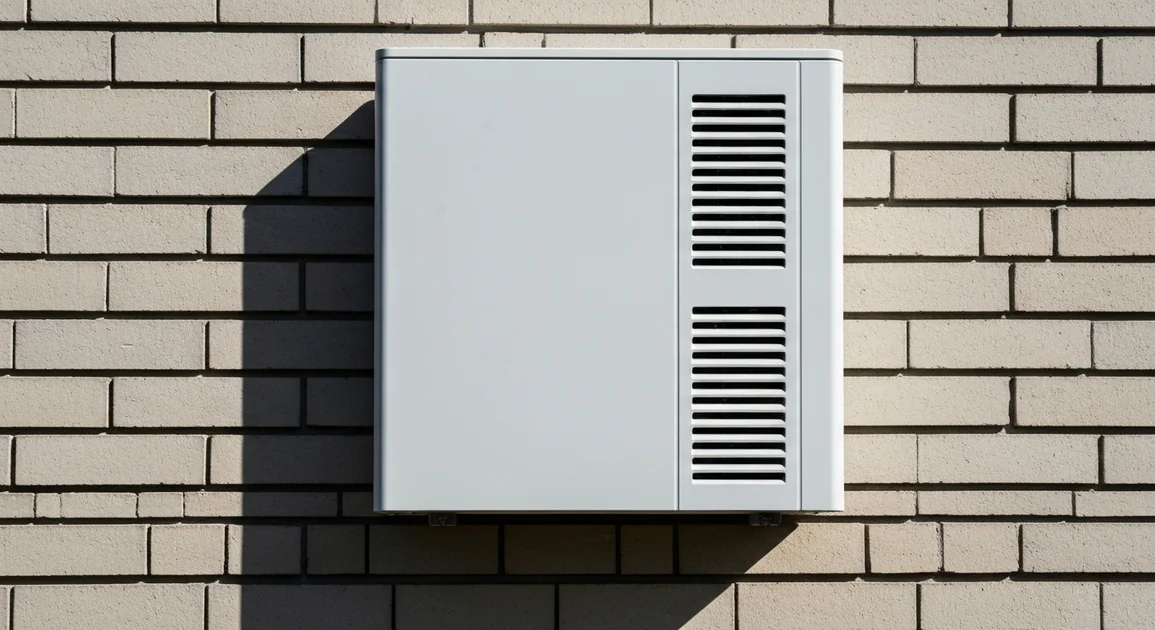
The fastest way to filter these three brands for Texas is to look at battery chemistry. Powerwall 3 and Enphase IQ both use lithium iron phosphate (LFP), which has better thermal stability, allows 100% depth of discharge, and tolerates high ambient temperatures more gracefully than the alternative. Generac PWRcell uses nickel manganese cobalt (NMC) chemistry, which offers higher energy density per kilogram but a lower depth of discharge (80%) and greater sensitivity to sustained heat.
For most Texas installations, LFP is the safer default. The exception is when generator integration is a hard requirement. If you need to recharge the battery from a standby generator during a multi-day outage, Generac's ecosystem is the only one that does this natively.
Texas grid isolation and sustained summer heat make battery chemistry and operating temperature ceiling two of the most important specs to evaluate. LFP chemistry, used in Powerwall 3 and Enphase IQ, tolerates sustained heat better than NMC, allows 100% depth of discharge, and has a stronger thermal stability profile for exterior installations in hot climates (MDPI Applied Sciences, 2025).
Side-by-Side Specs: Powerwall 3 vs Enphase IQ vs Generac PWRcell
Specs on paper don't always translate to performance in the field, but they're the right starting point. The table below compares the three brands on the numbers that determine backup duration and reliability during a Texas summer outage.
One number matters more than any other: usable capacity, not rated capacity. Generac's throughput warranty and NMC chemistry limit actual discharge to 80% of rated capacity. A 17.1 kWh rated Generac pack delivers about 13.7 kWh usable, roughly the same as a single Powerwall 3 at 13.5 kWh with 100% depth of discharge.
| Spec | Tesla Powerwall 3 | Enphase IQ 5P | Generac PWRcell |
|---|---|---|---|
| Usable capacity | 13.5 kWh | 5 kWh per unit (stackable) | 8.6 to 17.1 kWh |
| Peak power | 11.5 kW | 3.84 kW per unit | 6.7 kW (max config) |
| Battery chemistry | LFP | LFP | NMC |
| Depth of discharge | 100% | 100% | 80% |
| Coupling type | AC + DC hybrid | AC (microinverter) | DC |
| Operating temp ceiling | 122°F | 131°F | 140°F |
| Warranty | 10 yr / 70% capacity | 10 yr / 4,000 cycles | 10 yr throughput |
| Approx. installed cost (TX) | $16,000 to $20,000 | $12,000 to $18,000 (2-unit) | $15,000 to $22,000 |
| Generator integration | No | No | Yes (native) |
Enphase IQ 5P has the highest rated operating temperature ceiling at 131°F among the three leading residential battery brands. Powerwall 3 is rated to 122°F and Generac PWRcell to 140°F, but Generac's NMC chemistry makes it more sensitive to sustained high-temperature cycling than the LFP systems. For exterior installations in direct Texas sun, the Enphase IQ's combination of LFP chemistry and the highest thermal ceiling is the strongest spec combination.
The chart below compares installed cost per usable kWh at Texas mid-range pricing, which is the most honest apples-to-apples cost comparison for these three systems.
Tesla Powerwall 3: The All-in-One Option
Tesla Powerwall held 59% of the U.S. home battery marketplace in H1 2025. Combined with Enphase, the two brands held 84% of all quoted systems, according to EnergySage data (pv magazine USA, September 2025). That market share translates to the widest installer network and the deepest local service coverage in Texas.
Powerwall 3 is the simplest install for Texas homes because it includes a built-in hybrid inverter. One device replaces two: the battery and the inverter arrive as a single unit (Tesla, 2026). That cuts installation time, reduces permitting complexity, and eliminates one more potential failure point. For homeowners adding solar and storage at the same time, or doing a full retrofit, that simplicity has real value.
A single Powerwall 3 delivers 13.5 kWh of usable capacity. That's enough to power the critical loads in a 2,000 sq ft Houston home, refrigerator, a few lights, a phone charger, a ceiling fan, through an overnight outage without solar recharge. The 11.5 kW peak output handles a 3-ton central air conditioner at startup without load management. The 10-year warranty guarantees at least 70% capacity retention, which means approximately 9.5 kWh usable at year 10.
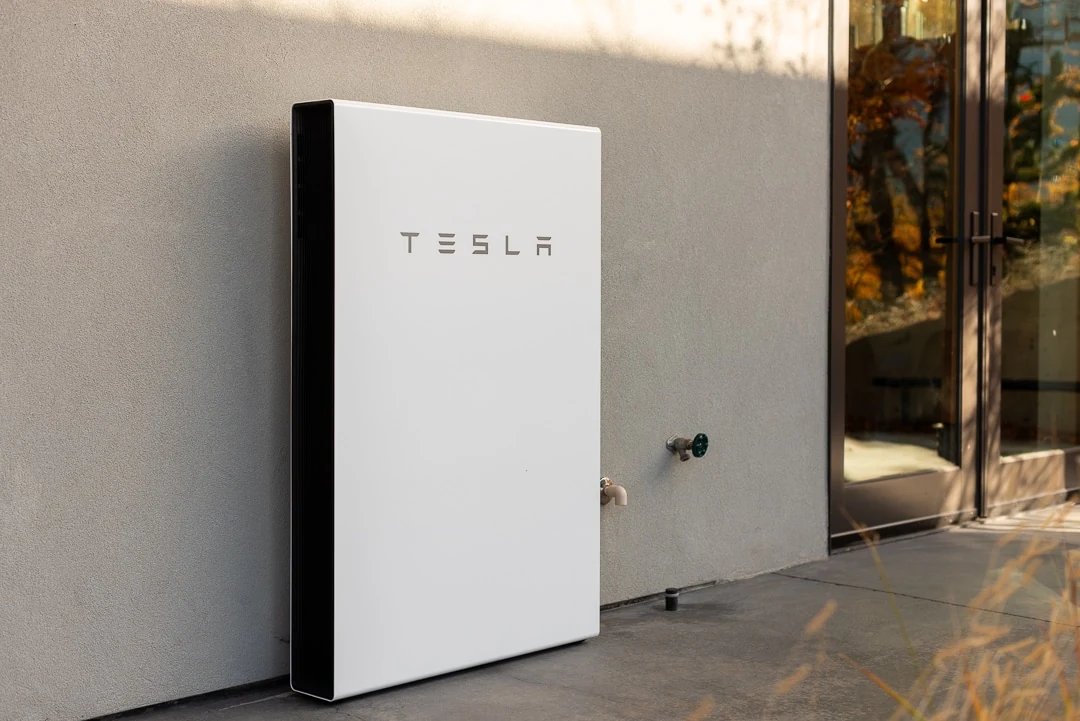
One limitation matters in Texas specifically: Powerwall 3 has no native integration with a standby generator. If the grid stays down for three or four days, which happens in rural areas after severe weather, there's no way to recharge the Powerwall from a generator. You're limited to whatever solar is available. The second limitation is ecosystem dependency. Tesla controls the monitoring app, the firmware, and the service pipeline. When something needs attention, the path runs through Tesla, not through your local installer.
Best Fit for Powerwall 3 in Texas
Choose Powerwall 3 if you're doing a new solar install and want a single integrated system, if you're adding storage to an existing system without replacing the current inverter, or if you want a single-vendor warranty and don't need generator backup. It's the right call for suburban Houston, DFW, and San Antonio homeowners who want simplicity over modularity.
For a 2,000 to 2,500 sq ft home in Katy or Sugar Land, Powerwall 3 is a common recommendation from Houston-area installers. The built-in inverter simplifies permitting, reduces hardware footprint, and the 11.5 kW peak output handles a 4-ton AC at startup without the load management discussion that comes with a single-module Enphase install.
Enphase IQ Battery: The Modular Microinverter Match
74% of U.S. solar installers used Enphase equipment in 2024, making it the most installer-familiar battery system on the market (SolarReviews 2025 Solar Industry Survey). That familiarity means shorter install timelines and more experienced technicians in the Houston metro.
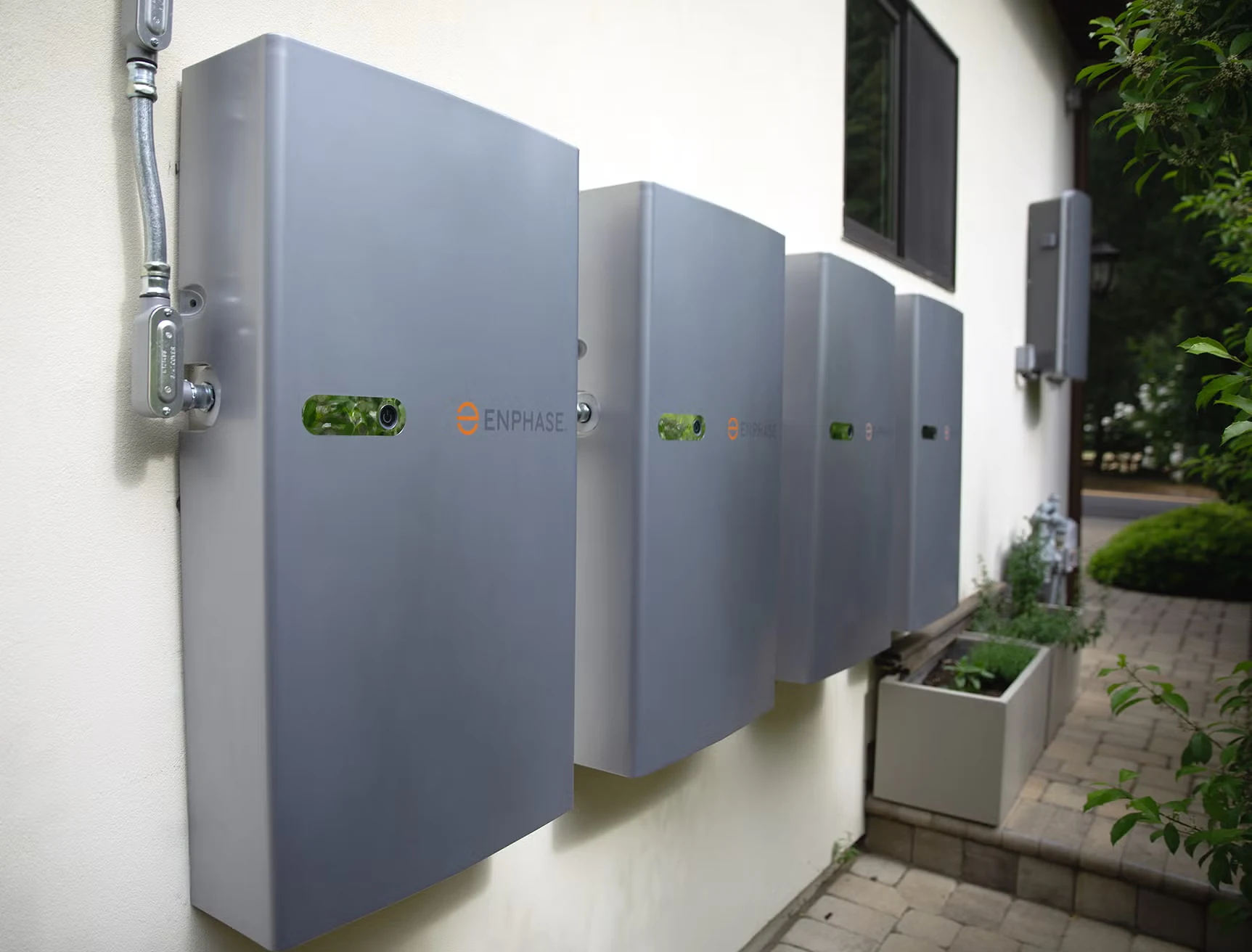
Enphase IQ 5P is the right battery for homes already running Enphase microinverters, and its 131°F operating temperature ceiling makes it the strongest thermal performer of the three brands (Enphase Energy, 2026). Each module delivers 5 kWh of usable capacity. Most Texas installs use two or three modules for 10 to 15 kWh total, enough for overnight backup on critical loads or partial whole-home coverage.
The AC-coupled architecture is worth understanding. Enphase IQ works with any existing solar inverter, not just Enphase equipment. If you have a SolarEdge or SMA system and want to add storage, Enphase IQ slots in without replacing the inverter. That's a meaningful cost advantage on retrofit installations. Enphase Ensemble technology also enables true off-grid operation during an outage without a separate automatic transfer switch.
The limitation that matters most for Texas homes is continuous power output. A single Enphase IQ 5P module delivers 3.84 kW continuously. A 3-ton central air conditioner draws approximately 3 to 5 kW at startup. Running that AC on a single module requires load management, which means the system sheds other circuits when the AC compressor kicks on. Two or three modules solve this, but the conversation has to happen before installation, not after.
Best Fit for Enphase IQ in Texas
Enphase IQ is the right choice if your home already runs Enphase microinverters and you're adding storage to an existing system. It also makes sense if you're in an area with sustained extreme heat, inland markets like Laredo or Midland, where the 131°F thermal ceiling reduces risk on exterior installs. For homeowners who want to start with one module and expand later as the budget allows, the modular design makes that straightforward.
Enphase IQ 5P is the best thermal fit for Texas exterior installations, with a 131°F rated operating ceiling and LFP chemistry that maintains 100% depth of discharge over 4,000 cycles or 10 years. For homes already running Enphase microinverters, it's the no-new-hardware storage upgrade (Enphase Energy, 2026).
Generac PWRcell: The Generator-Ready Option
Generac PWRcell is the only major residential battery system that integrates natively with a standby generator, making it the right choice for homeowners who face multi-day outages or who already own Generac equipment (Generac, 2026). During a grid outage, a Generac standby generator can automatically recharge the PWRcell when the battery drops below a set threshold. That handoff runs without manual intervention and extends backup capability beyond what solar alone can provide.
The DC-coupled architecture gives the PWRcell an efficiency edge in daily operation. DC coupling means solar energy travels directly into the battery without a round-trip AC conversion, which is 7 to 10% more efficient than AC-coupled systems like Enphase IQ. Over a Texas solar year, with an average of 5.5 peak sun hours per day, that efficiency difference adds up to meaningful additional kWh captured annually.
The modularity is real. A single PWRcell cabinet starts at 9 kWh and scales to 18 kWh of rated capacity, with 80% depth of discharge delivering 7.2 to 14.4 kWh usable. The PWRmanager device automatically prioritizes critical circuits, shedding non-essential loads to protect the appliances that matter most during a long outage. Generac's throughput warranty, based on total energy cycled rather than calendar years, benefits homeowners who cycle the battery lightly.
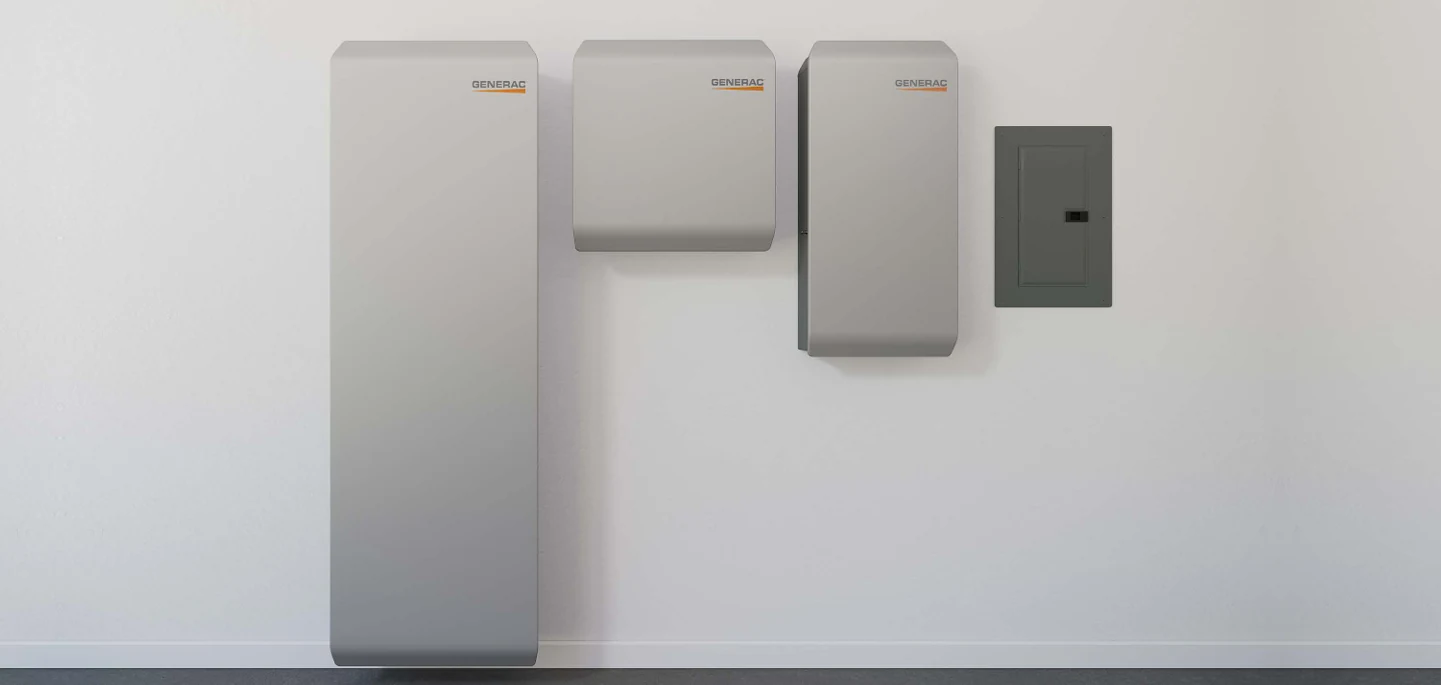
The NMC chemistry drawback is worth being clear about: a 17.1 kWh rated PWRcell delivers approximately 13.7 kWh usable at 80% depth of discharge. That's nearly the same as a single 13.5 kWh Powerwall 3 at 100% depth of discharge. You're paying for a larger nominal capacity that doesn't fully translate to usable backup power.
One practical limitation for Houston-area buyers: Generac PWRcell does not appear in EnergySage's top five most-quoted residential battery brands in Texas as of April 2026 (EnergySage). Installer availability matters as much as hardware quality. Before committing to a PWRcell, confirm there is a certified Generac installer within a reasonable service radius of your home.
Best Fit for Generac PWRcell in Texas
Choose the PWRcell if you're in rural Texas, the Hill Country, East Texas, or any area where outages historically run more than 24 hours, and where a standby generator is already part of your backup plan. If you already own a Generac generator, the PWRcell is the straightforward addition that turns a single-source backup into a two-source, auto-managed system.
Generac PWRcell is the only major residential battery with native generator integration, enabling a Generac standby generator to automatically recharge the battery during extended grid outages. DC coupling provides a 7 to 10% efficiency advantage over AC-coupled systems during daily solar charging, and the modular cabinet scales from 9 to 18 kWh rated capacity without additional enclosures (SolarReviews, 2025).
Which Brand Is the Right Fit for Your Texas Home?
The right home battery brand in Texas depends on three factors: what solar equipment you already have, how long your outages typically run, and whether you need generator backup (PV Magazine, December 2025). A 2025 industry survey found Texas homeowners split almost evenly across their motivations: rate savings (30%), solar self-supply (29%), and backup power (26%). That near-equal distribution explains why no single brand dominates every installation.
Use the table below to match your situation to the right choice.
| Homeowner Situation | Best Brand |
|---|---|
| New solar install, want simplicity | Powerwall 3 |
| Existing Enphase microinverters | Enphase IQ |
| Rural location or extended outage risk | Generac PWRcell |
| Coastal Texas, humidity and salt air | Enphase IQ (sealed modules, highest thermal ceiling) |
| Budget-staged, want to expand over time | Enphase IQ (start with one module) |
| Already own a Generac generator | Generac PWRcell |
Brand matters less than configuration. A Powerwall 3 sized for a home that needs 20 kWh of backup will underperform on day two of an outage. An Enphase install without load management on a home with a 5-ton AC will trip under startup load. The conversation with your installer should include your AC tonnage, your critical load list, and your local outage history before a brand gets written on the quote.
One comparison metric missing from most guides is cost per usable kWh. Total installed price alone is misleading because the three brands deliver different usable capacities. At Texas mid-range pricing, Powerwall 3 comes out to approximately $1,330 per usable kWh, Enphase IQ to $1,500, and Generac PWRcell to $1,710. That's a more honest comparison than list price, and it changes the framing on which brand is the "affordable" option.
Questions to Ask Your Installer Before Committing to a Brand
- What coupling strategy fits my existing or planned solar system, and does it require replacing the current inverter?
- Does the proposed configuration handle my central AC startup surge without load management restrictions?
- How does the warranty claim process work if the battery underperforms, and is service handled locally or through the manufacturer?
For a deeper look at what a battery system can actually run during an outage, see our guide on home battery backup in Houston and Texas.
What Does a Home Battery System Cost in Texas?
The average installed cost of home battery storage in Texas is $1,344/kWh, compared to the national median of $855/kWh, according to EnergySage marketplace data (EnergySage Texas, April 2026). A typical 13 kWh system costs approximately $17,472 in Texas. Texas costs run higher than the national median because of local permitting fees, demand for certified installers, and climate-specific installation requirements.
Installed costs for residential home battery systems in Texas typically run $12,000 to $22,000, depending on brand, capacity, and whether the home's electrical panel requires an upgrade. Panel upgrades and permitting in many Houston-area municipalities add $1,500 to $3,000 to the total.
Texas residential battery deployments reached 3.1 GWh in 2025, a 51% year-over-year increase, as homeowner demand continues to grow (Modo Energy / ERCOT, 2026). Texas is projected to surpass California as the country's largest battery storage market in 2026, driven by continued ERCOT grid reliability concerns and falling hardware costs.
Here's how installed cost estimates break down by brand at Texas mid-range pricing:
- Powerwall 3: $16,000 to $20,000 for a single 13.5 kWh unit
- Enphase IQ: $12,000 to $18,000 for a two-unit (10 kWh) system
- Generac PWRcell: $15,000 to $22,000 for a mid-range (12 to 14 kWh usable) configuration
These are all-in cash prices. Financing changes the monthly payment structure but not the total purchase price. Cost per usable kWh at mid-range pricing: Powerwall 3 approximately $1,330/kWh, Enphase IQ approximately $1,500/kWh, Generac PWRcell approximately $1,710/kWh.
To understand how long different system sizes actually run your home, see our breakdown of how long a home battery lasts during a Houston power outage.
[INTERNAL-LINK: see if your home qualifies for a battery system → /home-backup-planner]
Texas residential battery storage deployments reached 3.1 GWh in 2025, a 51% year-over-year increase, reflecting the strongest single-year residential adoption in the state's history (Modo Energy / ERCOT, 2026). Texas is on track to surpass California as the country's largest battery storage market by the end of 2026.
Why Eos Backup and Battery Installs Sigenergy Instead
After evaluating the systems above, Eos Backup and Battery chose Sigenergy for installations across the Houston metro. Sigenergy is a newer entrant to the residential storage market, but its specs address several gaps that Powerwall, Enphase, and Generac leave open, particularly for Texas homeowners who care about instant switchover, EV integration, and long-term flexibility.
Transfer Speed: Lights Stay On, Computers Don't Restart
The most common complaint after a power outage is the seconds-long gap when switching to battery, enough time for computers to shut down, smart home devices to reboot, and sensitive electronics to take a hit. Sigenergy's inverter is designed to switch to backup in under 20 milliseconds, faster than the threshold at which most electronics register an interruption. Sigenergy's own technical documentation claims 0 ms of load-side disruption, a manufacturer specification not yet independently lab-verified, but corroborated by owner reports confirming no flicker and no device restarts during switchover. (Sigenergy Technical Note; owner review, 2025)
For comparison, Powerwall 3, Enphase IQ, and Generac PWRcell do not publish a transfer time specification.
Modular From 6 to 54 kWh in a Single System
Sigenergy uses the same Energy Controller (inverter) regardless of how many battery modules are connected. A home can start with one 8.76 kWh module and expand to 54 kWh by adding modules, without replacing any hardware. The field-configurable output covers 3.8 kW to 11.5 kW continuous (17.1 kW peak for 10 seconds), matching Powerwall 3's continuous output at the top end and scaling down for smaller installations.
This is different from stacking multiple Powerwall units (each is a complete system) or Enphase modules (each adds its own inverter cost). With Sigenergy, the inverter is a one-time purchase.
V2X: Your Electric Vehicle Can Power Your Home
Sigenergy is the only system in this comparison with an integrated bidirectional DC fast charger (25 kW). Compatible electric vehicles can feed power back into your home during an outage, turning your EV battery into a second, much larger energy reserve.
The EVDC charger is available in two connector versions: CCS1 for most non-Tesla EVs, and NACS for Tesla vehicles. Compatible models include the Ford F-150 Lightning, Rivian R1T and R1S, Hyundai Ioniq 5 and Ioniq 6, Kia EV6 and EV9, GM vehicles, Volkswagen ID.4, Porsche Taycan, and Tesla vehicles with the appropriate connector. The charger covers both 400V and 800V EV platforms, handling high-voltage vehicles that most home chargers cannot support. (Sigenergy V2X compatibility, 2025)
Note: V2X compatibility is based on Sigenergy's own testing. Vehicle manufacturers have not officially certified third-party V2X operation. Performance may vary by model year and software version.
[INTERNAL-LINK: see which vehicles are V2X-compatible with the Sigenergy system → /plans/v2x]
Smart Panel, Smart Controller, Smart Home
Sigenergy's ecosystem includes a Smart Panel and Smart Controller that connect battery, solar, EV charging, and home loads into a single managed system. The mySigen app provides real-time monitoring and automated energy scheduling. During an outage, the Smart Panel can prioritize critical circuits automatically, without requiring a separate automatic transfer switch. The system can be commissioned and operated entirely offline, without internet access, which matters during the multi-day outages Texas homeowners have experienced after major storms.
Sigenergy Specs vs. Powerwall, Enphase, and Generac
| Spec | Sigenergy SigenStor | Tesla Powerwall 3 | Enphase IQ 5P | Generac PWRcell |
|---|---|---|---|---|
| Chemistry | LFP | LFP | LFP | NMC |
| System capacity | 6 to 54 kWh (one system) | 13.5 kWh per unit | 3.36 to 13.4 kWh (modular) | 9 to 18 kWh |
| Continuous output | Up to 11.5 kW | 11.5 kW | 3.84 kW per module | 9 kW |
| Peak output | 17.1 kW (10 sec) | 30 kW surge | , | , |
| Operating temp ceiling | 131F (55C) | 122F (50C) | 131F (55C) | 140F (60C) |
| Transfer time | Sub-20 ms (0 ms claimed) | Not published | Not published | Not published |
| V2X (EV discharging) | Yes, 25 kW DC | No | No | No |
| Generator input | Yes | No | No | Yes |
| Solar inverter included | Yes | Yes | Yes | No |
| Offline setup | Yes | No (requires internet) | No | No |
| Warranty | 10 yr / 70% (15 yr optional) | 10 yr / 70% | 10 yr / 4,000 cycles | 10 yr throughput |
| US certifications | UL 1741 SB, IEEE 1547 | UL listed | UL listed | UL listed |
If you're in Harris County, Fort Bend, Montgomery, Brazoria, or Galveston County, contact us for a no-pressure consultation. We'll size a system to your home's actual load and outage profile.
View our available installation plans to see what a full Eos Backup and Battery engagement looks like from site assessment to commissioning.
Frequently Asked Questions
Is Powerwall 3 compatible with existing solar panels?
Yes. Powerwall 3 supports both AC and DC coupling. Most existing solar systems, including those with SolarEdge, Enphase, or SMA inverters, can add a Powerwall 3 without replacing the current inverter. The right coupling strategy depends on the existing inverter model. Confirm with your installer before purchasing.
Which home battery handles Texas heat the best?
Enphase IQ 5P and Sigenergy SigenStor share the highest rated operating ceiling at 131°F (55°C), using LFP chemistry that tolerates sustained heat better than the NMC chemistry in Generac PWRcell. Powerwall 3 is rated to 122°F (50°C). Regardless of brand, shaded or interior mounting reduces thermal stress and extends battery life in the Texas climate. None of these systems should be mounted on a south-facing exterior wall in direct sun without shade protection.
Can a home battery run my central air conditioner during an outage?
It depends on AC tonnage and the battery's continuous power output. A 3-ton central AC draws approximately 3 to 5 kW at startup. Powerwall 3 (11.5 kW peak) handles this without load management. A single Enphase IQ 5P module (3.84 kW continuous) requires load shedding or multiple modules to handle the startup surge. Confirm your AC's startup draw with your installer before finalizing the system design.
Does Generac PWRcell work without solar?
Yes. PWRcell can be charged from the grid or from a Generac standby generator. Solar panels are not required. For homeowners who want generator-backed battery storage without a solar installation, PWRcell is the most capable option in this category.
How long does installation take?
The physical installation typically takes one to two days once permits are approved. In Harris County and surrounding areas, permitting timelines generally run two to four weeks. From initial site assessment to a commissioned, operational system, allow six to eight weeks as a planning baseline.
The Bottom Line: Picking a Battery Brand for Texas
Three brands. Three different strengths. Powerwall 3 wins on simplicity and peak power output. Enphase IQ wins on thermal performance, modular flexibility, and compatibility with existing Enphase solar systems. Generac PWRcell wins on generator integration and DC-coupling efficiency for homeowners who need multi-day backup capability.
The right system is the one sized to your actual load, specified for your outage risk profile, and installed by a team that knows how to configure it for Texas conditions. Brand name doesn't keep the lights on. Correct sizing does.
- Powerwall 3: best for new installs and homeowners who want a single integrated system.
- Enphase IQ: best for existing Enphase systems, hotter inland Texas markets, and staged budgets.
- Generac PWRcell: best for rural homeowners and those with or planning a standby generator.
Eos Backup and Battery installs Sigenergy battery systems across the Houston metro area. See our specifications page for the hardware we work with, or reach out directly to schedule a site assessment.
[INTERNAL-LINK: battery vs generator: which backup type is right for your Texas home → /blog/home-battery-backup-vs-generator-texas]
[INTERNAL-LINK: get your free site assessment scheduled → /home-backup-planner]