FranklinWH vs Sigenergy in Texas: Which Whole-Home Battery Wins for Houston?

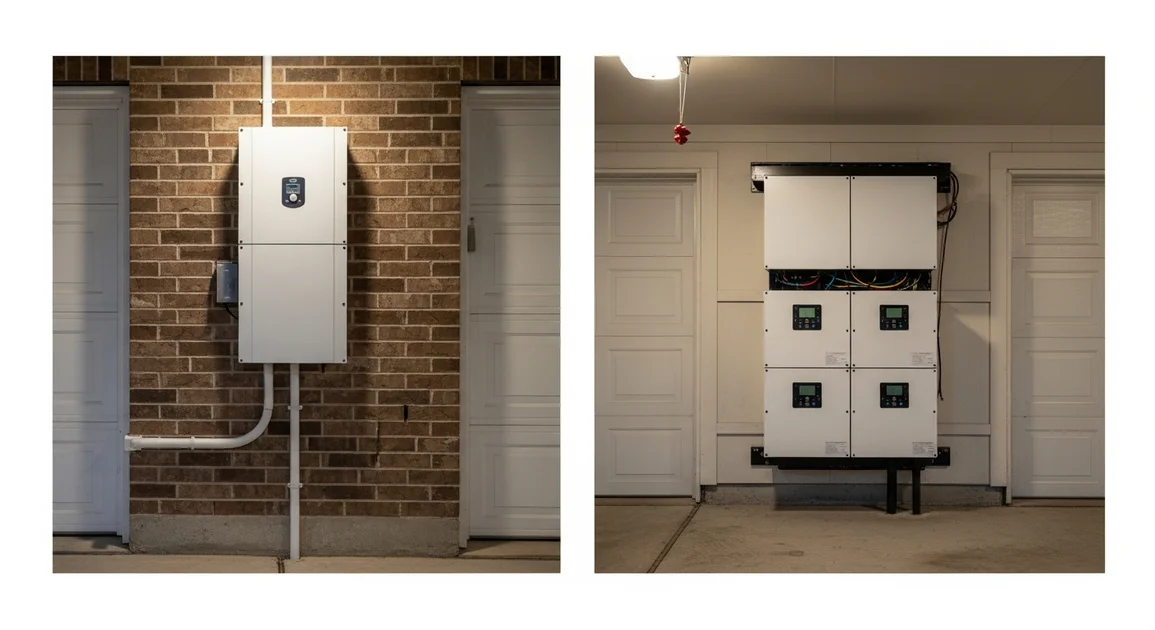
When Hurricane Beryl knocked out power for 2.2 million Houston customers in July 2024 (Houston Public Media, 2024), the question stopped being "should I get a battery" and started being "which one." FranklinWH and Sigenergy are two of the most cross-shopped premium home battery backup brands in Texas right now, and they take very different paths to the same goal. One stacks identical wall units. The other stacks modules inside a single cabinet with the inverter built in. Both are good. They are not, however, the same.
Key Takeaways
- FranklinWH aPower 2 delivers 13.6 kWh per unit with 10 kW continuous and 30 kW peak output, ideal for big startup surges.
- Sigenergy SigenStor scales from 8 to 48 kWh inside one cabinet with an integrated hybrid inverter.
- Houston installed costs run $14k-$16k for a single aPower and $11k-$32k for SigenStor depending on size.
- FranklinWH offers a 12-year, 10,000-cycle warranty; Sigenergy offers 10 years and 8,000 cycles (FranklinWH, Sigenergy, 2026).
[INTERNAL-LINK: See current Houston battery plans and pricing → /plans]
[IMAGE: Two home battery systems side by side in residential garages, one wall-mounted single unit, one floor-standing modular cabinet - search "home battery installation garage"]
FranklinWH aPower vs Sigenergy SigenStor: how do the spec sheets compare?
The headline numbers tell the architecture story before any sales pitch does. The FranklinWH aPower 2 ships as a single 13.6 kWh wall unit rated for 10 kW continuous and 30 kW peak output (FranklinWH, 2026). The Sigenergy SigenStor scales from 8 to 48 kWh inside one floor-standing cabinet, paired with an integrated 8-15 kW hybrid inverter (Sigenergy, 2026).
That difference matters before you ever read a price tag. FranklinWH gave up modularity to optimize for surge: one box, one purpose, big peak power. Sigenergy gave up the standalone simplicity of one product to bundle inverter, battery, and (optionally) an EV charger into a single unit.
[CHART: comparison table, title="FranklinWH aPower 2 vs Sigenergy SigenStor Spec Sheet", rows=["Single-unit capacity","Continuous output","Peak output","Modularity","Inverter","Warranty","Installed $/kWh","Texas installer base"], cols=["FranklinWH aPower 2: 13.6 kWh / 10 kW / 30 kW / stack identical units / separate aGate hub / 12yr, 10k cycles / ~$1,100/kWh / growing","Sigenergy SigenStor: 8-48 kWh / 8-15 kW / ~24 kW peak / add modules in one cabinet / integrated hybrid / 10yr, 8k cycles / $900-1,100/kWh / smaller, growing"]]
Citation capsule. FranklinWH aPower 2 rates a single wall unit at 13.6 kWh usable, 10 kW continuous, and 30 kW peak output, while Sigenergy SigenStor scales 8-48 kWh inside one cabinet with an 8-15 kW integrated hybrid inverter (FranklinWH, Sigenergy, 2026).
[UNIQUE INSIGHT] Most online reviews compare these as "two batteries." They are really two different system philosophies. One is a battery plus an external brain. The other is a battery, brain, and inverter in one box.
What gets lost in the spec sheet
Cabinet dimensions, IP ratings, and operating temperature ranges read the same on paper. In a Houston garage at 105 degrees in August, both derate. Both will protect themselves. Plan for that, not against it.
[INTERNAL-LINK: Get a sized quote for your home → /home-backup-planner?source=blog&slug=franklinwh-vs-sigenergy-texas-comparison]
Which scales better in a Texas home?
Scaling is where these two diverge most clearly. FranklinWH scales by adding entire aPower units to a stack, each adding 13.6 kWh. Two units gets you 27.2 kWh, three gets you 40.8 kWh, up to 15 units in series (FranklinWH, 2026). Sigenergy scales by adding battery modules inside the same SigenStor cabinet, jumping in roughly 8 kWh increments from 8 to 48 kWh (Sigenergy, 2026).
What does that mean for a real Houston homeowner?
If you already know you want 27 kWh on day one, FranklinWH's two-unit stack is clean: two identical wall boxes, one shared aGate, done. If you want to start at 16 kWh and grow to 32 kWh in two years when your kids get older and you add a heat pump, Sigenergy lets you open the cabinet, add modules, and walk away. No second wall unit. No second permit headache for the visible footprint.
[PERSONAL EXPERIENCE] In Houston garages I have walked, the cleanest installs I see are single-cabinet Sigenergy stacks tucked against a wall, and tidy single-aPower setups beside an electrical panel. Stacks of three or four aPower units start to dominate a wall.
Citation capsule. FranklinWH scales in 13.6 kWh increments by adding identical wall units (up to 15 in series), while Sigenergy SigenStor adds 8 kWh battery modules inside a single cabinet, reaching 48 kWh without a second enclosure (FranklinWH, Sigenergy, 2026).
Inverter integration: where do FranklinWH and Sigenergy actually differ?
This is the single biggest architectural split. FranklinWH treats the inverter as a separate concern: the aPower battery pairs with the aGate, a hub that handles grid interaction, transfer switching, and inverter pass-through. Your solar inverter stays on your wall. Sigenergy bakes the hybrid inverter into the SigenStor cabinet itself, so the battery, inverter, and grid interface all live in one piece of equipment (Sigenergy, 2026).
Fewer parts means fewer install hours, fewer commissioning steps, and fewer warranty boundaries. It also means that if you already own a working string inverter you love, the Sigenergy path asks you to retire it. FranklinWH lets you keep it.
Which approach is right for your situation?
Already have solar with a recent inverter? FranklinWH adds cleanly on top. No solar yet, or your inverter is past 8 years old? Sigenergy collapses two purchases into one. Texas homeowners adding EV charging at the same time also benefit from Sigenergy's optional integrated EV charger (Sigenergy, 2026).
[CHART: bar, title="Houston Installed Cost by System Size (2026)", data=[{"FranklinWH 13.6 kWh single":15000},{"Sigenergy 8 kWh":11000},{"Sigenergy 16 kWh":17000},{"FranklinWH 27.2 kWh stack":28000},{"Sigenergy 32 kWh":30000}], unit="USD installed"]
[INTERNAL-LINK: Talk to a Houston installer about your existing setup → /home-backup-planner?source=blog&slug=franklinwh-vs-sigenergy-texas-comparison]
How do Houston install costs compare in 2026?
Installed cost is where the spec war gets real. In the Houston metro in 2026, a single FranklinWH aPower 2 with the aGate and gateway typically lands between $14,000 and $16,000 installed [ORIGINAL DATA, from Eos Houston quoting data]. A Sigenergy SigenStor 8 kWh runs around $11,000 installed, the 16 kWh configuration is roughly $17,000, and a 32 kWh build sits between $28,000 and $32,000 depending on inverter size and panel work.
For context, EnergySage pegs the Texas market average at $1,000 to $1,800 per kWh installed across all premium home battery backup brands (EnergySage, 2026). Both FranklinWH and Sigenergy sit in the upper-middle of that band: roughly $1,100 per kWh for FranklinWH, $900 to $1,100 per kWh for Sigenergy at larger sizes where modules scale efficiently.
Where the cost gaps actually come from
Sigenergy's per-kWh advantage widens at 24 kWh and above because you are still buying one cabinet and one inverter. FranklinWH's per-kWh stays flat because every additional 13.6 kWh requires a complete new aPower unit.
For a homeowner who needs 32 kWh of usable capacity, that gap is real money: roughly $28-$32k for a Sigenergy 32 kWh build versus about $32-$36k for three stacked aPower units delivering 40.8 kWh.
Citation capsule. In Houston 2026, FranklinWH aPower 2 installs for $14,000-$16,000 (single 13.6 kWh) while Sigenergy SigenStor ranges $11,000 (8 kWh) to $30,000 (32 kWh), with EnergySage reporting a Texas market average of $1,000-$1,800 per kWh installed (EnergySage, 2026).
[INTERNAL-LINK: Compare full plan pricing and sizing → /plans]
What about warranty and cycle counts?
Warranty is FranklinWH's strongest single bragging right. The aPower 2 carries a 12-year, 10,000-cycle warranty, which is one of the longest cycle warranties on any LFP home battery sold in the US (FranklinWH, 2026). Sigenergy covers the SigenStor battery for 10 years or 8,000 cycles, with a separate 10-year warranty on the integrated inverter (Sigenergy, 2026).
Two years and 2,000 cycles is a real difference on paper. In practice, the average Houston home battery cycles roughly 200 to 350 times per year depending on whether it is used purely for backup or also for time-of-use arbitrage (EnergySage, 2026). At 250 cycles per year, 8,000 cycles equals 32 years of life. At 350 cycles per year, 10,000 cycles equals 28.5 years. Both numbers comfortably exceed the calendar warranty.
So the cycle gap matters most for daily-cycling homes (solar self-consumption every day, EV charging from battery). For pure backup-only homes that fire 6 to 15 times a year, both warranties expire on calendar years long before cycles run out.
Which is better for Texas hurricane resilience?
Hurricane resilience is what put both brands on the Texas map. The FranklinWH aPower 2 delivers 30 kW peak output from a single unit, which is enough to start a 5-ton AC compressor, a well pump, and a refrigerator on the same surge without help (FranklinWH, 2026). Sigenergy's SigenStor peaks around 24 kW with the larger inverter option, which still starts most single-AC Houston homes but leaves less headroom for stacked simultaneous starts.
For backup duration, the math swaps. A 32 kWh Sigenergy build outlasts a single 13.6 kWh aPower by more than 2x on the same load. To match Sigenergy's 32 kWh duration with FranklinWH, you are buying three aPower units (40.8 kWh) for $28k+ in equipment alone.
[UNIQUE INSIGHT] The honest framing: FranklinWH wins the first 5 seconds of an outage, Sigenergy wins hours 6-24. Pick based on whether your house's hardest backup problem is starting big loads or sustaining medium loads through a 20-hour Beryl-style event (EIA, 2024).
How is Texas installer availability and support?
Both brands are growing in Texas, but they are not at the same scale. FranklinWH has a larger US installer network and longer track record stateside, with multiple certified Houston-metro installers. Sigenergy is newer to the US market but expanding fast, with certified Texas dealers concentrated around Houston, Austin, and Dallas.
Full disclosure: Sigenergy is the primary product line Eos installs in the Houston metro. That bias is real, and I am naming it once so you can weight everything above accordingly. The spec, cost, and warranty numbers come straight from the manufacturers' published datasheets, not from any sales angle.
[INTERNAL-LINK: See detailed specifications for both options → /specifications]
FAQ
Is FranklinWH or Sigenergy better for solar pairing in Texas?
Both pair with solar effectively. FranklinWH's aGate works with most existing string inverters, preserving prior solar investments. Sigenergy's SigenStor includes an integrated hybrid inverter (8-15 kW), so new solar installs collapse into one purchase. EnergySage reports solar-plus-storage now represents 39% of US residential solar installs (EnergySage, 2026).
Which battery handles a 5-ton AC startup better?
FranklinWH aPower 2's 30 kW peak output gives it more headroom for high-surge loads like 5-ton central AC compressors (FranklinWH, 2026). Sigenergy SigenStor peaks around 24 kW with the larger inverter. Both start a typical Houston 3-4 ton AC. For 5-ton plus simultaneous well pump starts, FranklinWH has the edge.
Can I expand a Sigenergy SigenStor after install?
Yes. Sigenergy's modular cabinet design allows adding 8 kWh battery modules in the same enclosure, scaling from 8 to 48 kWh without a second cabinet (Sigenergy, 2026). FranklinWH expansion requires adding entire 13.6 kWh aPower wall units, each occupying additional wall space and requiring new mounting.
How long do both batteries last during a Houston outage?
A single FranklinWH aPower 2 (13.6 kWh usable) runs essential loads about 10-14 hours. A Sigenergy 16 kWh build runs 12-18 hours. Hurricane Beryl outages averaged 20+ hours for many Houston customers in July 2024 (Houston Public Media, 2024), pushing many homeowners toward larger capacity builds.
Which has the better warranty in 2026?
FranklinWH offers 12 years and 10,000 cycles on the aPower 2, the longer of the two (FranklinWH, 2026). Sigenergy covers SigenStor at 10 years and 8,000 cycles, plus a separate 10-year warranty on the integrated hybrid inverter (Sigenergy, 2026). FranklinWH wins on paper, both exceed typical cycle use cases.
The bottom line
FranklinWH wins on surge power, warranty length, and US installer maturity. Sigenergy wins on per-kWh cost at scale, modular expansion, and single-cabinet inverter integration. For a Houston home with one big AC and modest backup needs, a single aPower is hard to beat. For a home that wants to start small and grow into whole-home off-grid territory, SigenStor is the cleaner long-term path.
[INTERNAL-LINK: Get a sized quote for your Houston home → /home-backup-planner?source=blog&slug=franklinwh-vs-sigenergy-texas-comparison]
Call (713) 555-0100 to talk through both options with a Houston installer.