Tesla Powerwall 3 vs Sigenergy in Texas: Which Whole-Home Battery Wins?

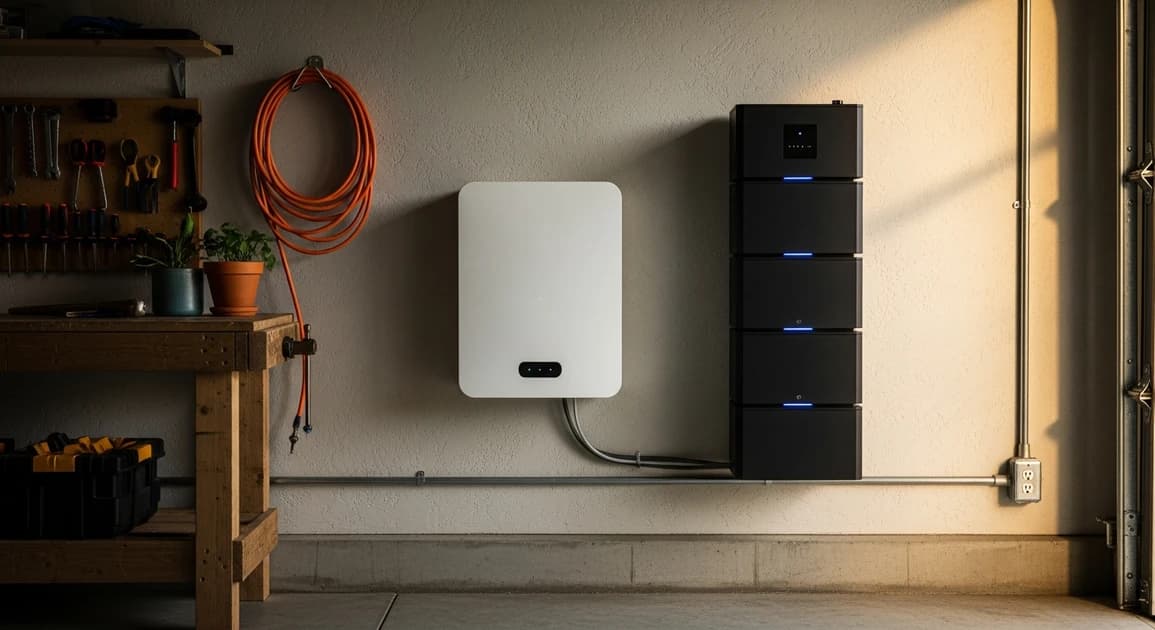
If you are shopping for a whole-home battery in Texas, two names keep coming up: the Tesla Powerwall 3 and Sigenergy's SigenStor. They take opposite design approaches. The Powerwall 3 is a sealed, fixed-capacity unit with a solar inverter built in. Sigenergy is a modular, DC-coupled system you scale in steps. Both are excellent. The right answer depends on your solar plans, how much capacity you need, and how you want to interact with the ERCOT grid. Disclosure up front: Eos installs Sigenergy, and we will tell you plainly where the Powerwall wins.
[INTERNAL-LINK: get a Houston whole-home battery quote in under 2 minutes -> /home-backup-planner?source=blog&slug=tesla-powerwall-3-vs-sigenergy-texas-comparison]
Key Takeaways
- The Tesla Powerwall 3 delivers 13.5 kWh usable and 11.5 kW continuous from a single unit with an integrated solar inverter, per Tesla (2025).
- Sigenergy SigenStor is modular and DC-coupled, scaling capacity in steps (roughly 5 to 48 kWh per stack) with hybrid inverters from about 6 to 12 kW for homes, per Sigenergy datasheets (2025).
- Powerwall wins on VPP maturity: Tesla runs an established ERCOT virtual-power-plant program, per Tesla Electric.
- Sigenergy wins on sizing flexibility and DC-coupled efficiency for a new solar install.
- Installed Texas cost runs roughly $12,000 to $15,000 for one Powerwall 3 and $11,000 to $40,000 for Sigenergy depending on how many modules you stack.
Quick verdict: who is each one for?
Choose the Powerwall 3 if you want a simple, fixed-capacity unit, you are adding solar through Tesla, and you value the most mature ERCOT virtual-power-plant program available today. Choose Sigenergy if you want to dial capacity precisely to your home, you are pairing it with a new DC-coupled solar array for maximum efficiency, or you want a single stack that also handles future EV DC charging.
Neither is a wrong answer for a Texas home. The Powerwall 3 is the safer default for a homeowner who wants one box and a known program. Sigenergy is the better fit for a homeowner who wants to right-size capacity and squeeze more out of new solar. The rest of this guide is the detail behind that verdict.
Capacity and scaling: fixed unit vs modular stack
The core difference is granularity. A Powerwall 3 is 13.5 kWh usable per unit, and you add capacity by adding whole 13.5 kWh units, per Tesla (2025). Sigenergy's SigenStor scales by adding battery modules to a stack, so you can land closer to the exact capacity your loads need rather than rounding up to the next 13.5 kWh, per Sigenergy (2025).
For a household that needs about 13 to 14 kWh, the Powerwall 3 is a clean fit. For a household that needs 20 kWh or 35 kWh, modular sizing avoids the "two Powerwalls is 27 kWh, more than I need, but one is not enough" problem. This is the most practical day-to-day difference between the two for a Texas buyer.
Citation capsule. A Tesla Powerwall 3 provides 13.5 kWh usable per unit and scales in 13.5 kWh increments, per Tesla (2025), while Sigenergy's SigenStor scales by individual battery modules (roughly 5 to 48 kWh per stack), per Sigenergy datasheets, letting a Texas homeowner match capacity to load more precisely.
Power and coupling: AC integrated vs DC modular
The Powerwall 3 delivers 11.5 kW of continuous power and includes a built-in solar inverter, so a new solar array connects straight into the unit, per Tesla (2025). Sigenergy uses a DC-coupled hybrid inverter rated roughly 6 to 12 kW for residential stacks, per Sigenergy datasheets (2025). DC coupling keeps solar energy in DC form from panel to battery, which avoids a conversion step and can edge out AC-coupled efficiency on a new install.
The practical reading: the Powerwall 3's integrated inverter makes a Tesla-solar-plus-battery package very tidy, while Sigenergy's DC-coupled design is the efficiency play when you are designing a fresh solar-plus-storage system together.
What do they cost in Texas?
Expect roughly $12,000 to $15,000 installed for a single Powerwall 3 without solar in the Houston market, and roughly $11,000 to $40,000 for a Sigenergy system depending on how many battery modules you stack. The Sigenergy range is wide precisely because it is modular: a small single-stack system can come in below a Powerwall, while a large 40-plus kWh stack costs well above it.
Price per usable kWh tends to converge as you scale up either system, so cost should not be the deciding factor between them at similar capacities. The deciding factors are sizing fit, solar coupling, and grid programs. We never quote a flat price online; final cost depends on your panel, your loads, and your install. This guide focuses on hardware and architecture, not promotional pricing.
[INTERNAL-LINK: see how Eos sizes and prices whole-home battery systems -> /home-backup-planner?source=blog&slug=tesla-powerwall-3-vs-sigenergy-texas-comparison]
ERCOT VPP and grid programs
This is where the Powerwall 3 has a real edge today. Tesla operates an established virtual-power-plant program in Texas through Tesla Electric, letting Powerwall owners share stored energy with the ERCOT grid during peak events. ERCOT has been expanding distributed-energy participation through its Aggregated Distributed Energy Resources (ADER) work, per ERCOT, and Tesla's program is the most mature consumer on-ramp.
Sigenergy systems can participate in grid programs through an aggregator or installer, but there is no single nationally branded consumer VPP comparable to Tesla's at the moment. If joining a turnkey VPP the day you turn the system on is a priority, that favors the Powerwall. If your priority is backup and solar self-consumption, the gap matters less.
[INTERNAL-LINK: how home batteries earn money on the Texas grid -> /blog/best-home-battery-brands-texas]
Warranty, lifespan, and Texas heat
Both systems carry a 10-year warranty, and both use lithium iron phosphate (LFP) chemistry, which tolerates Houston heat better than older nickel-based cells and is less prone to thermal runaway. Tesla warrants the Powerwall 3 for 10 years with a defined capacity-retention floor, per Tesla (2025). Sigenergy warrants its battery modules on a comparable 10-year-plus or throughput basis, per Sigenergy (2025).
The Texas-specific wrinkle is heat management. Houston summers routinely push ambient temperatures past 100F, and sustained heat is the main enemy of battery longevity. Both manufacturers rate their units for outdoor installation, but in our experience an indoor garage mount extends real-world life on either platform by keeping cells out of direct afternoon sun. The modular Sigenergy stack and the sealed Powerwall both handle Houston climate well; placement matters more than the badge.
[UNIQUE INSIGHT] The warranty number most buyers fixate on (10 years) is nearly identical between the two. What actually differs is serviceability: a modular system lets you replace or add a single module, while a sealed unit is replaced as a whole. For a 15-year ownership horizon, that serviceability difference can matter more than the headline spec.
Which one fits your Houston home?
Map it to your situation. If you need about 13.5 kWh, want a single sealed unit, are going with Tesla solar, and want the Tesla VPP, the Powerwall 3 is the straightforward pick. If you want to size capacity precisely (say 18, 27, or 36 kWh), you are designing a new DC-coupled solar array, or you want room to add EV DC charging later, Sigenergy is the more flexible platform.
For a side-by-side with another popular modular system, see our FranklinWH vs Sigenergy comparison, and for the broader field, our guide to the best home battery brands in Texas.
[INTERNAL-LINK: book a free Houston home assessment -> /home-backup-planner?source=blog&slug=tesla-powerwall-3-vs-sigenergy-texas-comparison]
Or call our Houston office at (713) 462-2202 to talk through which platform fits your panel and loads.
FAQ
Is Powerwall 3 or Sigenergy better for a Texas home?
Both are strong; it depends on your needs. The Powerwall 3 is better for a homeowner who wants a single 13.5 kWh sealed unit, Tesla solar, and the mature Tesla ERCOT virtual-power-plant program, per Tesla. Sigenergy is better for precise capacity sizing, DC-coupled efficiency on a new solar array, and future EV DC charging from the same stack, per Sigenergy.
What is the difference between AC-coupled and DC-coupled batteries?
DC coupling keeps solar energy in DC form from the panels to the battery, avoiding a conversion step, which can improve round-trip efficiency on a new solar-plus-storage install. AC coupling converts to AC at the inverter first. The Powerwall 3 has an integrated solar inverter, while Sigenergy uses a DC-coupled hybrid inverter, per manufacturer datasheets (2025).
Can both batteries back up my whole house during an outage?
Both can run whole-home or critical loads depending on sizing and your panel setup. A single Powerwall 3 delivers 11.5 kW continuous, enough to start a central AC compressor in most Houston homes, per Tesla. A Sigenergy stack with a 12 kW hybrid inverter is comparable. True whole-home backup of a large house may need more than one Powerwall or a larger Sigenergy stack.
Which battery can join an ERCOT VPP?
Powerwall owners can join Tesla's virtual-power-plant program in Texas directly through Tesla Electric, per Tesla. Sigenergy systems can participate through an aggregator or installer arrangement, but there is no single branded consumer VPP equivalent to Tesla's today. If turnkey VPP enrollment matters most, that favors the Powerwall 3.
The bottom line
The Tesla Powerwall 3 and Sigenergy SigenStor are both excellent whole-home batteries for Texas, and the choice comes down to fit. The Powerwall wins on simplicity, an integrated Tesla-solar package, and the most mature ERCOT virtual-power-plant program. Sigenergy wins on modular sizing precision and DC-coupled efficiency for a new solar build. We install Sigenergy because that flexibility fits most of the Houston homes we serve, but if you want one sealed box and the Tesla VPP, the Powerwall 3 is a genuinely good call.
[INTERNAL-LINK: get a Houston whole-home battery quote -> /home-backup-planner?source=blog&slug=tesla-powerwall-3-vs-sigenergy-texas-comparison]