Sienna and Iowa Colony Battery Backup: A New-Build Buyer's Guide

Sienna and Iowa Colony Battery Backup: A New-Build Buyer's Guide
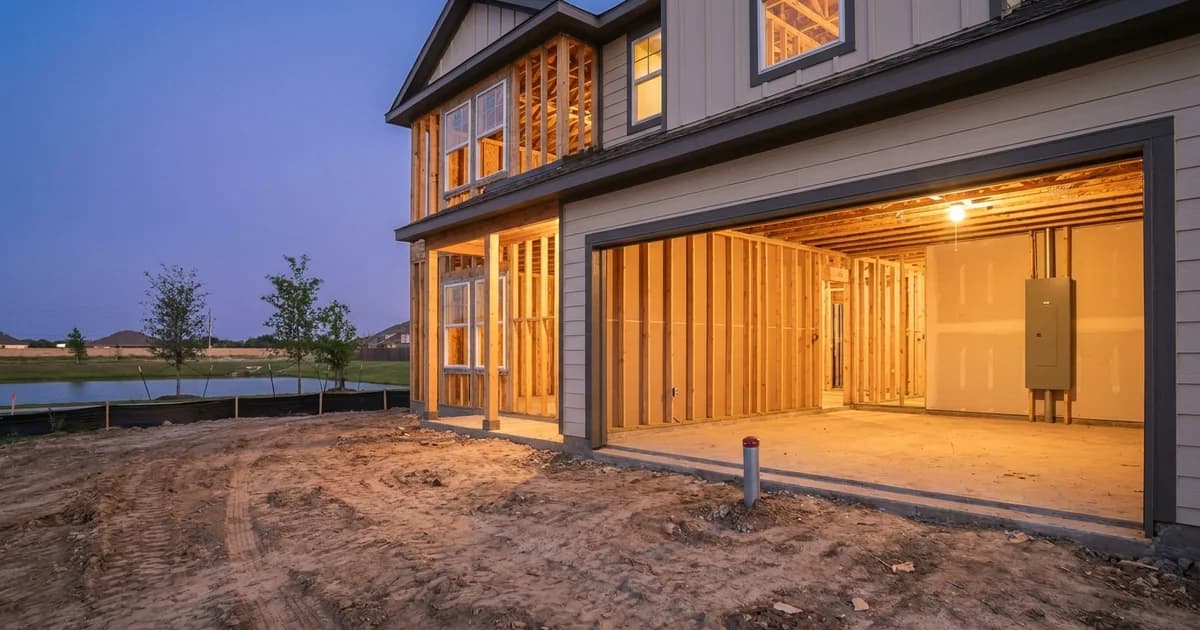
If you are buying a new home in Sienna, or in the Iowa Colony and Rosharon corridor south of it, you have a window most homeowners never get. The walls are open, the electrician is on site, and the cheapest moment to prepare for a battery is now. Sienna is a 10,800-acre master-planned community with roughly 40,000 residents, according to its developer. Iowa Colony went from 1,170 residents in 2010 to 8,154 in 2020, compiled from decennial Census counts.
This guide covers what is verifiably true about these two markets, what the builder should rough in, and how to size a system later. It is a local companion to our general new-construction battery guide.
Key Takeaways
- Sienna spans several Fort Bend MUDs, while Iowa Colony and Rosharon sit in Brazoria County. Your utility can differ by address, so check your bill.
- Under Texas SB 1252, a city cannot regulate the installation or inspection of a home battery up to 100 kWh (TDLR). A licensed electrician and the NEC still apply.
- Ask for a capped conduit stub, panel space and a clear garage wall before drywall. The DOE notes solar-ready design lowers later installation cost.
- Confirm your utility on your own bill. Some Brazoria ZIP codes split between two utilities.
What is actually true about Sienna and Iowa Colony?
Sienna is a Johnson Development community with a Missouri City address, inside Fort Bend ISD. Its developer states that it spans MUD 3, 4, 6, 7, 10 and 12, a former MUD 2, and a "Woods" section with no MUD. Homes start in the $250s and run past $800,000, so you will see everything from compact garages to large custom plans.
Iowa Colony is a different animal. It sits in Brazoria County, along the State Highway 288 corridor, and its Census count grew about sixfold in one decade. The same corridor includes master-planned neighborhoods such as Meridiana and Sterling Lakes. Rosharon sits just south and is mostly unincorporated.
Why does this matter for a battery? Because a growth corridor means new subdivisions, new feeders and builder-set electrical packages. You are rarely retrofitting an old house. You are choosing a spec sheet.
I could not verify the "standard electrical service size" in these builders' plans from any public source, so I am not going to claim one. Ask your builder for the panel schedule in writing.
Who delivers your power: CenterPoint, or someone else?
CenterPoint's own service-center listing places Iowa Colony, Rosharon, Missouri City, Arcola and Pearland in the same service area. That fits Sienna and most of the corridor. But Brazoria County is not uniformly CenterPoint. Texas-New Mexico Power serves a Gulf region that includes Alvin, Angleton and other Brazoria communities, and some ZIP codes are split between the two utilities.
So check your bill, not a map. Your delivery utility decides who you call during an outage and which interconnection steps apply if you add solar later. The battery itself works the same either way.
Hurricane Beryl showed how much the answer matters. In July 2024, Fort Bend County's outage count was 353,292 customers at the peak and 89,160 on July 11, per the county's status report. By July 16, CenterPoint still had 88,000 customers dark, eight days after landfall, according to the Texas Tribune.
Why do new builds here need to think about storms and drainage?
New subdivisions drain through engineered detention. Fort Bend County requires that, after January 1, 2020, slab elevations and drainage infrastructure be based on the NOAA Atlas 14 rainfall study, and the county's 100-year, 24-hour rainfall figure rose from 12.5 to 16.5 inches. That is good news for a lot you are buying in Sienna.
It does not remove the outage risk. Detention protects the slab from water. It does nothing for the overhead lines, the substation or the feeder that serves your street. Flooding and outages are separate problems, and a battery solves only the second.
One practical point follows. A newer slab elevation may put the garage floor a bit higher than older neighborhoods nearby. Mounting height is your installer's call, but raised equipment is a sensible conversation to have if your lot sits near a detention pond.
What should you ask the builder to rough in?
The idea is simple. The U.S. Department of Energy defines a solar-ready home as one built with the same components and design considerations as a home with panels, with the equipment added later. It also notes this reduces installation expense down the road. A battery-ready home borrows the same logic.
Here is the short list I give buyers, before the electrical rough-in inspection:
- A capped conduit stub from the main panel location to the garage wall you pick for the battery.
- Open space in the panel and a labeled spot for a future breaker.
- A clear wall section in the garage, kept free of shelving, water heater or hose bibs.
- A network drop near that wall so the system can report on itself.
- A line on the plans that says "storage ready," so the next buyer or inspector sees it.
Does a builder have to say yes? No. Many production builders limit changes after contract. Ask early, ask in writing, and ask for the cost of the change order. If the answer is no, ask whether you can add the conduit after the framing inspection but before insulation.
Location matters too. Fire-code guidance for one- and two-family homes, as summarized in an NFPA 855 overview, allows an attached garage when it is separated from the living space, and keeps systems out of bedrooms and closets that open into them. Equipment generally needs about three feet of clearance from other equipment and from doors or windows into the dwelling.
How do you size a battery for a new Sienna or Iowa Colony home?
Size by what you want running, not by square footage alone. The Eos Essential plan carries a 9 kWh battery for fridge, Wi-Fi, lights and medical devices. The Plus plan stores 17.52 kWh usable and is built to ride through AC startup. Every Eos plan uses one controller rated at 11.5 kW continuous and 17.1 kW surge.
For a larger Sienna floor plan with two AC units, a pool pump or an EV charger, the choice usually comes down to how much you will shed during an outage. Our 4,000 sqft sizing guide walks through that math, and Missouri City owners can see how the same decision plays out in our Missouri City buyer guide.
For Brazoria buyers, our Alvin and Manvel guide covers the rural feeder problem, and the Pearland cost breakdown is the closest in-county comparison.
One thing I will not give you is a dollar figure from this page. Your quote depends on panel layout, wall location and how many circuits you protect. The planner collects those details and routes you to the right plan.
Will your HOA or MUD block it?
Probably not. Texas Property Code section 202.010 says a property owners' association may not enforce a provision that prohibits or restricts installing a solar energy device, with narrow exceptions. Battery storage is not the same as a rooftop panel, so treat that statute as context, not a guarantee. Your architectural committee may still ask where the equipment sits and how it is screened.
Sienna's community has design review like most master-planned neighborhoods. Submit the location early, and keep it on the garage interior or a side wall away from the street.
MUD boundaries affect your tax bill and water service, not how your battery is installed. For a home battery up to 100 kWh, Texas law since September 1, 2025 bars cities from regulating the installation or inspection, though licensed electrical work under the NEC still applies (TDLR). Your builder's own rules still matter, and your utility's rules are separate.
A realistic order of operations
- Before you sign: ask whether the builder allows a conduit stub and panel space, and in what form.
- At the pre-drywall walk: photograph the stub, the panel and the clear wall. Phones are fine.
- At closing: collect the panel schedule and the as-built electrical notes.
- After move-in: confirm your delivery utility from your bill, then get a plan.
- Before the next storm season: have the system running, not on order.
Prepared homes install faster because nobody is fishing wire through finished walls. That is the whole benefit, and it is the reason this article exists.
Or call Eos at 833-989-3737 to talk through your setup with an installer.
Frequently Asked Questions
Is Sienna in Fort Bend or Brazoria County?
Sienna is in Fort Bend County, with a Missouri City address and Fort Bend ISD schools, according to its developer. Iowa Colony and Rosharon are in Brazoria County. That split can change which utility serves you, so confirm it on your bill before scheduling any electrical work.
Is Iowa Colony really one of the fastest-growing cities?
Its Census count rose from 1,170 in 2010 to 8,154 in 2020, roughly a sixfold increase. I did not verify a current official ranking against Census estimates, so I am not quoting one. The decennial numbers alone show the scale of new construction there.
Does CenterPoint serve all of Brazoria County?
No. CenterPoint lists Iowa Colony and Rosharon in its service area, but Texas-New Mexico Power serves parts of Brazoria County, and some ZIP codes split between utilities. Check your bill.
Can I add a battery after closing if the builder says no?
Yes. Roughing in is cheaper, not mandatory. Without a stub, the installer routes conduit through finished space, which takes more labor. Plan the garage wall early and keep it clear so the later install stays simple.
Do I need solar panels to have a battery?
No. A battery can run on grid power alone and supply your home when the grid fails. If you add panels later, the same stub and panel space make that step easier, a point the DOE's solar-ready guidance makes about builds in general.