Battery Backup for a New-Construction Home in Houston: Plan It During the Build

Battery Backup for a New-Construction Home in Houston: Plan It During the Build
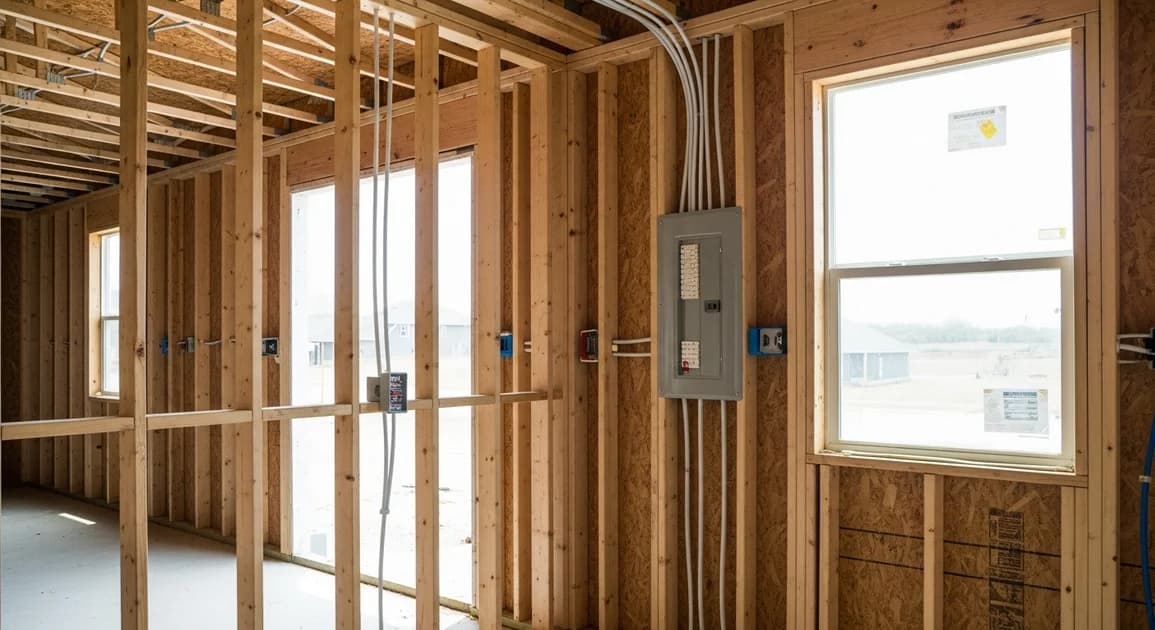
If you are building or buying a new home in Houston, the smartest time to plan for a battery is before the walls close up. Roughing in the wiring, panel space, and mounting location during construction is far easier than cutting into finished drywall later, and it keeps your options open even if you add the battery down the road. The U.S. Department of Energy documents this idea as a solar-ready home, and the same wiring principle makes a home battery-ready. The DOE notes the approach lowers the cost of installing later (DOE, 2026).
Key Takeaways
- Pre-wiring a new home for a battery is a recognized practice. A solar-ready home has the same wiring and panel design as a finished install, with the equipment added later (DOE, 2026).
- Doing it at build time lowers the later installation cost and can add resale appeal (DOE, 2026).
- You can install the battery during the build, or rough in the wiring now and add it later. Both work.
- Houston led all Texas metros with about 35,520 new residential permits in 2025 (HBWeekly, 2026), so this is a common decision here.
- Texas does not require battery-ready wiring, so Houston homeowners do it by choice, unlike states such as California that codify it.
[INTERNAL-LINK: plan a battery-ready new build → /home-backup-planner?source=blog&slug=battery-backup-new-construction-home-houston]
Should you plan a home battery during a new build in Houston?
Yes, because the hard part of any battery install is the wiring, and open framing makes that easy. During construction, the electrician can run conduit, reserve panel space, and mark a mounting spot in minutes, work that becomes a demolition-and-patch project once the home is finished. Even if you are not ready to buy the battery yet, roughing it in costs little and saves a lot later.
It also fits how Houston is growing. With tens of thousands of new homes going up across the metro each year, builders and electricians here are used to these requests. Raising it early is all it takes. A short note to your builder while the plans are still being drawn is usually enough to get the rough-in added to the electrical drawings before any framing starts.
What to have your builder do during construction
The goal is a battery-ready home: the wiring and space are in place so the battery drops in cleanly whenever you want it. Here is the short checklist we give builders.
Why does building it in beat a retrofit?
Because everything is accessible before the drywall goes up. Running conduit through open studs, adding a breaker, and reserving wall space are quick tasks during the electrical rough-in, but the same work in a finished home means opening walls, fishing wire, and patching afterward. The DOE puts it plainly: a solar-ready home lowers the cost of installing later (DOE, 2026).
When we coordinate with a builder's electrician during construction, the battery portion becomes a clean, planned part of the electrical package rather than a surprise later. For how the connection itself works, see our guide on the [INTERNAL-LINK: home battery electrical panel connection → /blog/battery-backup-electrical-panel-connection].
[INTERNAL-LINK: see the modular wall-mounted plans → /plans]
Is battery-ready wiring required, and what does storage-ready mean?
Not in Texas, which is why Houston homeowners do it by choice. Some jurisdictions have made it code: California's 2022 energy standards require solar on new single-family homes and provide a battery-ready pathway with storage of at least 7.5 kWh (California Energy Commission, 2022). Cities like Tucson, Orlando, and St. Louis have adopted solar-ready ordinances (Solar Power World, 2020).
Storage-ready simply means the home is wired and has the panel space and mounting location for a battery, even if the battery is not installed yet. It is the difference between a two-hour install later and a small construction project.
How do you coordinate with your builder and electrician?
Bring it up early, before the electrical rough-in. Share the battery specifications with your builder and their electrician so the conduit, breaker, and mounting location go in with the rest of the wiring. The best window is while the plans are still being finalized, so it is designed in rather than added on.
From there it is just timing. Whether you install the battery at closing or later, the rough-in makes it simple. For the full schedule of an install, see our [INTERNAL-LINK: Houston installation timeline → /blog/home-battery-installation-timeline-houston].
[INTERNAL-LINK: get a home battery quote in under 2 minutes → /home-backup-planner?source=blog&slug=battery-backup-new-construction-home-houston]
Prefer to talk it through? Call Eos at 713-207-2222 for a same-week Houston consultation.
Frequently asked questions
Should I pre-wire for a battery in a new home?
Yes, if a battery is on your radar at all. Roughing in the conduit, breaker, and wall space during construction is cheap and easy, and the DOE notes a solar-ready home lowers the later install cost (DOE, 2026).
Does my builder install the battery?
Usually the builder's electrician handles the rough-in wiring, and a battery installer sets and commissions the system. We coordinate with the builder's team so the two line up cleanly during construction.
Can I add the battery later instead of at build time?
Yes. That is the whole point of roughing it in. With the wiring and space in place, adding the battery later is a quick install rather than a wall-opening project.
Is it cheaper to install at build time?
It lowers the wiring cost, since the work happens in open framing rather than a finished home (DOE, 2026). We keep the exact numbers to your quote rather than a generic figure, because it depends on your plan.
What does storage-ready mean?
It means the home is pre-wired with panel space and a mounting spot for a battery, so the battery can be installed quickly whenever you choose, without new construction work.
This article covers planning a home battery into a new-construction home in Houston and reflects Eos specifications as of July 2026. Texas does not require battery-ready wiring; confirm the details for your plan with your builder and electrician.