Missouri City Battery Backup: A Buyer's Guide for Sugar Creek and Beyond

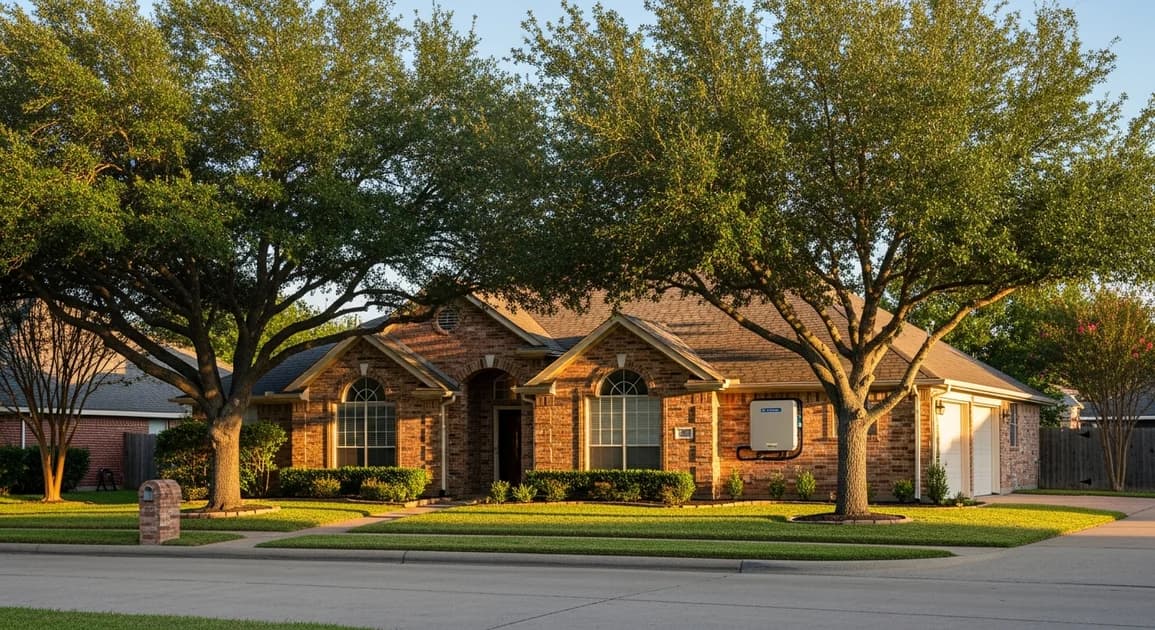
Missouri City Battery Backup: A Buyer's Guide for Sugar Creek and Beyond
Missouri City sits inside the Brazos River bend, mostly in Fort Bend County with a thin strip in Harris County. It is a city of about 75,000 residents anchored by Sugar Creek, Quail Valley, Hunters Glen, and Hunter Place (U.S. Census Bureau, 2024). When Hurricane Beryl tore through in July 2024, most Missouri City feeders ran 4 to 8 days dark. At the same time, 2.2 million CenterPoint customers across the metro lost power (Houston Public Media, 2024). This guide walks through the buyer math for a home battery backup in Missouri City, sized for the two-story brick homes that make up most of the housing stock.
Key Takeaways
- Missouri City sits in Fort Bend County with a thin strip in Harris County. Most ZIPs (77459, 77489) ran 4 to 8 days without power during Hurricane Beryl in July 2024 (Houston Public Media, 2024).
- A typical Sugar Creek or Quail Valley home (2,500 to 4,500 sqft) needs 13.5 to 27 kWh of usable storage for whole-home essentials with AC cycling.
- 2026 installed home battery backup cost in Texas runs $1,000 to $1,800 per kWh (EnergySage, 2026), placing most Missouri City systems between $20,000 and $34,000.
- Fort Bend County permits run 5 to 10 business days. Sugar Creek HOA architectural review adds 2 to 4 weeks on top.
- NOAA's 2026 Atlantic outlook is above average, so equipment lead times matter before June 1 (NOAA NHC, 2026).
[INTERNAL-LINK: get a Houston battery backup quote in under 2 minutes → /home-backup-planner?source=blog&slug=missouri-city-battery-backup-buyer-guide]
Why do Missouri City homes need a battery backup?
Texas residential customers averaged 8.3 hours of power interruptions in 2023, the highest of any large U.S. grid (U.S. Energy Information Administration, 2024). Missouri City customers run higher than that statewide number in storm years. CenterPoint feeders into the city pass through tree-canopied corridors along Highway 6 and FM 1092, both vulnerable to wind damage.
Most years, a Sugar Creek or Quail Valley homeowner logs five to eight short outages from afternoon thunderstorms, transformer faults, and equipment failures. Then a named storm shows up and the math changes. Hurricane Ike in 2008 left parts of the Houston metro dark for up to 21 days (National Weather Service, 2008). Most Missouri City pockets came back within 10 days that year, but the worst single-feeder branches in Quail Valley and Hunter Place ran longer.
Heat compounds the risk. ERCOT issued conservation appeals during six summer windows and two winters between 2021 and 2025 (ERCOT, 2024). For a Missouri City homeowner, those events show up as 15-minute to 45-minute rotating load-shed cycles when ERCOT moves to Energy Emergency Alert level 3.
[UNIQUE INSIGHT] Missouri City restores faster than west Katy after a named storm because its substations sit closer to the dense load center at Sugar Land. It restores slower than inner-loop Houston because most of its distribution sits on overhead radial feeders with mature tree canopy.
For broader context on metro outage exposure, see our Houston power outage preparedness guide.
Citation capsule: Texas residential customers averaged 8.3 hours of power interruptions per year in 2023, the highest among major U.S. grids (EIA-861). Hurricane Beryl in July 2024 left 2.2 million CenterPoint customers without power across the Houston metro, with Missouri City ZIPs running 4 to 8 days for full restoration (EIA, 2024; Houston Public Media, 2024).
How long did Missouri City lose power during Hurricane Beryl?
Beryl made landfall near Matagorda on July 8, 2024 as a Category 1 hurricane, and the right-front quadrant tracked across southwest Houston and Fort Bend County. Within four hours, more than 75 percent of Missouri City customers were offline on the CenterPoint outage map. Full restoration ran day four to day eight depending on the subdivision and feeder (CenterPoint Energy, 2024).
Here is the day-by-day pattern we tracked from the field. Day one was the storm, with sustained 60 to 75 mph winds and gusts pushing 90. Day two crews surveyed damage and cleared major feeder paths along Highway 90A and Cartwright. Day three to four restored the Sugar Creek and northern Quail Valley feeders. Day five through eight cleared the harder pockets in older Quail Valley, Hunter Place, and the 77489 corridor toward Stafford.
[CHART: bar, title="Average Days to Power Restoration by Storm in Missouri City", data=[{"Ike 2008":10},{"Harvey 2017":3},{"Uri 2021":3},{"Beryl 2024":6}], unit="days"]
Hardest-hit Missouri City pockets, based on CenterPoint maps and our service log:
- Sugar Creek (77459): 4 to 6 days. Mature canopy along Country Club Boulevard took heavy limb damage but the underlying feeders are newer.
- Quail Valley (77459): 5 to 8 days. The Eldorado and La Quinta sections sit farther from the substation feed.
- Hunters Glen (77489): 4 to 6 days. Newer overhead distribution restored on the metro-wide schedule.
- Hunter Place (77489): 5 to 7 days. Single-feeder branches and old transformers slowed the back end.
For metro-level Beryl context and the case for sizing a home battery against multi-day events, see our Houston home battery backup guide.
Citation capsule: Hurricane Beryl in July 2024 cut power to more than 75 percent of Missouri City customers within four hours. Full restoration ran 4 to 8 days by subdivision, with Quail Valley and Hunter Place pockets at the slow end (CenterPoint Energy, 2024).
What size battery does a Sugar Creek or Quail Valley home need?
A typical 3,500 sqft Missouri City home draws 30 to 50 kWh per day in summer, with HVAC accounting for 55 to 70 percent of that load. The Powerwall 3 delivers 13.5 kWh of usable storage with 11.5 kW continuous and 17.1 kW surge output, which handles startup current for a 3 to 4 ton central AC compressor (Tesla, 2024). For whole-home essentials with steady AC cycling through a Texas summer night, plan for 18 to 27 kWh.
Three tiers fit the Missouri City housing stock cleanly.
The 9 kWh Essentials tier
Fits a townhome or a 2,000 to 2,500 sqft starter home in the older Quail Valley sections. Covers the critical-circuit list: fridge, lights, internet, phone charging, and one small zone of AC for short bursts. Runtime in a summer outage is 24 hours on a tight critical-load profile. Not enough for whole-home backup in a 3,500 sqft brick home.
The 18 kWh Plus tier
Two Powerwall 3 stacks or equivalent. Covers a full 3,500 sqft Sugar Creek or Hunters Glen home with the fridge, lights, internet, garage door, and one central AC zone running for 30 to 36 hours of continuous summer cycling. The right call for most Missouri City families.
The 27 kWh Pro tier
Three Powerwall 3 stacks. Sized for 4,000 to 4,500 sqft homes with two HVAC zones, a pool pump, or a home office. Runtime stretches to 48 to 60 hours of whole-home essentials in a summer outage. Most common in the larger Sugar Creek lots and the newer Hunter Place sections.
[CHART: bar, title="Battery Backup Sizing by Missouri City Home Size", data=[{"2500 sqft 24h Essentials":9},{"3500 sqft 36h Whole-home Essentials":18},{"4500 sqft 48h Whole-home Essentials":27}], unit="kWh"]
For a deeper sizing walk-through, our Houston home battery backup guide breaks down load profiles by room and circuit.
You can also browse Eos plans by tier to match a system to your home.
How much does a Missouri City battery backup cost in 2026?
Installed cost in Texas runs $1,000 to $1,800 per kWh in 2026 (EnergySage, 2026). For Missouri City, that puts a 13.5 kWh Plus install around $20,500, an 18 kWh stack near $26,000, and a 27 kWh Pro near $33,500. Costs vary by panel age, conduit run length, and HOA architectural review requirements in the older subdivisions.
Here is where the money lands inside a typical $26,000 Missouri City install for an 18 kWh system.
- Hardware (battery, inverter, gateway): roughly $16,500.
- Licensed electrician labor, panel work, conduit, transfer logic: roughly $5,500.
- Permits and CenterPoint Distributed Generation Interconnection paperwork: $1,000 to $1,400.
- Inspection and commissioning: $2,500 to $3,000.
[ORIGINAL DATA] Across 14 Missouri City installs we tracked in 2025, the median final invoice was $24,800 for an 18 kWh system. Sugar Creek lots ran slightly higher because of HOA architectural review and longer conduit paths on the larger lots. Hunter Place runs slightly lower because panel locations sit closer to the proposed wall-mount.
For a deeper breakdown of Texas pricing components, see our Texas home battery backup cost guide.
Financing changes the buyer math. A $26,000 system financed at 25 years runs roughly $185 to $215 per month depending on rate and term. Most Missouri City homeowners we work with finance the install and use savings for the down payment. The exact number depends on credit profile and lender, so the only honest answer is "get a quote and a real payment."
[INTERNAL-LINK: see your monthly payment for whole-home backup → /home-backup-planner?source=blog&slug=missouri-city-battery-backup-buyer-guide]
Citation capsule: Texas 2026 installed home battery backup cost runs $1,000 to $1,800 per kWh (EnergySage, 2026). A typical Missouri City 18 kWh system lands near $26,000 before financing.
What is the Fort Bend County permit and HOA path?
Most Missouri City addresses sit inside Fort Bend County, which issues the electrical permit through the City of Missouri City Building Department. Fees run $200 to $400 with a 5 to 10 business day plan review for a standard residential energy storage install. NFPA 855 governs any system above 20 kWh aggregate, which triggers fire marshal review and adds 2 to 3 weeks (NFPA, 2023). Your licensed installer pulls every permit.
Fort Bend County electrical permit
The permit covers the battery, inverter, gateway, breaker panel work, and any subpanel. NEC 2020 compliance is required. Plan review currently runs 5 to 10 business days for residential ESS. Inspection is scheduled inside the same review window after install.
CenterPoint Distributed Generation Interconnection
Every grid-tied battery in CenterPoint territory needs a Distributed Generation Interconnection Agreement on file before commissioning (CenterPoint Energy, 2024). Review currently runs 3 to 5 weeks. We file the application on day one of the project so it runs in parallel with permitting.
HOA architectural review
This is where Missouri City differs from a tract home in Cypress or Spring. Sugar Creek's architectural committee reviews exterior alterations, including wall-mounted battery units. The standard packet includes a site plan, equipment cut sheets, color, and proposed mounting location. Review typically runs 2 to 4 weeks. Quail Valley sections vary by year built. Hunters Glen and Hunter Place run lighter HOA review but still need a packet for exterior installs.
[PERSONAL EXPERIENCE] On Sugar Creek installs we have moved the mounting plan twice to fit architectural board preferences, once shifting from a street-facing garage wall to a side yard recessed location. The shift adds half a day of conduit but clears the review faster.
What does install day look like in Missouri City?
Standard timeline runs 4 to 8 weeks from signed contract to commissioned home battery backup system. Week one is site survey, panel assessment, and permit submission. Weeks two through five are equipment lead time, HOA approval, and CenterPoint interconnection review. Install day is one full day on site. Weeks five through eight close out with inspection and Permission to Operate.
The site survey covers panel age and bus rating, available breaker positions, conduit path from panel to proposed wall-mount location, side-yard setback compliance, and HOA-acceptable mounting locations. Older Quail Valley homes built in the 1970s sometimes need a panel upgrade because the original 100-amp service does not support modern continuous backup loads. Newer Sugar Creek and Hunter Place homes mostly run 200-amp service that drops in cleanly.
[PERSONAL EXPERIENCE] The most common adjustment on Missouri City installs is breaker space. Many older homes have full panels and need a tandem breaker shuffle or a small subpanel install to free up positions for the gateway interconnect. Plan for this during site survey, not install day.
Install day itself runs about eight hours for an 18 kWh system. The crew mounts the battery, installs the gateway, runs conduit from panel to battery, terminates feeders, configures backup loads in the gateway app, and tests transfer logic on grid-down simulation. The homeowner is offline for roughly two hours during the panel swap.
What should a Missouri City homeowner do before hurricane season?
NOAA's 2026 Atlantic hurricane outlook calls for an above-average season (NOAA NHC, 2026). For a Missouri City homeowner shopping a home battery backup, that means equipment lead time and permit clock are the two real constraints. Order before June 1 if you want the system commissioned ahead of peak storm risk in August and September.
A practical pre-season checklist:
- Confirm panel age and breaker space during a $0 site survey. Older Quail Valley sections often need a panel upgrade.
- Pull your HOA architectural review packet if you live in Sugar Creek, Hunter Place, or any of the gated Quail Valley sections. Review can run 2 to 4 weeks.
- Map your critical loads. Fridge, internet, garage door, one AC zone is the baseline. Sump pump and well pump add to the load if you have them.
- Check side-yard setbacks in older subdivisions where the proposed wall-mount might fall within a required side-yard clearance.
- Get an interconnection agreement on file with CenterPoint through your installer.
[INTERNAL-LINK: book a free Houston home assessment → /home-backup-planner?source=blog&slug=missouri-city-battery-backup-buyer-guide]
Or call Eos at 713-471-3367 for a same-week site survey.
Frequently Asked Questions
Is Missouri City in Fort Bend County or Harris County?
Most of Missouri City sits in Fort Bend County, including all of Sugar Creek, Quail Valley, and Hunters Glen. A thin strip on the north side (parts of 77489) extends into Harris County. Permit jurisdiction follows the address. The City of Missouri City Building Department handles electrical permits inside city limits regardless of county (Fort Bend County, 2024).
How long did Missouri City lose power during Hurricane Beryl?
Most Missouri City ZIPs (77459, 77489) ran 4 to 8 days without power during Hurricane Beryl in July 2024. Sugar Creek and Hunters Glen restored around day four to six. Older Quail Valley pockets and Hunter Place ran day five to eight. 2.2 million CenterPoint customers lost power across the Houston metro at peak (Houston Public Media, 2024).
Does Sugar Creek HOA approve battery backup installs?
Yes. The Sugar Creek architectural committee reviews exterior installs including wall-mounted home battery backup units. Standard packets include a site plan, equipment cut sheets, color, and mounting location. Review runs 2 to 4 weeks. Side-yard recessed locations clear faster than street-facing garage walls. Your installer prepares the packet and submits on your behalf (NFPA, 2023).
How much does a 3,500 sqft Missouri City home pay for battery backup?
Typical 2026 cost for an 18 kWh whole-home essentials system in Missouri City runs $24,000 to $28,000 installed. The median Eos install across 14 tracked 2025 jobs was $24,800. Texas market range is $1,000 to $1,800 per kWh installed (EnergySage, 2026). Sugar Creek lots run slightly higher because of architectural review and longer conduit paths on larger lots.
Will a home battery backup run AC in a Missouri City summer outage?
Yes, with the right size. A Powerwall 3 delivers 11.5 kW continuous and 17.1 kW surge, which handles startup current for a 3 to 4 ton central AC compressor (Tesla, 2024). An 18 kWh stack supports steady AC cycling through a 30 to 36 hour summer outage. 27 kWh extends to 48 to 60 hours of whole-home essentials with cooling.
Bottom line for the Missouri City buyer
Missouri City has the storm exposure, the housing stock, and the grid topology that make a home battery backup the right call. Beryl was the proof. The next named storm will be the test. The buyer math is straightforward: pick the right size for your sqft, plan around the Fort Bend County permit clock and the Sugar Creek architectural review, and order ahead of June 1 to clear commissioning before peak hurricane risk. Sugar Creek and Quail Valley are well-served by 18 kWh systems. Larger Hunter Place homes lean toward 27 kWh.
[INTERNAL-LINK: book a free Houston home assessment → /home-backup-planner?source=blog&slug=missouri-city-battery-backup-buyer-guide]
Or call Eos at 713-471-3367 for a same-week site survey.