Waller, Hockley and Brookshire Battery Backup: The I-10 and US-290 Exurban Belt

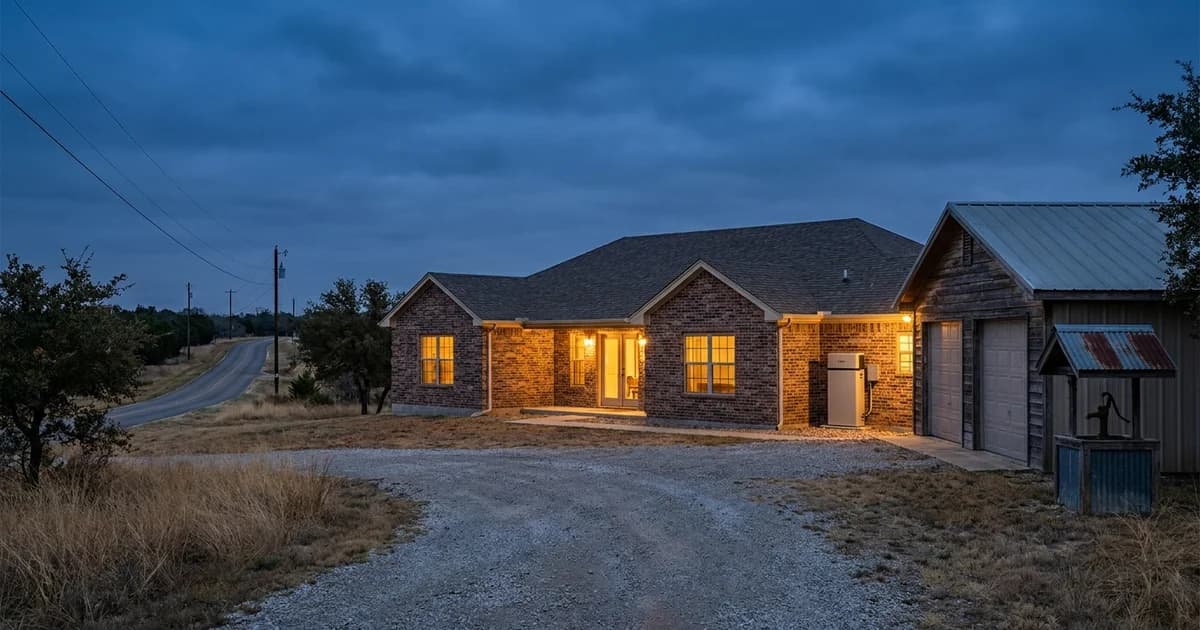
If you live out past the Grand Parkway on the I-10 or US-290 side, an outage doesn't just mean the lights go off. The well pump stops, the septic aerator stops, and the nearest crew may be coming from a long way off. This guide covers Waller, Hockley and Brookshire: who actually delivers your power, what acreage adds to your load, and how to size a home battery for it.
One thing up front: your town name doesn't reliably tell you your utility. We'll show you how to check by address.
Key Takeaways
- Waller County grew from 56,750 people in April 2020 to an estimated 65,109 in July 2024, about 14.7% (U.S. Census Bureau QuickFacts).
- Not every home here is on the same utility. San Bernard Electric Cooperative serves parts of Waller and Harris counties.
- Wells and septic turn a short outage into a household problem. Size the battery around them.
- Since September 1, 2025, Texas cities can't regulate the installation or inspection of home batteries up to 100 kWh (TDLR).
Why Is This Corner of the Houston Area Different?
Because it's growing fast and still mostly rural infrastructure. The Census Bureau's estimate puts Waller County at 65,109 residents in mid-2024, up from the 56,750 counted at the April 2020 base (U.S. Census Bureau QuickFacts). New subdivisions are landing next to cattle pasture and pecan orchards.
That mix matters for outages. Newer neighborhoods sit at the end of long feeders. Older acreage homes often depend on a private well and a septic system. Both are exposed when a line goes down.
A quick geography check helps. The Waller County seat is Hempstead, not Brookshire or Waller (Greater Houston Flood Mitigation Consortium). Brookshire and Waller are separate towns on the US-290 corridor, and Hockley sits on the same highway nearer the Harris County line, which puts it closer to our Tomball coverage than to Hempstead.
Who Delivers Your Power Out Here?
It depends on your exact address. CenterPoint Energy Houston Electric delivers power across much of the Houston region, but San Bernard Electric Cooperative serves roughly 34,000 meters across eight counties, including Waller, Harris and Montgomery. A cooperative serves its members directly, so your retail plan choices work differently there.
We couldn't find a public, town-by-town list that says "Brookshire is CenterPoint" or "Hockley is the co-op," and ZIP codes don't follow service lines. So don't trust a ZIP lookup. Check your bill, call the utility named on it, or use the state utility regulator's service territory map.
Why does this matter for a battery? Because your outage reports, restoration updates and the paperwork to connect a system all go through whoever owns the poles at your address. Ask them before you buy. Utility interconnection is a separate step from anything the state or your city requires.
How Long Do Outages Last Out Here?
Long enough to plan for, and the worst ones are regional. When Hurricane Beryl hit on July 8, 2024, nearly 3 million Texas customers lost power. CenterPoint projected 98% restored by July 17, with roughly 45,000 customers still uncertain after that (Texas Tribune).
That was a coastal-heavy event. Waller County's own track record is different, and we don't have a published, address-level outage history for Waller, Hockley or Brookshire that we can honestly cite. That data isn't publicly available in a form we trust, so we won't make up a number.
What we can say is simple. A rural feeder with fewer customers per mile often gets worked after dense areas during a big storm. If you're on acreage, plan for the multi-day case, not the two-hour flicker.
What Does a Well and Septic Add to Your Outage Plan?
A private well needs power to deliver a single glass of water, and many septic systems need it to treat waste. The Texas A&M extension guide on onsite wastewater systems during outages says aerobic systems hold reserve capacity of only one-third of the daily design flow, about 80 gallons for a three-bedroom home. Once that's used, it says to stop all water use if the outage runs long.
That's the sleeper problem on acreage. You might have food in a cooler and a fan running, but with the pump off, showers and flushing are limited fast. Texas A&M also advises limiting use to essentials like toilet flushing and handwashing during an outage.
Emergency planners suggest storing at least one gallon of water per person per day for several days (Ready.gov). That covers drinking and basic sanitation. It doesn't cover livestock, a garden or a family that wants to bathe.
So what do you do? Put the well pump and the septic aerator on the protected circuits. We cover pump sizing in more detail in our well pump and water system guide.
What the battery has to handle
A submersible or jet pump pulls a hard surge when it starts. Every Eos residential system uses a controller rated for 11.5 kW continuous and 17.1 kW surge, which is built for motor starts like a well pump or an AC compressor. The capacity side scales by module count.
| Plan | Nominal capacity | Best fit on acreage |
|---|---|---|
| Essential | 9 kWh | Fridge, Wi-Fi, lights, a well pump used sparingly |
| Plus | 18 kWh | Critical loads plus a day of comfort and regular water |
| Pro | 27 kWh | Multi-day outages with AC cycling and a full well and septic load |
Runtime depends on what you run, and summer AC is the biggest swing. Our plan pages list the runtime ranges for each size, and the planner builds the estimate around your own appliances.
Do You Need a City Permit for a Home Battery Here?
Not a city permit for the battery itself. This changed recently, and plenty of older advice online is out of date.
Texas SB 1252 took effect on September 1, 2025. It bars a municipality from adopting or enforcing an NEC amendment or any local ordinance that regulates the installation or inspection of a "residential energy backup system," meaning one providing no more than 50 kW or storing no more than 100 kWh (TDLR). Every Eos residential plan sits under that 100 kWh line.
Three things haven't changed, per the same TDLR notice. Electrical work still has to follow Texas Occupations Code chapter 1305 and the National Electrical Code, and it still has to be done by licensed Texas electrical contractors. Municipally owned utilities can still regulate inside their own service areas. And connecting to your utility is its own process.
Much of the I-10 and US-290 belt is unincorporated or rural anyway. Other rules still apply on your lot: HOA and deed restrictions, flood-zone placement and where you mount the equipment. We'll check each of those with you rather than assume.
Does Flood Risk Change Where the Battery Goes?
Yes, it can. Waller County has a documented flooding history: the Texas General Land Office approved $9.3 million in flood mitigation projects for Hempstead drainage after repeated storm damage in 2015, 2016 and Hurricane Harvey in 2017 (Greater Houston Flood Mitigation Consortium).
If your property has flooded or sits low, mounting height matters more than anything else. A garage wall or a raised exterior wall keeps the battery and controller above likely water. We'll look at your site photos during the planning process.
How Is This Different From Tomball or Angleton?
Tomball is suburban and tree-lined, with a mix of city and county jurisdiction questions, which we cover in our Tomball guide. Angleton and West Columbia sit in Brazoria County, on a different set of feeders, covered in the Angleton and West Columbia guide.
The Waller, Hockley and Brookshire belt sits between them. It has acreage like rural Brazoria, new subdivisions like northwest Harris, and a split of utilities you won't find in most of Cypress or Katy. If you're closer to the Cypress side, see our Cypress battery backup vs generator comparison and our Cypress service page.
How to Plan Your Backup in Four Steps
- Confirm your utility. Read your bill and check the territory map for your address.
- List what must stay on. Fridge, well pump, septic aerator, medical equipment, internet, a window of AC.
- Decide how many days you want to cover. One day, or the multi-day storm case.
- Get a site-specific plan. Photos of your panel and a proposed battery wall are enough to start.
Or call Eos at 833-989-3737 to talk through your setup with an installer.
For general Houston-area coverage, see our Houston service page.
Frequently Asked Questions
Is my home in Waller, Hockley or Brookshire served by CenterPoint?
Possibly, but not always. CenterPoint delivers power across much of the region, and San Bernard Electric Cooperative serves parts of Waller and Harris counties. Town names and ZIP codes don't follow service lines. Check your bill or ask the utility named on it.
Can a home battery run a well pump?
Generally yes, if the controller can handle the starting surge. Eos systems provide 11.5 kW continuous and 17.1 kW surge. Pump size and start-up draw vary, so we confirm yours during planning. Our well pump guide explains the numbers.
Do I need a permit from the city to install one?
Not from a city, for systems up to 100 kWh. Texas SB 1252, effective September 1, 2025, prohibits municipalities from regulating their installation or inspection (TDLR). Licensed contractors and your utility's interconnection process still apply.
What happens to my septic system in an outage?
If it's an aerobic system with electric components, reserve capacity is limited. Texas A&M advises limiting water use to essentials and stopping use if the outage is extended (Texas A&M AgriLife Extension). A battery on the aerator circuit avoids the problem.
Which Eos plan fits an acreage home?
It depends on your loads and how many days you want to cover. Plus is a common starting point for a day of coverage with a well and septic, while larger homes with heavy AC use look at Pro. The planner narrows it down in a few minutes.