Sunrun Brightbox vs Sigenergy: Lease or Own in Houston

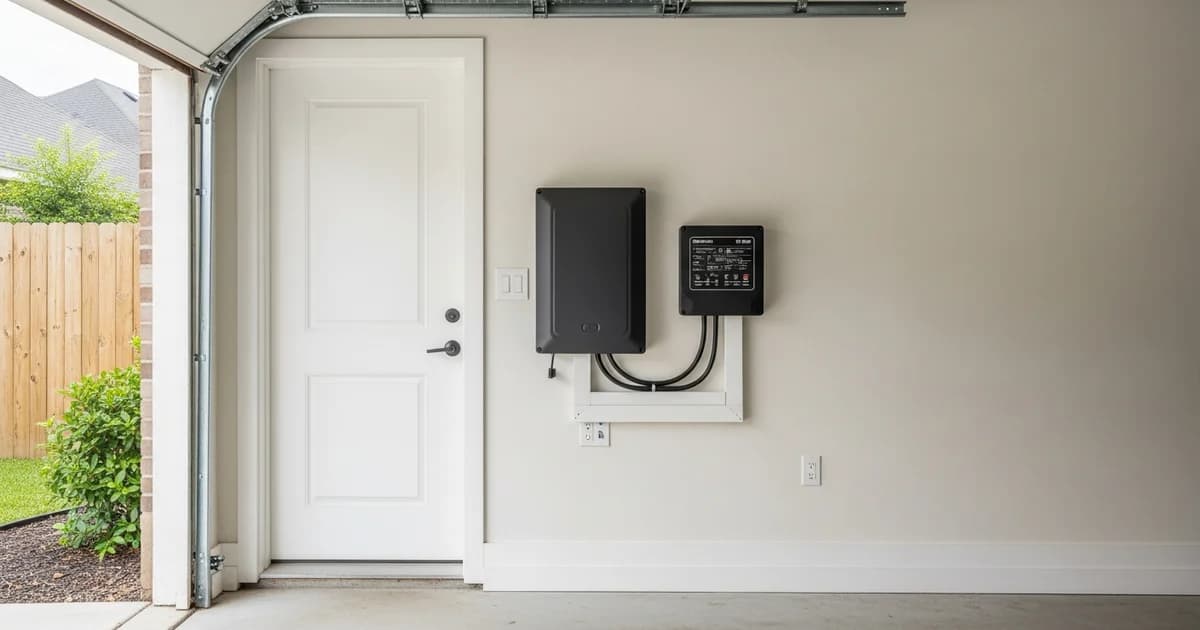
A Sunrun Brightbox can start near $0 down. That is exactly why the real cost is so hard to see. When Hurricane Beryl knocked out power to about 2.2 million Houston customers in July 2024 (Houston Public Media, 2024), a lot of homeowners stopped asking "do I need backup" and started shopping. Many got sold a low monthly payment and a long warranty. What the sales offer rarely spells out: you will not own the battery, and that changes what happens when you sell. This is an honest, five-axis comparison of leasing a Brightbox versus owning a Sigenergy system, with the Houston context that actually matters.
Key Takeaways
- A Sunrun Brightbox is typically leased or bundled into a power purchase agreement, so you pay a locked monthly fee and never own the hardware (EnergySage, 2026).
- A Sigenergy SigenStor is bought outright, so you own the asset, can expand it, and sell your home without a contract to transfer.
- A full Sunrun solar-plus-battery subscription commonly runs $150 to $250 a month at $0 down (Green Energy Calc, 2026).
- Leasing lowers upfront friction; ownership wins lifetime value and a cleaner resale.
[INTERNAL-LINK: get a Houston battery backup quote in under 2 minutes → /home-backup-planner?source=blog&slug=sunrun-brightbox-vs-sigenergy-houston]
Sunrun Brightbox vs Sigenergy: the one difference that drives everything
The Brightbox is usually leased or bundled into a power purchase agreement, while a Sigenergy SigenStor is bought and owned (EnergySage, 2026). Every other difference, cost, control, and resale, flows from that single fact. The Brightbox is Sunrun's battery offer, most often paired with solar and delivered as a long-term service contract. The SigenStor is a modular, owned 5-in-1 system that combines battery and hybrid inverter in one cabinet.
One disclosure, up front: Sigenergy is the primary product line Eos installs in the Houston metro. I am naming that once so you can weight everything below accordingly. The specs and figures here come from public manufacturer and industry sources, not a sales script.
So why does ownership versus rental matter more than any kWh number? Because it decides who controls the hardware, who keeps the value, and what you hand to a buyer at closing.
| Model-level comparison | Sunrun Brightbox | Sigenergy SigenStor |
|---|---|---|
| Ownership | Sunrun owns it (lease/PPA) | You own it |
| Upfront cost | Often near $0 down | One-time purchase |
| Monthly obligation | Locked, 20 to 25 years | None after payoff |
| Contract length | 20 to 25 years | No contract |
| Who maintains it | Sunrun, for the term | You (warranty-backed) |
| Expandable | Limited by contract | Modular, stackable |
| Transfers at home sale | Buyer must qualify and assume | Conveys with the house |
Citation capsule. A Sunrun Brightbox is typically leased or sold under a power purchase agreement, so Sunrun owns the hardware, while a Sigenergy SigenStor is purchased and owned by the homeowner (EnergySage, 2026). That ownership split drives every downstream difference in cost, control, and resale.
[UNIQUE INSIGHT] Most "Sunrun vs X" articles compare panels and warranties. The decision that actually changes your finances is simpler: you rent the Brightbox, you own the Sigenergy.
Upfront cost: $0 down vs buying the asset
Leasing a Brightbox can start near $0 down with a locked monthly payment, while owning a Sigenergy system is a one-time purchase you finance, pay cash for, or cover with a monthly loan payment. Adding a battery to a Sunrun lease typically raises the monthly payment by about $30 to $60 (EnergySage, 2026). A full solar-plus-battery subscription commonly runs $150 to $250 a month at $0 down (Green Energy Calc, 2026).
The appeal of $0 down is real. No large check, no financing application, a predictable line on the bill. For a household with no cash to put down and no appetite for a loan, that lowers the barrier to getting backup at all. I will not pretend that is nothing. It is genuinely useful.
The counterpoint is just as plain: the monthly payment never stops for the lease term. With ownership, the cost is fixed. An Eos Sigenergy build is sized to your home and priced as a single purchase across our plan tiers, from Essential 9 kWh up to Ultimate 45 kWh, available as cash or a monthly loan payment. An outright Brightbox purchase, where Sunrun offers it, is commonly cited around $10,000 to $15,000 installed (EnergySage, 2024).
[INTERNAL-LINK: compare owned Eos battery plans from 9 to 45 kWh → /plans]
Who owns the battery, and why it matters
On a Sunrun lease or PPA, Sunrun owns the hardware and you pay for access or for the power it produces; with Sigenergy, you own it outright the day it is commissioned. Sunrun covers a leased battery for up to 25 years and replaces it at no cost during the term (Sunrun, 2026). That coverage is a real benefit for a hands-off homeowner who never wants to think about a failed component.
Ownership unlocks a different set of things. You control the system settings. You keep any value the asset adds to your home. There is no third party holding an interest tied to your property. Nobody else's contract sits between you and the equipment bolted to your wall.
Here is the trade plainly. The lease hands you maintenance coverage and replacement for the term, which has genuine value. In exchange, you give up control and the asset itself. Ownership hands you control and the asset, in exchange for being responsible for it, backed by the manufacturer warranty. Neither is a trick. They are two different deals.
[PERSONAL EXPERIENCE] In Houston homes Eos has worked in, the owners who are happiest with a lease are the ones who truly never want to touch the system and expect to stay put for decades. The friction shows up later, when life changes.
Citation capsule. On a Sunrun lease or power purchase agreement, Sunrun owns the battery and covers it for up to 25 years with no-cost replacement, while a Sigenergy SigenStor is owned by the homeowner from the day it is commissioned (Sunrun, 2026). Coverage is convenience; ownership is control.
[INTERNAL-LINK: check if your home qualifies for a 9 to 45 kWh system → /home-backup-planner?source=blog&slug=sunrun-brightbox-vs-sigenergy-houston]
Long-term economics: the 20-year picture
Over a 20 to 25 year horizon, a stream of locked lease payments typically totals more than the one-time cost of owning a comparable system. The reason is structural: every month, you are paying for hardware, maintenance, financing, and the leasing company's margin. Many leases also carry an annual escalator, so the payment climbs over time. An owned system's cost is fixed the moment it is paid off.
Run the simple version. A $200 monthly subscription over 20 years is $48,000 before any escalator. Add a common 2 to 3 percent yearly increase and the total climbs higher. An owned system stops costing money once the loan or cash purchase is done. The hardware keeps working, but the payments stop.
There is also the buyout. If you want out of a Sunrun agreement, early termination or payoff figures are commonly cited at $15,000 to $25,000 or more (Solar.com, 2025). That is the number that surprises people, because it shows what the "free" entry was really worth.
[INTERNAL-LINK: see your monthly payment for whole-home backup → /home-backup-planner?source=blog&slug=sunrun-brightbox-vs-sigenergy-houston]
Control and expandability
A Sigenergy SigenStor is modular and scales from roughly 6 kWh up to 48 to 54 kWh by stacking 6 kWh and 9 kWh modules, while a leased Brightbox is whatever Sunrun installed under the contract you signed (Sigenergy, 2026). The SigenStor inverter is software-configurable across roughly 3.8 to 11.5 kW in a single 5-in-1 cabinet, with a 10-year inverter warranty (vpsolar, 2026).
Why does that matter in Houston specifically? Loads grow here. People add an EV, swap in a heat pump, set up a home office, or simply run more AC as summers stretch longer. With an owned modular system, adding capacity later means opening the cabinet and stacking another module. No new contract.
With a lease, changing the system usually means renegotiating or re-contracting. You are locked into the size Sunrun installed when you signed. If your needs grow, the hand-holding that felt convenient on day one becomes a constraint.
[UNIQUE INSIGHT] The lease's "free replacement and maintenance" benefit is real, but it is priced into the monthly payment and the escalator, and it disappears the moment you want to expand capacity or move the equipment.
Citation capsule. A Sigenergy SigenStor is modular, scaling from about 6 kWh to 48 to 54 kWh with stackable 6 kWh and 9 kWh modules and a software-configurable 3.8 to 11.5 kW inverter, while a leased Sunrun Brightbox stays fixed at the size installed under contract (Sigenergy, vpsolar, 2026).
[INTERNAL-LINK: how the top Texas home battery brands compare → /blog/best-home-battery-brands-texas]
Contract end and home sale: the part the sales offer skips
When you sell a Houston home with a leased Sunrun system, the buyer usually has to qualify and agree to assume the lease, or you pay it off at closing; an owned Sigenergy system simply conveys with the house like any other fixture. Leased solar is a frequent sticking point in home sales, and buyers must qualify to assume the contract (Yahoo Finance, 2025).
Picture the closing table. Your buyer loves the house. Then their lender flags a 25-year energy contract they have to take over. Now the buyer has to qualify with Sunrun, agree to a payment they did not choose, and accept an escalator into the 2040s. Some buyers walk. Others use it as leverage to drop your price.
The buyout is the other lever. If assumption stalls, you can pay the contract off at closing, but that figure is commonly $15,000 to $25,000 or more (Solar.com, 2025). That cost lands right when you are trying to net the most from your sale.
[PERSONAL EXPERIENCE] Eos has seen Houston-area sellers carrying a leased solar-plus-battery agreement run into exactly this. A buyer balks at assuming the contract, and what was a clean sale turns into a negotiation about who eats the payoff. This is installer observation, not legal advice. Read your specific contract, because terms vary.
An owned system avoids the whole conversation. The SigenStor is a fixture. It conveys with the house, adds to what you are selling, and there is no third party to qualify or pay off.
Citation capsule. Selling a Houston home with a leased Sunrun system usually requires the buyer to qualify and assume the contract or the seller to pay it off at closing, with early termination commonly cited at $15,000 to $25,000 or more, while an owned Sigenergy system conveys with the house (Yahoo Finance, Solar.com, 2025).
Which should a Houston homeowner choose?
Lease a Brightbox if your priority is the lowest possible upfront cost and a fully hands-off, maintained system, and you expect to stay put. Own a Sigenergy system if you want the lowest lifetime cost, full control, room to expand, and a clean resale. That is the honest split, and it is not the same answer for everyone.
Short-stay or zero-cash households lean toward the lease. If you have no money to put down, do not want a loan, and plan to be gone in a few years anyway, the lease's $0-down entry and maintenance coverage can fit. Long-hold, equity-minded, expansion-minded households lean toward ownership. If you are staying, want the lifetime math in your favor, and might grow the system, owning wins.
With ERCOT volatility and hurricane season, both options keep the lights on. A Brightbox and a SigenStor both deliver home battery backup when CenterPoint goes dark. The difference is not whether the lights stay on. It is who owns the thing keeping them on.
[INTERNAL-LINK: book a free Houston home assessment → /home-backup-planner?source=blog&slug=sunrun-brightbox-vs-sigenergy-houston]
Call (833) 989-3737 to talk through lease versus ownership with a Houston installer.
FAQ
Is the Sunrun Brightbox a lease or do you own it?
The Brightbox is typically leased or delivered under a power purchase agreement, so Sunrun owns the hardware and you pay a monthly fee. Outright purchase is offered but promoted less often, commonly cited around $10,000 to $15,000 installed (EnergySage, 2026).
What happens to my Sunrun lease if I sell my Houston home?
The buyer usually has to qualify and agree to assume the lease, or you pay it off at closing. Leased solar is a known sticking point in home sales, and early payoff is commonly $15,000 to $25,000 or more (Solar.com, 2025). Read your specific contract.
Is it cheaper to lease a Brightbox or own a battery?
Leasing wins on upfront cost, often near $0 down. Ownership usually wins over 20 or more years, because lease payments continue with an escalator while an owned system's cost is fixed once paid (Green Energy Calc, 2026). It depends on how long you stay.
Can I expand a Sunrun Brightbox later?
Expansion is limited by your contract; the Brightbox is whatever Sunrun installed when you signed. A modular Sigenergy SigenStor is designed to scale from roughly 6 kWh to 48 to 54 kWh by stacking modules in one cabinet (Sigenergy, 2026), so an owned system grows with your loads.
Does Sunrun cover repairs on a leased Brightbox?
Yes. The lease or power purchase agreement includes maintenance and replacement for the term, up to 25 years (Sunrun, 2026). That coverage is a genuine benefit, but it is priced into your monthly payment and the escalator, not free.
The bottom line
Leasing a Sunrun Brightbox lowers the barrier to entry and offloads maintenance, which is real value for a hands-off household that plans to stay put. Owning a Sigenergy system costs more upfront and puts maintenance on you, but it wins lifetime value, control, expandability, and a clean resale. The lease is convenience you rent. Ownership is an asset you keep.
If you want the ownership path priced for your Houston home, see how the math works for your address.
[INTERNAL-LINK: get a Houston ownership quote in under 2 minutes → /home-backup-planner?source=blog&slug=sunrun-brightbox-vs-sigenergy-houston]
For a spec-for-spec look at the owned option, read our [INTERNAL-LINK: FranklinWH vs Sigenergy comparison → /blog/franklinwh-vs-sigenergy-texas-comparison].