Bluetti AC500 vs Whole-Home Battery in Texas

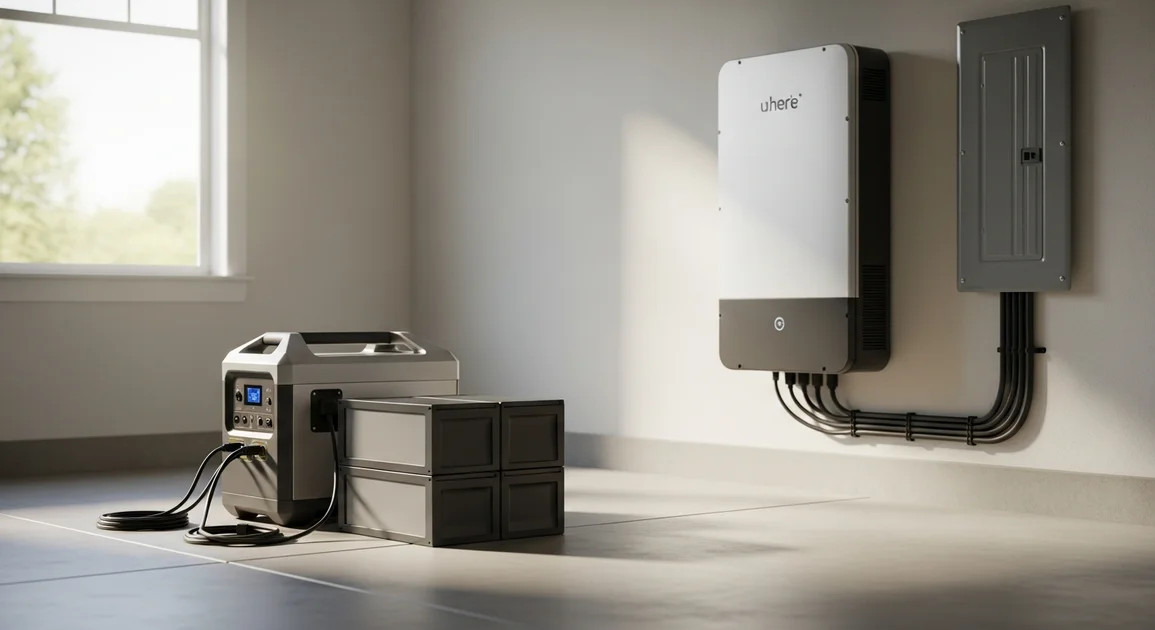
A single Bluetti AC500 can hit roughly 16.5 kWh of capacity, close to a mid-tier whole-home battery (Bluetti, 2026). So why isn't it a whole-home solution? Because the spec sheet hides the two things that matter most in a real Texas outage.
Most shoppers see a big number and assume a big portable equals whole-home backup. It doesn't. Capacity is only one axis, and not the deciding one. This is an honest, axis-by-axis comparison so you pick the right tool for your situation, whether that's renting, RVing, partial backup, or true multi-day outage resilience.
TL;DR: The Bluetti AC500 is a 5,000W modular portable station that expands to about 16.5 kWh with B300K packs and plugs in by hand. A whole-home battery hardwires to your panel, switches on automatically in milliseconds, and scales from 9 to 45 kWh. Portable wins for renters, RVers, and partial backup. Whole-home wins for hands-free, multi-day outage resilience in Texas.
[INTERNAL-LINK: get a Houston battery backup quote in under 2 minutes -> /home-backup-planner?source=blog&slug=bluetti-ac500-vs-whole-home-battery-texas]
What Is the Bluetti AC500 and What Can It Run?
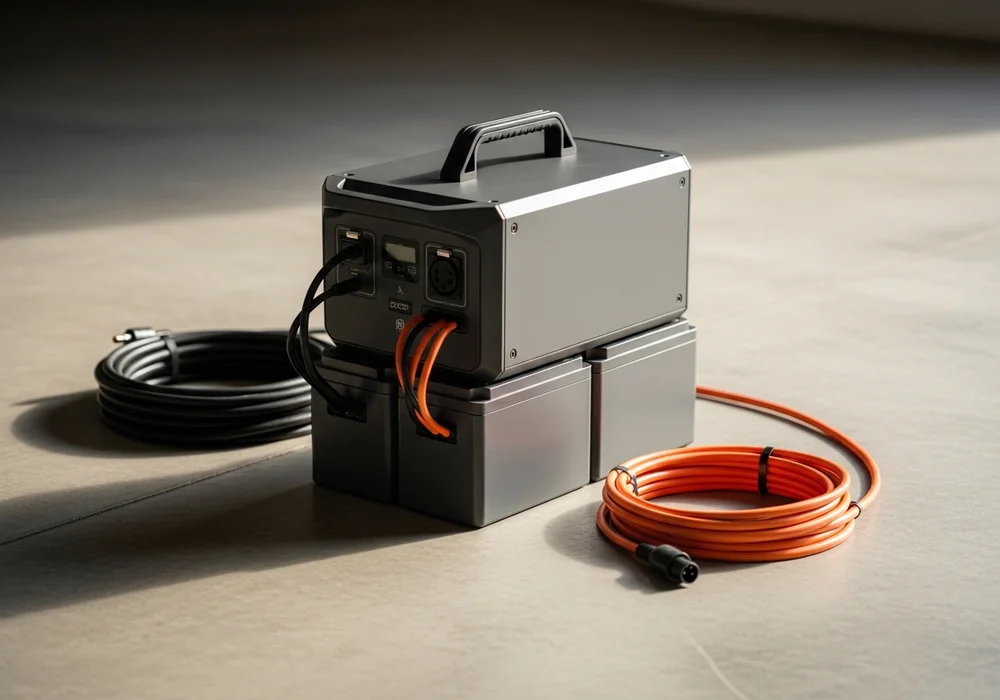
The AC500 is a 5,000W modular portable power station, 10,000W surge, that needs at least one B300K pack to work. Each B300K adds 3,072Wh, and a single AC500 expands to about 16.5 kWh (Bluetti, 2026). It uses LFP chemistry rated for 3,000+ charge cycles, which holds up well in Texas heat.
On a practical level, the AC500 runs the things you carry power to. Think fridge, lights, ceiling fans, a window AC unit, phones, laptops, a CPAP, and a router. You plug devices into its outlets, or wire it to a manual transfer interlock if you want it feeding a few circuits.
The Bluetti AC500 is a 5,000W modular portable station, not a panel-tied system. With one B300K it expands to roughly 16.5 kWh, enough to keep essentials alive but not a central air conditioner (Bluetti, 2026). That single distinction shapes everything else in this comparison.
What it cannot do is quietly run your whole house. Central HVAC, an electric water heater, and a full panel of 240V loads sit outside what a single portable unit handles. It's a strong essentials box, not a house.
What Does a Whole-Home Battery Do Differently?
A whole-home battery hardwires to your electrical panel, detects an outage, and switches your home to battery power automatically in milliseconds. No cords, no manual steps, nothing to carry. You don't even have to be home for it to work.
That hardwired tie means it can run the panel itself, including 240V loads and central air within your sizing. It scales in tiers, from a 9 kWh Essential setup up through Plus at 18 kWh, Pro at 27 kWh, Premium at 36 kWh, and Ultimate at 45 kWh. The install is permitted and inspected, so it's a fixed part of the home.
A whole-home battery transfers automatically and runs your electrical panel, scaling from 9 to 45 kWh in named tiers (Eos plans, 2026). Because it's sized to your actual load profile, it isn't guessing at what you'll plug in during an outage. It already knows.
The trade is permanence. You can't take it camping, and you can't pack it into a moving truck. For a homeowner staying put, that permanence is the entire point.
[INTERNAL-LINK: compare whole-home battery tiers -> /plans]
Automatic vs Manual: Who Flips the Switch?
This is the real dividing line, and most comparison pages skip it. With the AC500, you are the transfer switch. You carry it out, plug in each device or throw a manual interlock, and reverse all of that when the grid comes back. A whole-home system does every step on its own.
Our finding: Across Eos site surveys, the homeowners who already own a portable unit almost never complain about its capacity. They complain about the 3 a.m. scramble: waking up to a dead fridge, hunting for cords in the dark, and deciding which device gets power first. The pain point is operation, not kilowatt-hours.
Picture a Houston outage at 3 a.m. With a portable, someone has to wake up, get the unit out, and start plugging things in by feel. If a medical device like a CPAP or an oxygen concentrator is running, that gap is not theoretical. A whole-home battery covers the transition before anyone notices the lights flickered.
The capacity numbers can look similar on paper. The experience of using them is not. One asks you to manage power during the worst moments of an outage. The other asks nothing at all.
Capacity and Runtime: How Long Does Each Last?
A single AC500 plus B300K stack tops out near 16.5 kWh, which covers essentials for roughly a day or two before it drains. A whole-home battery scales to 45 kWh and is sized to your real load (Bluetti, 2026). You can push the portable further: a dual AC500 setup with up to 12 B300K packs reaches 240V output and about 33 kWh, but that's a lot of stacked hardware to manage by hand.
Here's the part the spec sheet won't tell you: the recharge gap. Without solar feeding it, once a portable unit is empty, it stays empty until the grid returns. In our Houston install region, the outages that actually hurt are the long ones. Hurricane Beryl in July 2024 and the February 2021 winter storm both left many homes dark for days, long enough that a single AC500 running essentials would empty out well before power came back.
A single AC500 covers essentials for a day or two without recharge, while a whole-home system scales to 45 kWh and refills from the grid or solar automatically (Bluetti, 2026). In a multi-day Texas event, that difference is the gap between a backup that runs out and one that keeps going.
[INTERNAL-LINK: check if your home qualifies for a 9 to 45 kWh system -> /home-backup-planner?source=blog&slug=bluetti-ac500-vs-whole-home-battery-texas]
Cost, Install, and Effort Compared
The AC500 is plug-and-play with no install, no permit, and a four-figure upfront cost that climbs as you add B300K packs. A whole-home battery is a permitted, hardwired install with a higher all-in cost but zero ongoing handling. One is cheaper to buy and harder to live with during an outage. The other is the reverse.
Recharge speed favors the portable in one narrow way: a B300K refills from 5% to 80% in about 45 minutes through the AC500 (Bluetti, 2026). That's fast, but it only matters if the grid is up to charge from. During a real outage, there's nothing to plug into unless you've paired it with solar.
Effort is where the two truly split. With a portable, you do the labor every time: hauling, plugging, rationing, and reversing it all. With a whole-home system, the install crew does the work once, and the battery handles every outage after that. For Houston homeowners weighing both, runtime hours by setup tell the real story.
Which One Is Right for Your Situation?
Portable wins for renters, apartment dwellers, RVers, and anyone who wants flexible partial backup. Whole-home wins for homeowners who want hands-free, multi-day, whole-house resilience. There's no single right answer, only the right tool for how you live.
If you rent or move often, a hardwired install makes no sense, and the AC500 is genuinely one of the better portable choices out there. Same if you want a unit that follows you to a campsite or a job site. You keep flexibility, and you skip permits entirely.
If you own your home, have medical loads, want central AC to keep running, or travel and need backup that works while you're away, a whole-home system is the honest answer. One more pattern we see in Eos site surveys: plenty of customers buy a portable first, then add a whole-home system after they live through one cord-juggling outage. Buying portable first is rarely a mistake. It just often isn't the finish line.
For broader context, see how battery backup compares to a generator and all six Houston backup options ranked. If you've decided permanent is the direction, here's whole-home battery backup in Houston.
[INTERNAL-LINK: book a free Houston home assessment -> /home-backup-planner?source=blog&slug=bluetti-ac500-vs-whole-home-battery-texas]
Prefer to talk it through first? Call our Houston team and we'll size the right system for your home before you spend a dollar.
Frequently Asked Questions
Can a Bluetti AC500 power a whole house in Texas?
Not the way a hardwired system does. A single AC500 tops out near 16.5 kWh and cannot run central HVAC; it powers essentials like a fridge, lights, and fans by manual plug-in (Bluetti, 2026). A whole-home battery runs your full panel automatically.
Does the Bluetti AC500 turn on automatically when the power goes out?
No. You connect the AC500 by hand, plugging in devices or throwing a manual interlock. Only a panel-tied whole-home battery transfers automatically, switching your home to battery power in milliseconds without anyone lifting a finger (Eos plans, 2026).
How many B300K batteries do I need for backup?
One B300K is the minimum needed to operate the AC500, adding 3,072Wh (Bluetti, 2026). Essentials-only households often run two to four packs. To back up central AC reliably across a multi-day outage, you want a whole-home system instead.
Is the Bluetti AC500 a good fit for renters?
Yes. It's one of the best portable options for renters and RVers because it needs no install, no permit, and no panel work. You plug it in, and it moves with you. For homeowners wanting hands-free whole-house backup, a permanent system fits better.
The Bottom Line
The spec sheet sets up a fair fight on capacity, then hides the part that decides it. Pick by use case, not by kilowatt-hours.
- The Bluetti AC500 is flexible, portable, manual, and capped near 16.5 kWh on a single unit.
- A whole-home battery is automatic, hardwired, and scales from 9 to 45 kWh, sized to your load.
- Renters and RVers win with portable. Homeowners wanting multi-day, hands-free resilience win with whole-home.
If you're a Houston homeowner leaning toward permanent backup, the fastest next step is a sizing-based quote for your address.
[INTERNAL-LINK: get a fixed-price install quote for your address -> /home-backup-planner?source=blog&slug=bluetti-ac500-vs-whole-home-battery-texas]