Bellaire and West University Place Battery Backup: Inner-Loop Rules, Older Service

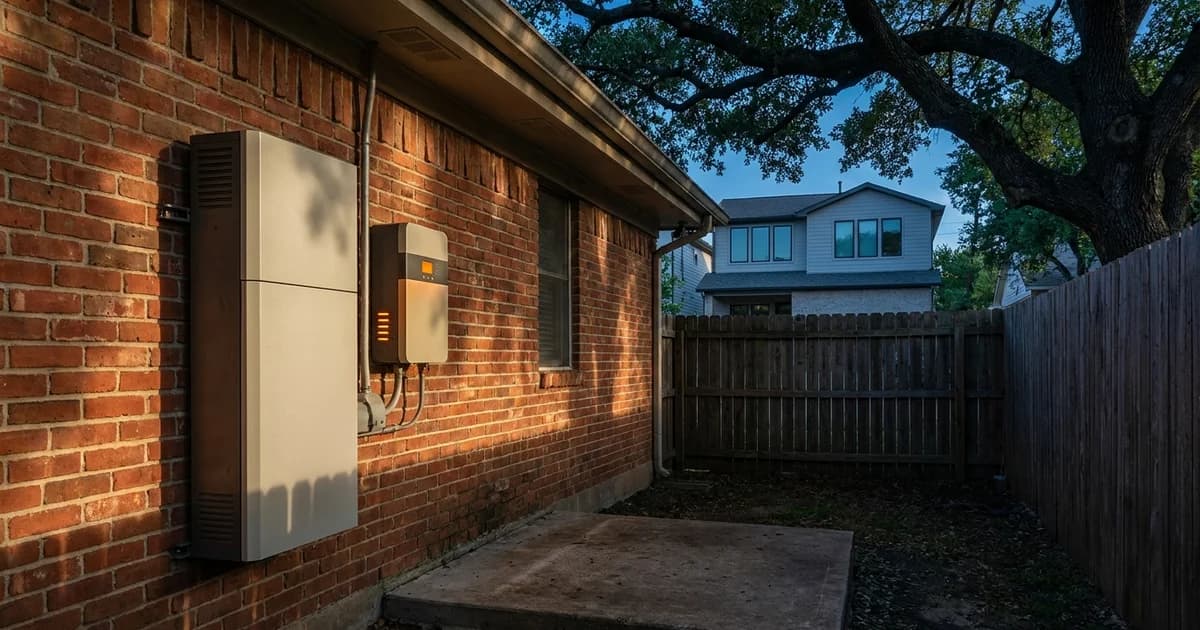
Ask a Houston contractor about battery permits and you get a Houston answer. If your address is in Bellaire or West University Place, that answer is wrong.
Both are incorporated cities with their own building departments, inspectors and zoning rules, and both are completely surrounded by the City of Houston. Two houses four blocks apart can sit under different code officials and different review clocks for the exact same equipment. Then the housing stock splits the answer again, because a 1955 original and the new build next door are not the same electrical project.
Key Takeaways
- Bellaire and West University Place are independent municipalities inside Houston. Each issues its own permits, so the City of Houston process does not apply to either address.
- West U requires in-person applications and takes roughly 10 to 15 business days when a plan needs review beyond the counter (City of West University Place).
- Bellaire runs permits, contractor registration and inspections through its own SmartGov portal, not through Houston's system.
- Both cities drain to Brays Bayou, a 127-square-mile watershed that HCFCD says floods severely at least once a decade (HCFCD).
Why does the Houston permit process not apply here?
Bellaire is a city of 17,206 residents with its own charter, its own police department and its own development services office (Census Reporter, ACS 5-year estimates). It is not a Houston neighborhood, and neither is West University Place. Both are enclave cities, ringed by Houston on every side, and each one permits and inspects electrical work itself.
The Harris County Flood Control District lists the Brays Bayou watershed as draining portions of Houston, Missouri City, Stafford, Bellaire, West University Place, Southside Place and Meadows Place (HCFCD). Seven names, one bayou, and your permit follows the city line rather than the water.
It is a different problem from the one inner-loop homeowners face a few miles north, where the constraint is historic design review rather than a separate city hall. We covered that case in the Houston Heights historic district guide. Here the issue is jurisdiction, not aesthetics.
That matters more than it sounds. An installer who files with Houston for a Bellaire address does not get a slower permit, they get no permit. The application lands in the wrong queue, and you find out when the inspector who shows up has no record of the job.
What we see in the field: the single most common delay on an inner-loop battery install is not the equipment or the utility. It is a contractor who has never registered with the city that actually has jurisdiction over the address.
How does the Bellaire permit path work?
Bellaire requires a permit before work begins, and it runs the entire process through its own online portal rather than any county or Houston system. Applicants use the SmartGov community portal to apply for building permits, upload plans and submittal documents, check application status, request inspections and review results (City of Bellaire public portal).
Contractor registration happens in the same portal. Your electrician has to be registered with Bellaire specifically, on top of holding a state license. Texas requires that anyone performing non-exempt electrical work be licensed and work through a licensed electrical contractor (Texas Department of Licensing and Regulation). The state license is the floor. City registration is the part that gets skipped.
One genuinely useful feature: the portal's parcel search shows zoning data, flood information and permit history by address without an account. Pull your own parcel before you get a quote. You will know your zoning district and flood status in two minutes, and those two facts drive most of the design decisions that follow. Bellaire's development services office answers permit questions at 713-662-8230 and inspections@bellairetx.gov (City of Bellaire FAQs).
What does West University Place require?
West U is stricter about how you apply, and that is the part that moves your timeline. The city states that no one may install, alter, or convert a structure without first obtaining a permit, and the permit families it lists include building, plumbing, mechanical, electrical, stormwater and floodplain development (City of West University Place).
Applications go in person. The permit office at 3826 Amherst Street takes them Monday through Friday, 7:30 a.m. to 4:30 p.m., and the city splits work into two tracks. Routine electrical, mechanical and plumbing can be processed over the counter the same day. Anything that triggers zoning, setback or tree review goes "behind the counter" and runs roughly 10 to 15 business days when the submission is complete and accurate (City of West University Place). Tree disposition review adds about 5 to 7 business days on its own.
Read that as a planning number, not a warning. A battery inside existing setbacks with no service upgrade has a real shot at the fast track. A battery that needs a new pad near a side property line, or trimming around a protected tree, is a two to three week review before anyone touches a wire. Community development takes questions at 713-662-5833 and inspections@westutx.gov.
Why do two houses on the same street get different answers?
Because the street is half original and half rebuilt. Bellaire's median owner-occupied home value is $1,037,500 across 6,641 housing units (Census Reporter, ACS 5-year estimates). Land that valuable gets scraped, and the result is a block where 1940s to 1960s ranch houses on 100A or 125A service sit next to new construction on 200A or 400A.
Those two houses need different projects. A modern 200A or 400A service usually has room for a backup interconnection without touching the meter. A 100A or 125A panel from the original build often does not, and the honest answer is that a service upgrade comes first, which pulls the utility into the schedule and adds an inspection.
Neither city publishes a running count of teardowns versus originals, so ignore any percentage you see quoted. The only number that matters is stamped on your own panel. We cover the panel side in our guide to 200A service panel compatibility and the paperwork side in the Houston-area battery permit walkthrough.
Sizing follows from that. Our systems run 11.5 kW continuous with 17.1 kW surge, enough to start a compressor on a typical inner-loop house, but the number of battery modules behind it decides how long you stay up. A 1950s house with one AC unit is a different conversation than a 4,200-square-foot rebuild with two condensers and a pool pump.
Where can the equipment physically and legally go?
On a small lot, this is the constraint that decides the design. Bellaire tells residents to identify their zoning district on the city zoning map first, then check the setback sheet or Chapter 24 of the Code of Ordinances, because the numbers differ by district (City of Bellaire). Zoning questions go to 713-662-8240 and zoning@bellairetx.gov.
Lots here are narrow. The side yard is often the only exterior wall available, and that strip already holds the condenser, the meter, the gas line and the only path to the back yard. Add lot coverage limits and a mature tree you are not allowed to damage, and the set of legal mounting positions gets small fast.
Three practical consequences:
- Garage or interior mounting becomes the default on the tightest lots, which changes clearance, ventilation and inspection requirements.
- Anything inside a side setback triggers a zoning look, which in West U is what moves you from same-day to the 10 to 15 business day track.
- Elevation matters as much as footprint. West U lists floodplain development as its own permit family, and equipment mounted low in the mapped floodplain is a design problem before it is a permit problem.
If your house is in an HOA or a deed-restricted section, that review runs in parallel with the city, not after it. How HOA approval works for battery backup in Texas covers the sequencing. And if you are weighing the spend against resale, what a home battery does to home value in Texas has the honest version.
What actually causes outages in Bellaire and West U?
Two things, and they are unrelated. The first is canopy. Both cities kept their trees through the rebuild wave, and the distribution feeding these blocks is largely overhead. Mature limbs over primary conductors is the standard local outage recipe, and it does not take a hurricane. A summer downburst will do it.
The second is water. Both cities drain to Brays Bayou, a watershed of roughly 127 square miles that HCFCD says has flooded severely on average at least once every decade, with thousands of structures now inside the mapped 100-year floodplain because development predates floodplain regulation (HCFCD, Project Brays). The county has put a multi-year $480 million project into that channel.
During Hurricane Harvey, the National Weather Service reported that HCFCD estimated nearly 136,000 structures flooded across Harris County, and that 10 of the 19 official forecast locations on county bayous reached record water levels (NWS Houston/Galveston). The Memorial Day 2015 and Tax Day 2016 storms are the other two events people here still date their houses by. HCFCD does not publish a structure count broken out for Bellaire or West University Place from those storms, so this guide does not quote one.
The practical read: canopy outages are short and frequent, flood outages are long and rare. A system sized only for the first will disappoint you during the second, so runtime, not inverter output, is the number worth arguing about. Our Pro plan is where most inner-loop houses stop choosing between the AC and the refrigerator.
Design for both. Mount high, size for the long event, and accept that the short ones are the reason you will notice the system working at all.
Or call Eos at 833-989-3737 to talk through your setup with an installer.
Frequently Asked Questions
Do I pull a City of Houston permit for a battery in Bellaire?
No. Bellaire is an independent municipality with its own development services office, and it processes permit applications, contractor registration and inspections through its own SmartGov portal (City of Bellaire). A Houston filing does not cover a Bellaire address.
How long does a West University Place battery permit take?
It depends on the track. Routine electrical work can be handled over the counter the same day, while anything requiring zoning, setback or tree review runs roughly 10 to 15 business days on a complete submission (City of West University Place). Applications must be filed in person at 3826 Amherst Street.
My house is original 1950s construction. Can it take a battery?
Usually yes, but often not without a service upgrade first. Original Bellaire and West U houses commonly run 100A or 125A panels, while post-teardown rebuilds run 200A or 400A. Check your main breaker rating before comparing quotes, since it changes both scope and schedule.
Does flooding history change how the system gets installed?
Yes. Both cities sit in the Brays Bayou watershed, where HCFCD reports thousands of structures inside the mapped 100-year floodplain (HCFCD). Equipment gets mounted above expected flood elevation, and West U lists floodplain development as its own permit category.
Do I need a Texas-licensed electrician and a city registration?
Both. Texas requires non-exempt electrical work to be performed by a licensed individual working through a licensed electrical contractor (TDLR), and Bellaire additionally requires contractors to register through its own portal before pulling a permit.
Sources
- City of West University Place, Permitting and Plan Review Process, retrieved 2026-09-08, https://www.westutx.gov/1394/Permitting-Plan-Review-Process
- City of West University Place, Permits, retrieved 2026-09-08, https://www.westutx.gov/240/Permits
- City of Bellaire, Public Permitting Portal (SmartGov), retrieved 2026-09-08, https://ci-bellaire-tx.smartgovcommunity.com/Public/Home
- City of Bellaire, Frequently Asked Questions: Permits, retrieved 2026-09-08, https://www.bellairetx.gov/faq.asp?TID=0&searchTerms=permit
- City of Bellaire, FAQ: Where can I find out what my setbacks are?, retrieved 2026-09-08, https://www.bellairetx.gov/FAQ.aspx?QID=113
- Harris County Flood Control District, Brays Bayou Watershed, retrieved 2026-09-08, https://www.hcfcd.org/Find-Your-Watershed/Brays-Bayou
- Harris County Flood Control District, Project Brays, retrieved 2026-09-08, https://www.hcfcd.org/Activity/Active-Projects/Brays-Bayou/Project-Brays
- NOAA National Weather Service Houston/Galveston, Hurricane Harvey, retrieved 2026-09-08, https://www.weather.gov/hgx/hurricaneharvey
- Texas Department of Licensing and Regulation, Electricians, retrieved 2026-09-08, https://www.tdlr.texas.gov/electricians/
- Census Reporter, Bellaire, TX profile (ACS 5-year estimates), retrieved 2026-09-08, https://censusreporter.org/profiles/16000US4807300-bellaire-tx/