V2H Installation Cost in 2026: Equipment, Labor, and Total Price

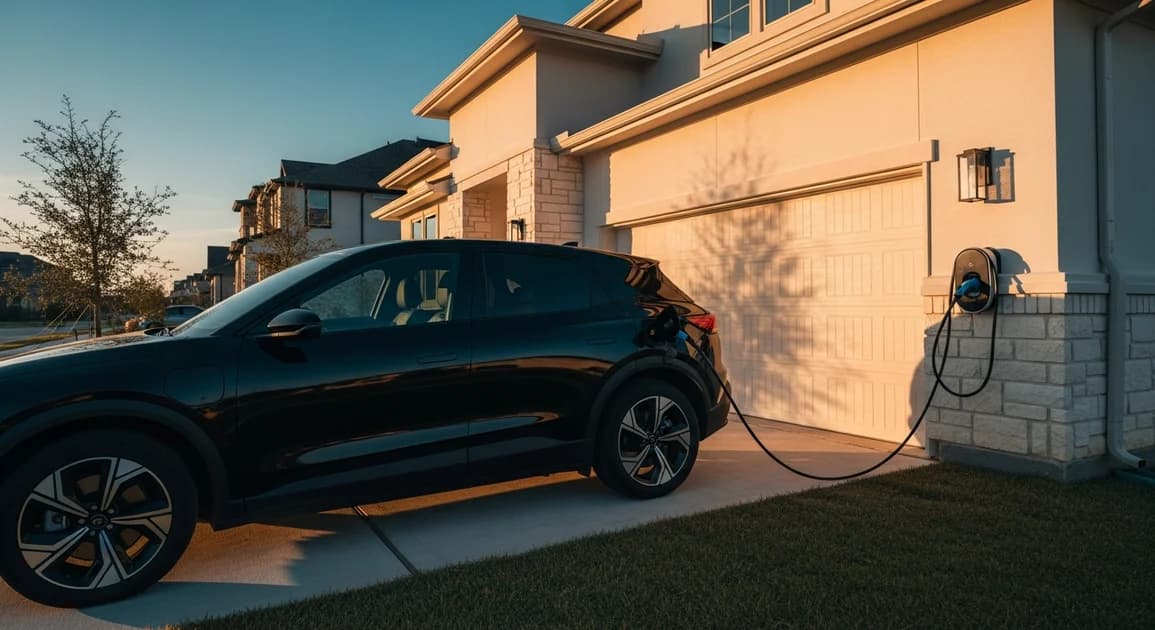
V2H Installation Cost in 2026: Equipment, Labor, and Total Price
Over 630,000 bidirectional EVs are now on US roads (Recharged, 2026), and more homeowners are asking what it actually costs to set up vehicle-to-home charging. The honest answer is: it depends on choices most cost articles never explain. You'll see ranges from $3,000 to $12,000 quoted in the same breath, with no breakdown of what drives the difference.
This article breaks the cost down line by line: equipment, labor, permits, and the panel upgrade question that catches a lot of homeowners off guard. We'll also cover which systems offer the best value for Texas homeowners who want both V2H and whole-home backup, not just one or the other.
Key Takeaways
- V2H installation typically costs $5,500-$12,000 in 2026, with most homeowners landing between $7,000-$9,000 (Industrial Control Academy, 2025)
- Equipment is the biggest variable: from $1,310 (Ford hardware only) to $7,299 (GM Energy bundle)
- Homes with 100-amp panels need a $1,500-$3,000 upgrade; most Texas homes built after 2000 can skip this
- As part of an Eos backup plan, the V2X module adds ~$3,000 (or $29/month), one of the lowest entry points available
What Does V2H Installation Cost in 2026?
V2H installation costs $5,500-$12,000 in 2026, with most homeowners landing between $7,000-$9,000 when combining bidirectional charger hardware and professional electrical installation. Equipment accounts for the majority of the cost, ranging from $4,000 to $10,000 depending on system choice (Industrial Control Academy, 2025; Recharged, 2026).
Four cost drivers explain the entire range. Equipment choice is the biggest one. Labor complexity comes second, especially if your home needs new conduit runs or service upgrades. The panel upgrade question is the hidden variable that catches people off guard. And finally, whether V2H is bundled with a complete home backup system changes the math considerably.
So why does the spread run so wide? A Ford F-150 Lightning owner might spend $3,300 total with a straightforward install. A GM Ultium owner going with the full Energy Powershift bundle could hit $11,000 before they're done. Same technology category, completely different cost profile.
Equipment Costs: What Are You Actually Paying For?
The charger hardware is the largest single cost component in any V2H installation. Ford's Charge Station Pro starts at $1,310 for hardware only; the GM Energy Powershift bundle is $7,299 (InsideEVs, 2024). Tesla Powershare requires a $2,995 gateway plus a $500 connector before any installation labor is counted (ChargeProTexas, 2025).
One distinction most V2H cost articles completely skip: the difference between AC-coupled and DC-coupled chargers. This isn't just a technical detail. It directly affects your installation cost.
AC-coupled chargers connect to your home's AC wiring and use the EV's onboard inverter to convert power. DC-coupled chargers, like the Eos V2X at 25 kW DC, bypass the vehicle's onboard AC inverter entirely. That means fewer conversion losses and, critically, a lower peak demand on your home's electrical panel. A lower effective peak draw can mean the difference between needing a panel upgrade and not needing one. No other V2H cost guide walks through this implication, but it's real money.
Connector type is the other variable. CCS1 connects to most US non-Tesla EVs. NACS connects to Tesla vehicles. The Eos V2X lets you choose your connector at purchase, with no adaptor required. Cable length options are 16.4 ft (5m) and 24.6 ft (7.5m), which matters depending on where your vehicle parks relative to your electrical panel.
V2H Equipment and Total Installed Cost Comparison (2026)
| System | Hardware Cost | Installation | Total Installed |
|---|---|---|---|
| Ford Charge Station Pro | $1,310 | $2,000-$4,000 | $3,310-$5,310 |
| Tesla Powershare | $3,495 | $1,500-$3,000 | $4,995-$6,495 |
| GM Energy Powershift | $7,299 | $1,500-$3,700 | $8,799-$11,000 |
| Generic DC bidirectional | $4,000-$6,000 | $2,000-$3,000 | $6,000-$9,000 |
| Eos V2X (add-on to plan) | ~$3,000 | Included | ~$3,000 + plan |
Sources: InsideEVs 2024, ChargeProTexas 2025, eos-e.com
The Eos V2X also comes with a 3-year warranty, which is worth noting when comparing against generic DC bidirectional chargers that often ship with 12-month coverage.

What Does Electrician Labor Actually Cost?
Labor runs $1,500-$4,000 for most V2H installations. Licensed electricians charge $75-$150 per hour in most US markets (EV Charging Summit, 2025), and a standard V2H setup takes 4-8 hours of hands-on work. Electrical permits are required for every V2H installation and add $50-$200 to the total (SolarTechOnline, 2025).
What makes labor more expensive? Distance from the electrical panel to the charger location is one factor. Homes with older wiring or crowded panels that need circuit reorganization add time. And not every licensed electrician has V2H experience, which matters more than it might seem.
Here's something to confirm before signing any installation agreement: UL 9741 compliance. That's the standard governing bidirectional EV charger safety in the US. Every V2H charger installed in a home must comply with it. Ask your installer specifically whether they've done UL 9741-compliant bidirectional installs before. If they look confused, that's your answer.
There's also the utility approval factor. Some Texas utilities require grid interconnection approval before a bidirectional charger installation goes live. This process can take several weeks. Asking your installer to initiate that conversation early keeps the timeline from stretching out unexpectedly.
For Houston-area homeowners specifically, permits in Harris County are generally straightforward for residential electrical additions. That said, calling ahead to confirm requirements with CenterPoint Energy saves time on both ends. Utilities in Oncor territory have their own processes, so the conversation is worth having before the electrician shows up.

Do You Need a Panel Upgrade? The Hidden Cost
If your home has a 100-amp service panel, a panel upgrade adds $1,500-$3,000 to the project (ELinkPower, 2025). A 25 kW bidirectional charger draws significant current, and 100-amp panels, which are common in homes built before 1990, can't safely support it. Most Texas homes built after 2000 have 200-amp service and won't need this upgrade.
How do you check? Find your main circuit breaker and look at the amperage printed directly on it. "100A" means you need to have the upgrade conversation before budgeting. "200A" means you're likely fine for a standard V2H installation.
When we spec a V2X installation for a Houston-area home with an existing 200-amp panel, the project is straightforward. Homes with 100-amp panels need the upgrade conversation first, because skipping it creates both safety and warranty issues down the line. The good news is that the DC-coupled architecture of the Eos V2X reduces peak panel demand compared to AC-coupled alternatives, which can shift some 100-amp homes into the "no upgrade needed" column depending on their overall electrical load.
How Does Eos V2X Compare on Cost?
As part of an Eos home backup plan, the V2X module costs ~$3,000 cash or $29/month. That's the hardware add-on cost for the bidirectional charger itself. Compare that to $7,299 for the GM Energy bundle or $5,000-$7,000 for Tesla Powershare total installed (InsideEVs, 2024).
The important distinction: Eos V2X isn't a standalone V2H charger. It's an add-on to a complete home battery backup system. If you already want whole-home protection plus bidirectional EV charging, you're not paying for a second separate ecosystem. You're adding one module to infrastructure that already does a job.
What does the V2X module include?
- 25 kW DC bidirectional charging, directly DC-to-DC with no conversion losses
- Your choice of CCS1 or NACS connector, selected at purchase
- Cable options: 16.4 ft (5m) or 24.6 ft (7.5m)
- Smart scheduling that draws from the EV first, switches to the home battery at your set minimum threshold, then recharges both when the grid returns
- 3-year warranty
- Compatibility with 25+ EV models across Tesla, Ford, Rivian, Kia, and others
Combined backup numbers are worth thinking through. Pair an Eos Pro (26 kWh) with a typical EV carrying a 75 kWh battery and you have over 100 kWh of total backup capacity. For context, the average Texas home uses about 40 kWh per day. That's multiple days of coverage from two systems that charge each other as conditions allow.
Is that overkill for a normal Texas summer outage? Probably. Is it the right setup for someone who lived through Winter Storm Uri without power for three days? You can answer that yourself.

What Do the Long-Term Savings Look Like?
V2H can save $2,400-$5,600 in EV charging costs over a 15-year vehicle lifespan, equivalent to 40-90% of total charging costs when paired with time-of-use rate arbitrage (Anthropocene Magazine, 2025). The spread depends on how aggressively you use rate windows and whether you participate in a virtual power plant program.
ERCOT's time-of-use pricing creates real arbitrage potential for Texas homeowners. Charge the EV cheap at night during off-peak hours. Use that stored energy during peak afternoon hours when grid prices spike. Virtual Power Plant programs in Oncor and CenterPoint territory pay participants $10-$50 per month for making their stored energy available to the grid during demand events (ChargeProTexas, 2025).
There's also the outage angle that pure financial math doesn't capture. Texas homeowners who've been through a major grid event understand what "the grid didn't work" costs in terms of spoiled food, hotel nights, generators, and stress. A V2H system paired with a home battery means your home stays on while neighbors scramble.
One caveat worth stating honestly: payback timeline depends on how often your vehicle is home and plugged in. A work truck that's gone five days a week contributes far less than a second car that sits in the driveway most of the time. Build your payback estimate around your actual usage pattern, not the best-case scenario.
Which EVs Are Compatible with V2H?
V2H requires an EV that supports bidirectional DC charging. As of 2026, 630,000+ compatible vehicles are on US roads, spanning 14+ models (Recharged, 2026). This isn't a software feature you can add after purchase. Compatibility depends on the vehicle's onboard charging hardware, which is built into the car at the factory.
Key compatible models as of 2026:
- Ford F-150 Lightning (CCS1)
- Nissan Leaf, select years (CCS1)
- GM Ultium platform vehicles: Silverado EV, Blazer EV, Equinox EV (CCS1)
- Tesla Model 3, Y, S, X with Powershare hardware (NACS)
- Rivian R1T and R1S (CCS1)
- Kia EV6 and EV9 (CCS1)
Eos V2X works with 25+ models. You choose CCS1 or NACS at purchase. There's no adaptor involved, which matters for cable fit and charging reliability in daily use.
Not sure if your vehicle qualifies? Check the CHAdeMO, CCS1, or NACS port on your vehicle against the manufacturer's bidirectional charging specs. Some models support DC fast charging but not bidirectional discharge, so confirm both capabilities before committing to a system.
Frequently Asked Questions
How much does V2H installation cost in 2026?
Total installed cost runs $5,500-$12,000 for most homeowners, with the spread driven by equipment choice and whether a panel upgrade is needed. Equipment costs $4,000-$10,000; labor and permits add $1,500-$4,200. Adding V2H as part of an Eos backup plan starts at ~$3,000 for the module, with installation included in the plan. (Industrial Control Academy, 2025)
Do I need a panel upgrade for V2H?
Only if your home has a 100-amp service panel, common in homes built before 1990. A 200-amp panel is needed for a 25 kW bidirectional charger. Most Texas homes built after 2000 already have 200-amp service and skip this cost. Check the amperage printed on your main circuit breaker to know for certain. DC-coupled systems like Eos V2X draw less effective peak current, which can shift some 100-amp cases into the clear. (ELinkPower, 2025)
Is V2H worth the upfront cost?
For Texas homeowners with a compatible EV, the economics are solid. V2H can save $2,400-$5,600 in charging costs over 15 years, and VPP programs in Oncor and CenterPoint territory add $10-$50 per month in passive income. The real factor for Texas is outage resilience: a V2H system paired with a home battery keeps your house running when the grid doesn't. That's a hard thing to put a number on if you've lived through a major outage. (Anthropocene Magazine, 2025)
What is the cheapest V2H system available in 2026?
As part of an Eos backup plan, the V2X module adds ~$3,000 cash (or $29/month financed), one of the lowest hardware entry points for residential V2H. Ford's Charge Station Pro starts at $1,310 for hardware only, but it requires a separate Sunrun Home Integration System and a compatible home gateway to function. The all-in total for a complete Ford setup runs $3,300-$5,310 before labor. Eos includes installation as part of the plan.
What electrician qualifications should I look for?
Look for a licensed electrician with demonstrated experience in UL 9741-compliant bidirectional charger installations. Ask specifically about prior V2H installs, not just Level 2 EV charger installs. Those are different skill sets. Also confirm the electrician will handle permitting and any required utility interconnection approval, not just the physical installation.
The Bottom Line on V2H Installation Costs
V2H installation costs $5,500-$12,000 in 2026 for most homeowners. Equipment is the biggest variable, ranging from $1,310 (Ford hardware alone) to $7,299 (GM Energy bundle). Panel upgrades add $1,500-$3,000 for homes with older 100-amp service. Long-term savings of $2,400-$5,600 over 15 years are realistic for Texas homeowners with compatible EVs and TOU rate plans.
The Eos V2X module is available as an add-on to any Eos backup plan at ~$3,000 or $29/month. It's not a standalone charger. It's V2H built into a complete home energy system, which changes the cost comparison considerably. When you're already getting whole-home battery backup, bidirectional EV charging becomes a module, not a second project.
Texas homeowners who've lived through major grid events know exactly why both capabilities matter. The question isn't whether to have backup power. It's which system lets you accomplish that most efficiently.