Battery Backup for Stairlifts, Wheelchairs, and Hospital Beds in Houston

Battery Backup for Stairlifts, Wheelchairs, and Hospital Beds in Houston
Here is the good news most people do not expect: a stairlift and a power wheelchair keep working during a power outage, because they run on their own onboard batteries. The catch is that those batteries have to be recharged, and their chargers stop when the grid does. A home battery keeps the chargers powered, and it powers the one device in this group that runs continuously, an alternating-pressure mattress pump. This is not medical advice. Coordinate an outage plan with your equipment provider.
Key Takeaways
- More than 1 in 4 U.S. adults report a disability, and mobility is the most common type, affecting about 1 in 7 (CDC, 2024).
- Stairlifts and power wheelchairs run on rechargeable onboard batteries, so they keep working in an outage; the household load is their charger, not a running motor.
- An adjustable or hospital bed draws power only while its motor adjusts, but an alternating-pressure mattress pump runs 24/7 at roughly 7 to 12 watts.
- A Plus (18 kWh) system covers these modest, mostly intermittent loads plus your fridge and lights through a long outage.
- The ADA advises planning how to recharge batteries during an outage and keeping a manual wheelchair as backup if possible (ADA National Network).
[INTERNAL-LINK: keep your mobility equipment powered through an outage → /home-backup-planner?source=blog&slug=battery-backup-mobility-devices-stairlift-wheelchair-houston]
Can a home battery keep a stairlift, wheelchair, or hospital bed working in a Houston outage?
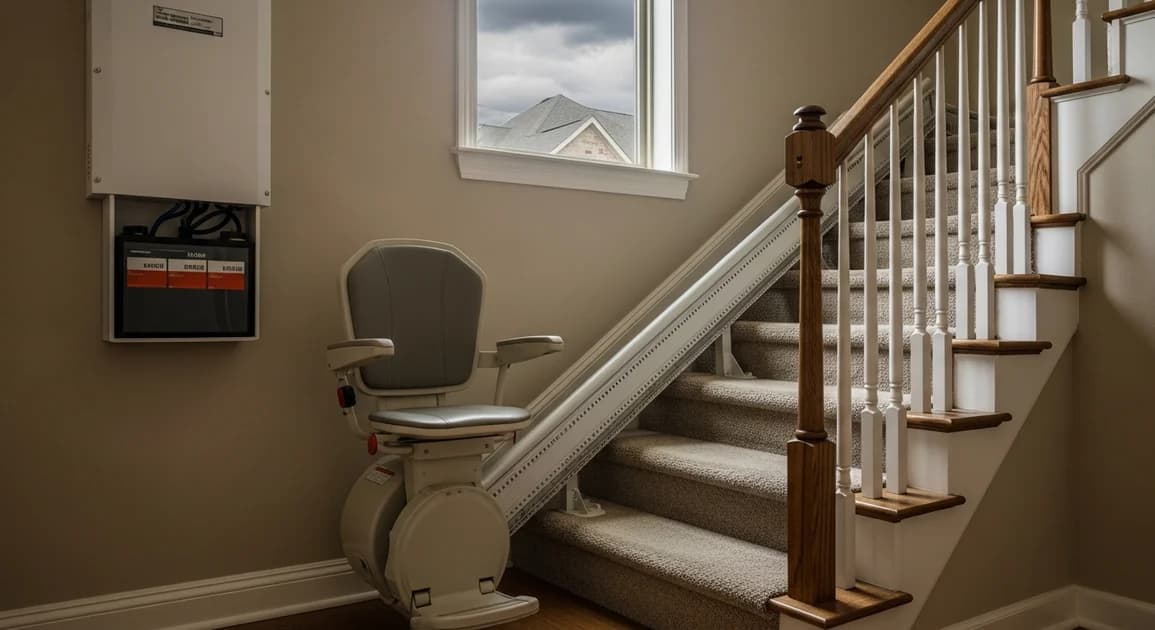
Yes, and understanding how these devices are powered makes the plan simple. Stairlifts from makers like Acorn and Stannah run on rechargeable onboard batteries and keep moving during an outage, recharging at charge points on the rail (Stannah). Power wheelchairs and scooters work the same way, running off battery packs that recharge from a wall outlet.
So the job of a home battery is to keep those chargers energized so the devices top back up between uses, and to keep any continuously powered equipment, like a hospital bed's mattress pump, running without a gap. A device may briefly interrupt on transfer, so follow your supplier's instructions for anything critical.
Which mobility devices need household power, and how much?
Most mobility devices are light, intermittent household loads because they only draw power while charging or actively moving. A mobility scooter charger pulls roughly 50 watts, a power-wheelchair charger around 190 to 230 watts while charging, and a hospital-bed motor a few hundred watts only during the seconds it raises or lowers (Pride Mobility). The one steady load is the alternating-pressure mattress pump at about 7 to 12 watts, running around the clock.
What size battery do you need for accessibility equipment?
Because these loads are small and mostly intermittent, sizing is comfortable. A Plus (18 kWh) system keeps the chargers, the bed, and a mattress pump running while also covering your refrigerator, lights, and Wi-Fi through a long outage. The onboard batteries in a stairlift and wheelchair do much of the work, so the household only tops them back up. When we survey Houston homes with mobility equipment, the charger circuit is the load people most often forget to flag, so we make sure it lands on the backed-up panel.
Larger households, or homes that also want to run air conditioning through summer outages, may prefer Pro (27 kWh) for the extra headroom. Confirm the right size at the free site survey.
[INTERNAL-LINK: size a system for accessibility equipment → /plans/plus]
Independence and safety during a Houston outage
For a household that depends on a stairlift or power chair, an outage is a threat to independence, not just comfort. Mobility disability is the most common disability among U.S. adults, affecting about 1 in 7 (CDC, 2024), and Houston's outages are long. Hurricane Beryl cut power to about 2.2 million customers in 2024, with more than 200,000 still out a week later (Houston Public Media).
Losing the ability to move between floors or recharge a wheelchair for days is a safety issue in summer heat. For a broader caregiver plan, see our guide below.
[INTERNAL-LINK: battery backup for aging parents and medical needs → /blog/battery-backup-aging-parents-medical-needs]
Build a plan for your powered mobility equipment
A battery is one part of a plan the ADA and Ready.gov both recommend for equipment users. Charge every device and spare battery at the first sign of an outage, keep a lightweight manual wheelchair as a backup if you use a power chair, and talk to your equipment supplier about your backup options (ADA National Network).
You can also ask CenterPoint to add you to its priority list, though that does not guarantee power within days, which is exactly why an independent battery matters. For the full household approach, see our [INTERNAL-LINK: Houston power outage safety guide → /blog/power-outage-safety-houston-homeowners].
[INTERNAL-LINK: get a home battery quote in under 2 minutes → /home-backup-planner?source=blog&slug=battery-backup-mobility-devices-stairlift-wheelchair-houston]
Prefer to talk it through? Call Eos at 713-207-2222 for a same-week Houston site survey.
Frequently asked questions
Does a stairlift work during a power outage?
Yes. Stairlifts run on rechargeable onboard batteries and keep operating when the grid is down, holding many trips on a full charge. A home battery keeps the charger powered so the lift tops back up between rides.
Can a home battery charge my power wheelchair?
Yes. A power-wheelchair charger draws roughly 190 to 230 watts while charging, an easy load for the system. Keep the charger on a backed-up circuit so you can recharge the chair during a long outage.
Will it run a hospital or adjustable bed?
Yes. The bed's motor draws power only while it adjusts, and any alternating-pressure mattress pump runs at just 7 to 12 watts. Both are small loads the system covers, though a device may briefly interrupt on transfer.
How long will the battery last with mobility equipment?
Comfortably through a long outage on a Plus system, because charging is intermittent and the continuous loads are tiny. Actual runtime depends on the other circuits you back up, which the site survey confirms.
Should the chargers be on the backed-up circuits?
Yes. Make sure your stairlift charge points, wheelchair charger, and any bed or mattress pump are on the circuits the smart panel protects, so they stay powered when the grid fails.
This article covers powering mobility and accessibility equipment during outages in Houston and reflects Eos specifications as of July 2026. It is not medical advice. Coordinate any emergency plan with your equipment supplier and provider.