Is Home Battery Backup Worth It in Texas? (2026)

Is Home Battery Backup Worth It in Texas? (2026)
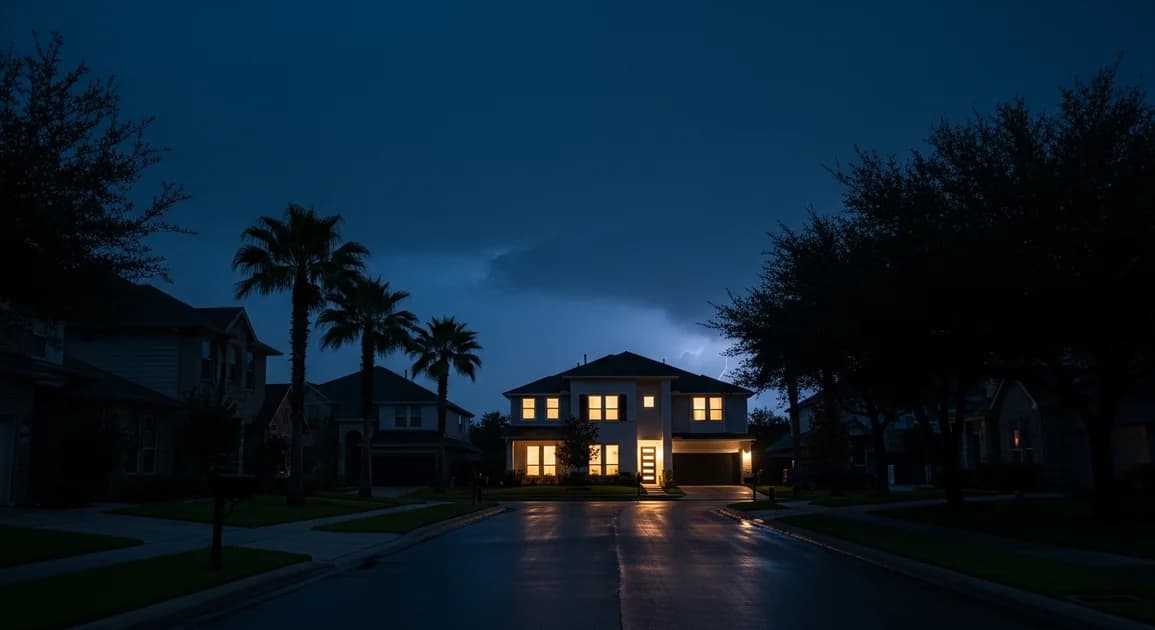
Hurricane Beryl knocked out power to 2.6 million Texas customers in July 2024. Over 260,000 CenterPoint customers were still without power 8 days later (Texas Tribune, 2024). For Houston homeowners, the question of home battery backup stopped being theoretical a long time ago.
The real question is whether the math works. A home battery system costs $10,000-$20,000 installed. That's a real investment. This article walks through the actual costs, the realistic savings, and who it genuinely makes sense for, and who should wait.
Key Takeaways
- Texas had more power outages than any other U.S. state from 2019-2023 (263 events, Governing.com / DOE data)
- Installed battery backup costs $10,000-$20,000; lithium-ion prices hit a record low $115/kWh in 2024 (BloombergNEF)
- Typical Texas payback period: 7.5-9 years via time-of-use savings, ERCOT demand response enrollment, and avoided outage losses
- One 13.5 kWh battery runs central AC for only 4-6 hours in Texas summer heat -- most Houston homes need 27-40 kWh
- For homeowners planning to stay 8+ years who experienced Beryl-level outages: the math works
Why Texas Homeowners Face Unusual Outage Risk
Texas recorded 263 power outage events from 2019-2023, more than any other state in the country (Governing.com, 2023). Houston has more outages than any other major U.S. city, and the gap between Texas and second-place California (221 events) tells you something real about grid reliability here.
ERCOT is an isolated grid. It's not connected to the Eastern or Western U.S. interconnections. When the Texas grid fails, the state can't import emergency power from neighboring states. That structural isolation is the single biggest reason why Texas outages are so prolonged compared to other states where utilities can request emergency transfers.
CenterPoint Energy serves the Houston metro and has faced repeated criticism for grid hardening failures following both the 2021 winter freeze and the 2024 hurricane season. After Beryl, some Houston residents lost power 32-46 times in a single year (Click2Houston, 2025). That's not a freak event; it's a pattern.
2024 was the worst year for U.S. power interruptions in 10 years. Major-event outages averaged 9 hours versus 4 hours in the prior decade (EIA, January 2025). The trend is going the wrong direction.
About 1 in 4 U.S. households experienced a complete power outage in a 12-month period, and 70% of those outages lasted 6 hours or longer (U.S. Census Bureau, 2023 American Housing Survey, October 2024). In Texas, that proportion is significantly higher.
Texas recorded 263 power outage events from 2019-2023 -- more than any other state -- according to analysis of DOE data by Governing.com (2023). ERCOT's grid isolation means Texas cannot import emergency power from neighboring states, leaving Houston-area homeowners more exposed to prolonged outages than almost anywhere else in the country.
What Does a Home Battery Backup Cost in Texas?
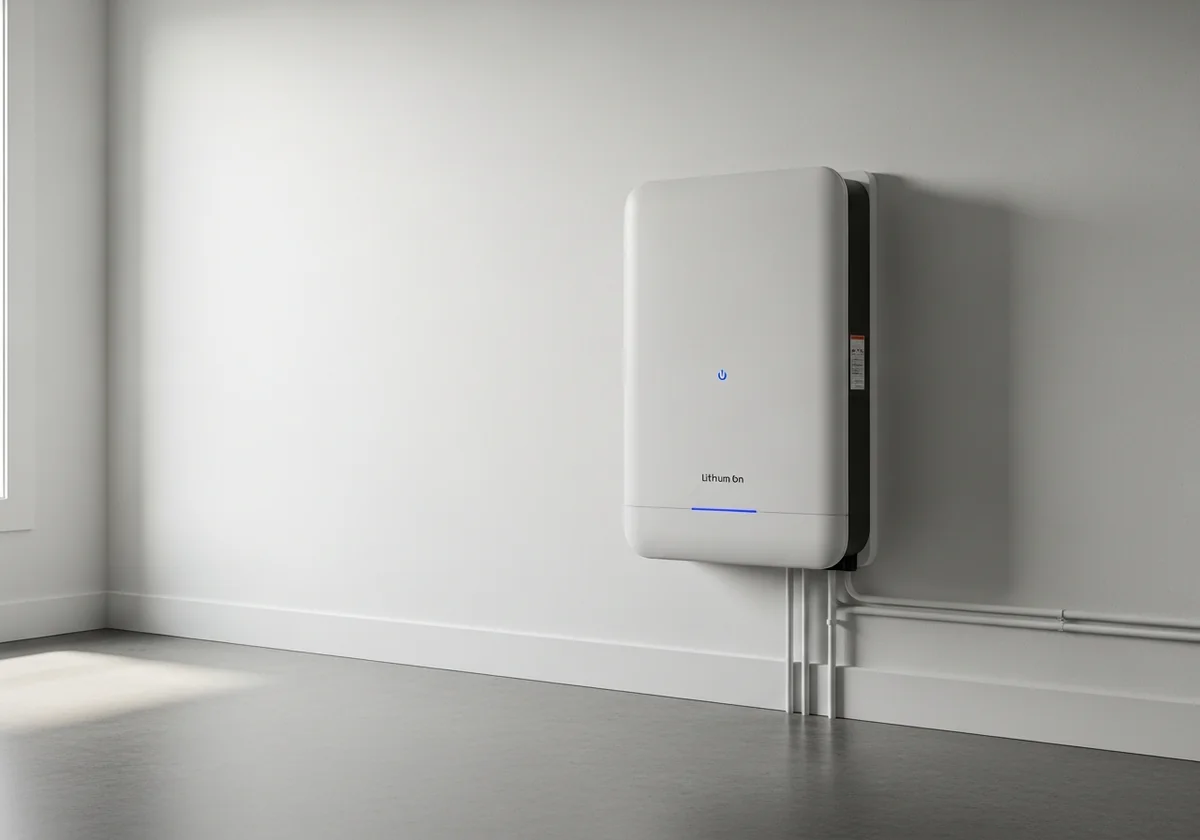
A single-unit system (13.5-15 kWh) costs $10,000-$16,500 installed in Texas, including hardware, labor, and Harris County permits. Multi-unit systems covering a full home's air conditioning load run $20,000-$35,000. Those figures reflect 2026 pricing, which is meaningfully lower than 2022-2023 levels for a straightforward reason: battery pack prices fell off a cliff.
The hardware-to-labor split runs roughly 60/40. The battery unit itself accounts for the larger share. Harris County electrical permit fees typically run $200-$400. Installation complexity, panel upgrades, and conduit runs are where costs can climb on older homes.
Lithium-ion battery pack prices fell to a record low $115/kWh in 2024 -- the largest single-year price drop since 2017, according to BloombergNEF (December 2024). That's a steep decline from $350/kWh in 2016, and it explains why the installed cost picture looks different now compared to just a few years ago.
Texas electricity prices rose 35% over five years (Texas Tribune, April 2026). That matters for the payback calculation: higher rates mean greater savings when a battery dispatches stored energy during peak pricing windows.
The average Texas household consumes 1,096 kWh per month at an average bill of $163.72 (EIA, 2024). That's well above the national average, and it's one reason why time-of-use savings strategies work better in Texas than in lower-consumption states.
Lithium-ion battery pack prices fell to $115 per kWh in 2024 -- a record low and the largest annual price drop since 2017 -- according to BloombergNEF (December 2024). Combined with Texas electricity prices rising 35% over five years (Texas Tribune, April 2026), the economics of home battery backup have improved significantly since 2022.
The Texas AC Problem: Will One Battery Actually Keep Your House Running?
Here's what most installers won't tell you upfront: a single 13.5 kWh battery runs a standard 3-ton central air conditioning unit for roughly 4-6 hours during a Texas summer day. For overnight protection through a Houston outage, most homes need 27-40 kWh of storage -- that means two to three stacked units.
Central AC is the dominant load in Texas homes. At 95°F outdoor temperature, a 3-ton unit consumes 3-5 kWh per hour. Do the math on a 13.5 kWh battery and you get somewhere between 2.7 and 4.5 hours of continuous cooling. That's one hot afternoon. It's not an overnight outage.
A 13.5 kWh battery like an Enphase IQ Battery 5P or Tesla Powerwall 3 gets depleted fast running full AC. The solution breaks into two approaches. You can stack 2-3 units to get 27-40 kWh of total storage, or you can install a critical loads panel that powers only essential circuits -- fridge, outlets, lights, fans -- while leaving the AC off.
The critical loads approach costs less. It works for a 6-hour storm outage. During a 3-day Beryl-scale event in Houston summer heat, it's genuinely uncomfortable. Many families with young children or elderly members don't consider no-AC a viable option.
From our Houston installs: The question we get most after Beryl is "why didn't my neighbor's single battery last through the night?" Central AC in Texas heat is the answer. On our 27 kWh multi-unit installs, customers ran through the July 2024 outages with AC cycling normally for 18-22 hours. Single-unit systems on critical-loads-only configurations ran 24-36 hours but with no air conditioning.
| Home Size | Recommended Storage | AC Runtime at 95°F | Essential Loads Only |
|---|---|---|---|
| Under 1,500 sqft | 13.5-20 kWh | 4-7 hours | 18-28 hours |
| 1,500-2,500 sqft | 20-27 kWh | 5-8 hours | 24-36 hours |
| 2,500-3,500 sqft | 27-40 kWh | 6-9 hours | 30-48 hours |
| 3,500+ sqft | 40+ kWh | 7-10 hours | 40+ hours |
The AC sizing problem is the biggest mismatch between what homeowners expect and what a single battery delivers in Texas. Every competitor's article describes "up to X hours of backup" without noting that this figure assumes no air conditioning. In Texas, that assumption breaks down completely by June. Don't buy a battery system sized for a mild-climate home.
How Long Until a Battery Pays for Itself in Texas?
A typical Texas home battery system can break even in 7.5-9 years. That payback comes from three stacked savings streams: time-of-use rate arbitrage, ERCOT demand response enrollment, and avoided financial losses during outages (Integrate Sun, 2026). That's a realistic number, not an optimistic one, and it's improved from the 10-12 year estimates that were common before 2024's price declines.
Time-of-Use Rate Arbitrage: $1,200-$1,500 per Year
Texas retail electric providers offer time-of-use (TOU) plans where electricity costs 3-5x more during peak hours. Peak windows typically run 4-9 PM on weekdays. A home battery charges overnight at off-peak rates, often $0.05-$0.08/kWh, and discharges during that 4-9 PM window to avoid peak charges.
For a household consuming 1,096 kWh per month -- the Texas average from the EIA (2024) -- the typical annual savings from TOU arbitrage runs $1,200-$1,500. That's the single largest savings stream in most installations. It's also automatic. The battery management system handles the dispatch scheduling without any manual intervention.
ERCOT Demand Response: $300-$600 per Year
Residential battery owners can enroll in the ERCOT Ancillary Services Demand Response (ADER) program through approved aggregators. The program pays battery owners to discharge during grid stress events, typically summer afternoons when ERCOT spot prices spike.
Texas battery storage deployment has saved consumers at least $750 million in electricity costs since 2023, with ancillary service prices dropping as residential storage scaled up (Dallas Federal Reserve, January 2025). The program works because individual batteries, aggregated, function as a virtual power plant. Annual ADER revenue for a typical residential system runs $300-$600. It's not the biggest savings stream, but it's essentially passive income.
Avoided Outage Losses: $200-$500 per Year, Amortized
Food spoilage from a 24-hour outage averages $200-$400 per household. For remote workers, a day without power means $100-$300 in lost productivity and income. With some Houston neighborhoods experiencing multiple multi-day outages per year after Beryl, the avoided-loss math adds up quickly.
A typical 13.5 kWh home battery system in Texas can achieve a 7.5-year payback through three revenue streams: time-of-use rate arbitrage ($1,200-$1,500/year), ERCOT Ancillary Services Demand Response enrollment ($300-$600/year), and avoided outage losses, according to Integrate Sun's 2026 payback analysis. Texas battery storage deployment has collectively saved consumers at least $750 million since 2023 (Dallas Federal Reserve, January 2025).
Battery Backup vs. Generator: Which Is Right for Texas?
For outages under 24 hours, battery backup wins on every practical dimension: no fuel logistics, no exhaust fumes, no noise, seamless automatic transfer. For outages exceeding 72 hours, a propane standby generator has the advantage of unlimited runtime as long as fuel holds. Most Houston homeowners serious about storm prep are now choosing both.
Where Battery Backup Wins
The biggest operational advantage of battery backup is the transfer. When grid power drops, a battery system switches over in milliseconds. There's no startup delay, no manual switch, no running outside in the rain to pull a cord. Most homeowners don't even notice the transition until they check the app.
During Hurricane Beryl, Houston gas stations ran out of fuel within 24-48 hours of the storm making landfall. Homeowners with gasoline generators faced a hard choice: queue for hours at a station, or go without. Battery owners didn't face this problem. No fuel to buy, store, or find during a storm.
Silent operation matters in practice, too. Many Houston subdivisions have HOA noise restrictions. Generators can't run at night. A battery backup has no noise limit, no exhaust, no CO risk -- which also means it can be installed indoors.
For homes with solar panels, the battery-plus-solar combination offers something a generator cannot: daytime recharge during extended outages. If the sun is out and the grid is down, the solar system keeps charging the battery. A generator just burns through its fuel supply.
Where Generators Win
The upfront cost gap is real. A whole-home propane standby generator runs $3,000-$8,000 installed, versus $10,000-$20,000 for a battery system. For a homeowner on a tight budget who needs to be prepared, a generator is a rational choice.
Generators also win on very large homes. A home above 4,000 square feet with high HVAC loads might need $30,000+ in battery storage for meaningful AC coverage. A propane generator handles that same load at a fraction of the hardware cost.
Propane supply is more storm-resilient than gasoline. Propane tanks can be filled weeks before hurricane season and stored indefinitely. That's a real advantage over gasoline, which degrades over time and sells out at stations.
What we saw post-Beryl: About 40% of our consultation calls in August 2024 came from homeowners who had a generator but were caught without fuel. The question they were asking wasn't "battery or generator" -- it was "how do I make sure I never have to go find gas during a storm again?"
Hurricane Beryl left 2.6 million Texas customers without power in July 2024, with over 260,000 CenterPoint customers still without electricity after 8 days (Texas Tribune, 2024). Gasoline shortages at Houston-area stations within 24-48 hours of the storm forced generator owners to search for fuel -- a logistics problem that battery backup systems eliminate entirely.
Is Home Battery Backup Worth It in Texas? A Direct Answer
Yes, for most Houston-area homeowners who experienced Beryl or a prolonged winter freeze, plan to stay in their home for 8+ years, and have a monthly electricity bill above $150. No, if the priority is a one-storm safety net on a tight budget -- a generator serves that need at lower cost.
Texas electricity prices have risen 35% over five years, driven by rapid population growth, extreme weather, and ERCOT grid infrastructure strain (Texas Tribune, April 2026). For homeowners with high electricity bills and a history of prolonged outages, a home battery system represents both an insurance policy and a cost-reduction tool with a 7.5-9 year payback at 2024 installed cost levels.
Texas homes with solar sell for 6.8% more than comparable homes without, according to Zillow data (via ESD Solar, 2024). Energy resilience improvements do translate to real estate value, which improves the overall return picture for homeowners who may eventually sell.
Is battery backup right for your home? Answer these 4 questions:
- Did your home lose power for more than 24 hours at least once in the last 3 years?
- Do you work from home, or does someone in your household depend on powered medical equipment?
- Are you planning to stay in this home for at least 8 more years?
- Does your home have solar panels, or are you considering adding them?
If you answered yes to 2 or more: the math supports a battery backup investment at current installed costs and savings rates.
Who Should Prioritize Battery Backup
Work-from-home households losing income during outages get the fastest effective payback because avoided losses stack on top of TOU savings. Homes with medical equipment -- CPAP machines, oxygen concentrators, refrigerated medication -- have a safety case that goes beyond pure finance.
Homeowners in Houston zip codes with above-average outage frequency are also strong candidates. Midtown, Montrose, and older east Houston neighborhoods had among the worst Beryl outage records. If your neighborhood loses power every major storm, the avoided-loss calculation compounds quickly.
Homes with solar are the clearest yes. Battery-plus-solar provides daytime recharge capability during extended outages. The combination also maximizes TOU arbitrage because you're charging the battery with free solar energy at midday and dispatching it during peak evening hours.
Who Should Wait
Homeowners planning to sell within 3-5 years face a payback period that exceeds their likely ownership window. The system adds home value, but the financial return is more limited in that timeframe. A generator is the more practical choice for short-term resilience.
Renters can't install permanently mounted systems. Homes already equipped with a natural gas standby generator in a neighborhood with relatively infrequent outages may not see enough additional value to justify the investment right now.
Texas electricity prices have risen 35% over five years, driven by rapid population growth, extreme weather, and ERCOT grid infrastructure strain (Texas Tribune, April 2026). For homeowners with high electricity bills and a history of prolonged outages, a home battery backup system represents both an insurance policy and a cost-reduction tool with a 7.5-9 year payback at 2024 installed cost levels.
Frequently Asked Questions
How much does a home battery backup cost in Texas?
A single-unit system (13.5-15 kWh) costs $10,000-$16,500 installed in Texas, including hardware, installation labor, and permit fees. Multi-unit systems covering a full home's air conditioning load run $20,000-$35,000. Battery pack prices fell to a record low $115/kWh in 2024 (BloombergNEF, December 2024), meaning installed costs today are meaningfully lower than 2022 levels.
How long does a home battery backup last during a Texas outage?
It depends on what you're powering. A single 13.5 kWh battery running central air conditioning lasts 4-6 hours in Texas summer heat. Running essential loads only -- fridge, lights, outlets, fans, no AC -- the same system lasts 18-28 hours. Most Houston homes need 27-40 kWh of storage to run AC through an overnight outage. See the sizing table above for estimates by home size.
Does home battery backup add value to a Texas home?
Yes. Texas homes with solar energy systems sell for 6.8% more than comparable homes without, according to Zillow data (ESD Solar, 2024), and homes with solar sell 15-20% faster. Battery backup adds to this value by providing resilience -- a differentiator in a market where buyers increasingly ask about backup power after Beryl and the 2021 winter freeze.
Is one battery enough for a Texas home?
For most homes, no -- not if you want to run air conditioning through the night. A single 13.5 kWh unit covers essential loads only during a Texas summer outage. Two to three units stacked (27-40 kWh total) provides overnight AC coverage for most Houston homes. A critical loads panel is a lower-cost option that maximizes runtime by powering only essential circuits and keeping the AC off.
How does ERCOT demand response work for home battery owners?
Residential battery owners can enroll in the ERCOT Ancillary Services Demand Response (ADER) program through approved aggregators. When ERCOT experiences grid stress -- typically summer afternoons when demand peaks -- enrolled batteries discharge to support the grid, and owners receive payment. Typical annual revenue runs $300-$600 per system, which improves the payback calculation on top of time-of-use rate savings.
The Math Has Changed. Here's the Takeaway.
Three things shifted the home battery backup calculation in Texas over the past two years. Battery prices hit record lows in 2024 at $115/kWh, down 20% in a single year. ERCOT's demand response program now pays homeowners to participate in grid stabilization, adding a revenue stream that didn't exist at residential scale before. And Hurricane Beryl made the cost of not having backup power concrete for millions of Houston households.
The math has never been stronger for a Texas homeowner who plans to stay put, works from home, or lives in a high-outage neighborhood. A 7.5-year payback at current savings rates is real, not optimistic.
What doesn't change: one battery isn't enough for a Texas summer. System sizing and design matter more than brand choice. Don't buy the marketing headline -- run the numbers for your home size, your electricity rate plan, and your outage history.