Hurricane Season Power Outage Checklist for Houston Homeowners

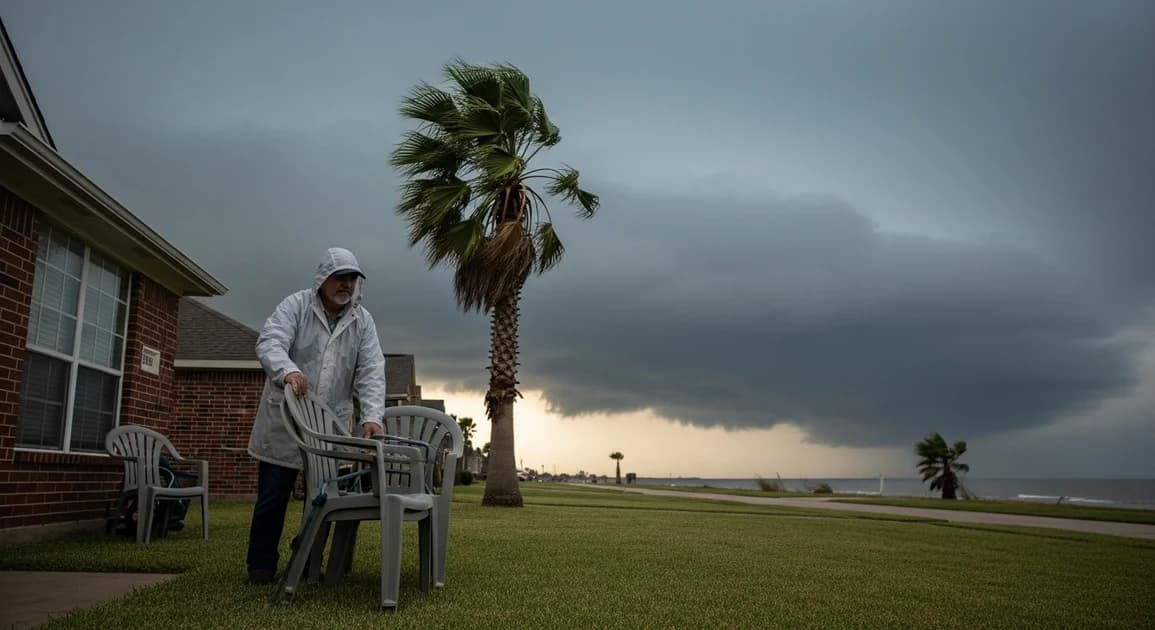
When Hurricane Beryl made landfall on July 8, 2024, it knocked out power to roughly 2.2 million CenterPoint customers across the Houston metro (Houston Public Media, 2024). Eight days later, 88,000 homes were still dark (Texas Tribune, 2024). If you lived through it, you already know a paper checklist taped to the fridge is not enough. You need one organized by time. Thirty days out looks nothing like 48 hours out. Here is the tiered version we hand to every Houston homeowner we install for, built from what Beryl actually taught us on the ground.
Key Takeaways
- Atlantic hurricane season runs June 1 to November 30 (NOAA, 2024). Long-lead prep work should be done by May 31.
- Named storms usually give Houston 3 to 7 days of warning from Atlantic formation to landfall (NHC, 2024), which is your real window for fuel, water, and battery charging.
- At Beryl's peak, 2.2 million CenterPoint customers lost power (Houston Public Media, 2024). A home battery backup is the only passive way to avoid joining that number next time.
- After the storm, document damage and food losses before you touch anything. Insurance adjusters want photos.
What should Houston homeowners do 30 days before hurricane season?
The 30-days-out window is where the cheap, boring work happens, and where most families lose the game before it starts. June 1 is the official NOAA start date (NOAA, 2024), so treat May 31 as your hard deadline. Arborists and insurance agents are booked solid once a storm is named.
[PERSONAL EXPERIENCE] Every install we did between July 9 and July 20, 2024 was a customer who had been thinking about a home battery backup for two years and only called after Beryl. Don't be that call.
1. Review your homeowners insurance policy. Pull the declarations page. Confirm wind, hail, and named-storm deductibles. Many Texas policies have a separate wind deductible at 1 to 5 percent of dwelling coverage. Call your agent if anything is unclear.
2. Trim trees away from the house and power drop. CenterPoint crews will not cut private limbs off your roof during a restoration. That is on you. Schedule a certified arborist in April or early May.
3. Verify your generator transfer switch works. If you have a portable or standby generator, run it under load for 30 minutes. Interlock kits and transfer switches fail quietly. Find out now, not at 2 a.m. in 95-degree heat.
4. Test your home battery backup state of charge and inverter status. Open the app. Confirm the system is at or near 100 percent, firmware is current, and the transfer relay test passes.
5. Photograph every room of your house. Open closets, open cabinets. These photos become your insurance baseline. Upload to cloud storage, not just your phone.
6. Stock shelf-stable food for 7 days per person. Canned protein, peanut butter, rice, electrolyte packets. Rotate the pantry every spring.
7. Refill all prescriptions to a 30-day supply minimum. Pharmacies lose power too. CVS on West Gray was closed for six days after Beryl.
8. Register medical equipment with CenterPoint's Critical Care Program. If anyone in the house runs a CPAP, oxygen concentrator, home dialysis, or powered wheelchair, the utility flags your address for priority restoration.
What do you do when a named storm is 7 days out?
[UNIQUE INSIGHT] The 7-day window is the actionable one for Houston. Named storms typically give 3 to 7 days of lead time from Atlantic formation to Gulf landfall (NHC, 2024), which means a named storm in the Gulf is not a drill. This is the tier where supplies disappear from shelves first.
1. Fuel every vehicle and fuel can to full. Gas stations on evacuation routes are the first to run dry. Top off by day 6.
2. Fill bathtubs and large containers for non-potable water. Toilet flushing, washing, cleaning. Separate from your drinking water supply.
3. Pre-cook meals that freeze well. Chili, pasta sauces, soups. Freeze in flat bags. They double as ice packs later.
4. Charge your battery system to 100 percent and confirm load priorities. Most home battery backup systems let you define a critical-load panel: fridge, freezer, well pump, medical equipment, a window AC. Review the list with your installer if it has been more than a year.
5. Share the family plan in writing. Meeting point, out-of-state contact, pet carriers, go-bag location. Text it to every family member.
6. Confirm your evacuation zone. Houston uses a zip-coded zone system (Houston OEM). Zones A through C evacuate in mandatory order. Know yours by heart.
7. Pre-position cash. ATMs and card readers die with the power. Pull $300 to $500 in small bills.
What should you finish in the final 48 hours before landfall?
By hour 48, NHC forecast cones have narrowed and shelves are thin. The work here is physical, not logistical. Your goal is to remove anything the wind can pick up and turn every battery in the house into stored energy.
1. Secure or store all outdoor furniture. Patio chairs, umbrellas, grills, trampolines, potted plants. If it can fly, it will break a window.
2. Close storm shutters or install plywood over windows. If you use plywood, 5/8-inch minimum, anchored with 2.5-inch screws into framing, not siding.
3. Move valuables and documents to an upper floor. Flooding does not need a Category rating. Beryl dropped 6 to 10 inches in parts of Harris County.
4. Charge every mobile device, power bank, and tool battery. Phones, tablets, laptops, drill batteries, Jackery-style power stations. All to 100 percent.
5. Freeze water bottles and fill empty freezer space. A full freezer holds temperature longer than a half-empty one. Frozen bottles become drinking water later.
6. Test every flashlight and swap batteries. Headlamps beat handheld flashlights when you are working with two hands.
7. Run a final inverter readiness check on your home battery backup. Grid-forming mode armed, transfer relay tested, critical load panel confirmed.
What should you do during the storm itself?
Once winds pass tropical-storm strength, the checklist shifts from action to discipline. Beryl was a Category 1 at Texas landfall, and it still killed at least 23 people (CNN, 2024). Most of those deaths happened after the wind stopped. Carbon monoxide and heat killed more people than the storm did.
1. Stay indoors and away from windows. Interior bathroom, closet, or hallway if the wind gets loud. No exceptions for photos.
2. Never run a generator, grill, or camp stove indoors or in a garage. This is the single deadliest mistake after Texas hurricanes. Generators live outside, 20 feet from any window or door.
3. Monitor the CenterPoint outage tracker and local emergency radio. NOAA Weather Radio with battery backup is still the most reliable source when cell towers saturate.
4. Keep fridge and freezer doors closed. A closed fridge holds safe temperature for about 4 hours. A full freezer holds for up to 48 hours (FDA, 2024). Every door opening costs you.
5. Run your home battery backup on essential loads only. Fridge, freezer, a single window AC in a sleeping room, medical equipment, phone charging. Skip the dryer, oven, electric range, and EV charging until the grid returns.
What are the first 72 hours of recovery after a Houston hurricane?
The first 72 hours after the wind stops are the highest-risk window for injury, fraud, and food-safety loss. Eight days after Beryl, 88,000 Houston-area customers were still without power (Texas Tribune, 2024). Your recovery plan has to assume days, not hours.
1. Inspect the house before restoring or reconnecting power. Walk the perimeter. Look for downed lines on the roof, sagging drops, and water near the main panel. If anything looks wrong, call an electrician before flipping a breaker.
2. Document all damage with timestamped photos and video. Wide shots, then close-ups. Include receipts for any emergency purchases. Insurance carriers pay faster when you give them a complete file.
3. Contact your insurance carrier within 24 hours. Even a quick claim number lock-in beats waiting. Adjuster backlogs after Beryl stretched into September.
4. Photograph spoiled food before disposal. Most homeowners policies cover food spoilage up to a named limit, usually $500 to $1,000. You need photos to collect.
5. Check on neighbors, especially older adults and medical-equipment households. Heat, not wind, is the secondary killer in Houston hurricanes. A wellness check at hour 24 matters.
6. Avoid flood water. It carries sewage, fire ants, and downed-line voltage. Do not wade unless you have to.
What did Hurricane Beryl and Hurricane Ike teach Houston?
Compare the numbers. Hurricane Ike in 2008 cut power to roughly 2.8 million CenterPoint customers across the Houston region (CenterPoint Energy Ike After-Action Report, cited by FEMA). Beryl in 2024 hit 2.2 million at peak (Houston Public Media, 2024). Sixteen years apart, and the scale barely moved. What changed is that more households now run medical equipment, work from home, and depend on refrigerated insulin or biologics. The grid is the same. The stakes are higher.
The takeaway: checklists help you survive 24 to 48 hours. Beyond that, you need a power source that does not need a grid to exist.
FAQ
When does Atlantic hurricane season officially start and end?
Atlantic hurricane season runs from June 1 through November 30 every year (NOAA, 2024). Peak activity for the Texas coast is mid-August through late October. Treat May 31 as the hard deadline for long-lead prep work like tree trimming, insurance review, and generator or home battery backup testing.
How much warning does Houston typically get before a hurricane hits?
From Atlantic formation to Gulf landfall, named storms usually give 3 to 7 days of lead time (NHC, 2024). Storms that form in the Gulf itself, like Hurricane Humberto in 2007, can give less than 48 hours. That is why the 30-day prep tier exists. You cannot rely on a long warning every time.
Can a home battery backup run my whole house during a multi-day outage?
Usually no, and trying to is how people run out of energy at hour 18. Most Houston homes should run the home battery backup on a critical-load panel: fridge, freezer, medical equipment, a window AC, phone charging, lights. Whole-home backup is possible with larger systems, but sizing matters more than marketing claims.
Should I register medical equipment with CenterPoint before hurricane season?
Yes, and do it by mid-May. CenterPoint's Critical Care Program flags addresses with life-sustaining equipment for priority restoration. It does not guarantee faster repair, but it raises your visibility in the dispatch queue. Registration is free and takes about 10 minutes online.
How long will food stay safe in the fridge and freezer after power goes out?
The FDA sets 4 hours for a closed refrigerator and up to 48 hours for a full freezer, 24 hours for a half-full one (FDA, 2024). Every door opening resets the clock. After Beryl, many Houston households lost an entire month of groceries. Photograph spoiled items before you bag them.
What is the single biggest preparedness mistake Houston homeowners make?
Assuming the last storm was the worst one. Beryl was a Category 1 at landfall and still caused 23 deaths and 2.2 million outages (CNN, 2024; Houston Public Media, 2024). Plan for a Category 2 or 3 direct hit, because the statistical odds over a 10-year window make one near-certain.
Final thoughts
Run the 30-day list by May 31. Run the 7-day list the moment a storm enters the Gulf. If you want a permanent answer to the question of how your family rides out the next multi-day outage, talk to us.