Texas Winter Storm Power Outage: How to Protect Your Home

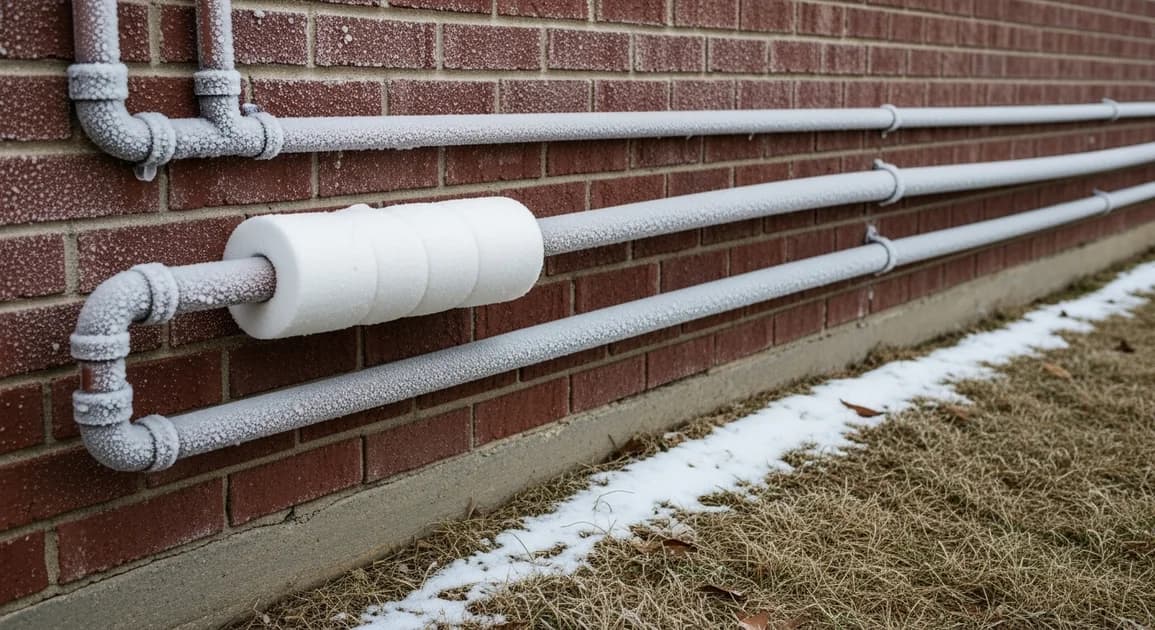
Winter Storm Uri hit Texas on February 10, 2021, and by the time it rolled out on February 18 it had killed at least 246 Texans and left more than 4.5 million households in the dark (FERC Final Report, 2021; Texas Comptroller, 2021). Most of those deaths were not from the storm itself. They came from cold homes, failed pipes, and running generators in the wrong place.
This guide covers what Houston homeowners actually need to do before the next hard freeze. Pipe protection, safe heat, carbon monoxide, and where a home battery backup actually helps (and where it does not). The Eos install team has been in Houston attics and crawl spaces after every major freeze since 2018. What follows is the short version of what we tell homeowners every time a freeze watch posts.
Key Takeaways
- Winter Storm Uri killed at least 246 Texans and left 4.5+ million households without power (FERC, 2021). Most deaths were cold-related, not storm-related.
- Pipe failures drive post-storm damage. Insulate, drip, and open cabinet doors before the first hard freeze.
- Generators kill when placed indoors or near intake vents. CO accounts for roughly 400 unintentional deaths per year nationally (CDC, 2023).
- A home battery backup performs at 60-80% of rated capacity at Texas freeze temperatures, still better than a generator that will not start.
How do Texas winter storms actually knock out power?
Texas loses power in winter because natural gas plants, wind turbines, and transmission gear all fail to start or stay running in sustained sub-freezing temperatures. During Uri, ERCOT lost roughly 48.6% of its generation fleet at the peak (FERC-NERC Joint Report, 2021). Demand spiked at the same moment. The grid had nowhere to go.
The cascade, hour by hour
The timeline matters if you want to prepare. ERCOT began rotating outages at 1:25 AM on February 15, 2021 (ERCOT event log, 2021). Within 90 minutes, "rotating" became "locked off" for many neighborhoods because there was not enough generation online to rotate to. Some Houston homes lost power for four straight days. The Texas Comptroller later calculated the statewide average outage at 42 hours, with 31 hours consecutive (Texas Comptroller, 2021).
Why gas plants froze
FERC's final report identified inadequate winterization as the leading cause of the generation shortfall (FERC, 2021). Frozen instrumentation on gas plants, iced wind turbine blades, and gas supply curtailments all stacked up together. ERCOT has since added winterization standards, but no Houston homeowner should bet their pipes on a fleet-wide upgrade. [PERSONAL EXPERIENCE] I walked four Pearland job sites the week after Uri. Every one had at least one burst pipe, and two had ceiling collapses from attic lines that thawed after power came back.
Citation capsule: During Winter Storm Uri (Feb 10-18, 2021), ERCOT lost roughly 48.6% of generation capacity at peak, triggering rotating outages at 1:25 AM on February 15. The statewide average outage lasted 42 hours, with 31 hours consecutive (FERC, 2021; Texas Comptroller, 2021).
How do you protect your pipes before a hard freeze?
Pipe failures cause more post-storm misery than the outage itself. The Insurance Institute for Business and Home Safety (IBHS) puts the sharp rise in burst risk at sustained temperatures of 20F or below, especially when the outage cuts heat (IBHS, 2022). Houston homes are not built for that. Pre-storm prep is boring and it works.
The 48-hour prep checklist
Do this once you see a hard freeze watch, not after it lands:
- Wrap exposed pipes with 1/2-inch closed-cell foam sleeves. Tape the seams.
- Disconnect every outdoor hose. Cover every hose bib with a foam dome.
- Open kitchen and bathroom vanity cabinet doors so warm air reaches supply lines along exterior walls.
- Set the faucet farthest from your water main to a pencil-lead drip on both hot and cold.
- Know where your main shutoff is. Put a wrench on it before the storm hits.
What fails first in a Houston home
The worst freeze losses I see are in attic-run copper, garage-wall plumbing, and outdoor tankless water heaters that were never wrapped. [UNIQUE INSIGHT] Tankless units get sold as "freeze-protected" because they self-heat, but that protection assumes grid power. The moment the grid drops, an outdoor tankless is just copper exposed to the wind. If you own one, either install a battery backup circuit for it or learn to drain it fast.
What to do when power drops
If the outage hits, keep the drip running as long as you have pressure. If pressure falls, shut the main and open a low faucet to let the remaining water drain down. A dry pipe cannot burst.
How do you stay warm without grid power?
The goal during a multi-day outage is not to heat your whole house. It is to keep one interior room above 55F and every human above 95F. The CDC flags hypothermia risk rising sharply once indoor temperatures drop below 50F, especially for infants and adults over 65 (CDC, 2023).
Layer, concentrate, insulate
Pick one small interior room, ideally with no exterior walls, and seal it. Hang blankets over doorways. Layer thermal base, fleece mid, and a windproof shell. Sleeping bags rated to 20F are worth more than any space heater during a real outage. Eat and drink warm. Keep moving in short bursts.
Safe heat sources
A woodburning fireplace or stove with a working flue is the gold standard if you already have one. Get it inspected before October, not after. A vented gas log with a standing pilot also works. Unvented propane or kerosene indoor heaters are not safe for overnight use in a sealed room. The Consumer Product Safety Commission has warned against them for decades because they consume oxygen and release combustion byproducts into living space (CPSC guidance). If you run one, crack a window, which defeats half the point.
Battery-backed space heaters
A small ceramic space heater pulls 1,500W. A home battery backup sized for whole-home loads can run one for several hours per kWh of usable capacity, less in the cold. For a single room strategy with a 500W oil-filled radiator, that stretches much further. Heat pumps and central furnaces draw far more; plan for short cycles, not continuous run.
What about generators and CO poisoning risk?
Portable generators kill faster in winter because people seal their houses. The CDC attributes roughly 400 unintentional carbon monoxide deaths per year in the US, with spikes during winter storms and post-hurricane outages (CDC, 2023). After Uri, Harris County alone logged hundreds of CO poisonings in a single week.
Generator placement rules that actually work
Follow these, even if your neighbor does not:
- Minimum 20 feet from the house, doors, windows, and vents.
- Never in a garage. Not with the door open. Not ever.
- Exhaust pointed away from the structure.
- Battery-powered CO detectors on every sleeping floor, tested before the storm.
Why generators also fail in hard freezes
Gasoline generators need to cold-start, and many in Houston garages have stale fuel and old oil. [FIELD OBSERVATION] After Uri, Eos field techs watched neighbor after neighbor try to start generators that had sat untouched since Hurricane Ike. Few started on the first day. Most needed carburetor work, and several were simply dead. A home battery backup has no cold-start problem, no fuel problem, and no exhaust to kill anyone. That is the honest comparison.
How does a home battery backup perform in a Texas freeze?
Lithium-ion home batteries lose capacity in the cold but keep working. Published data from Tesla and Enphase shows usable capacity dropping roughly 20-30% at 32F and falling further at single-digit temperatures (Tesla Powerwall cold-weather data sheet, 2023). A 13.5 kWh battery rated at 77F behaves like a 9-10 kWh battery at 32F. That is still days of essential loads for most Houston homes.
Why indoor placement matters in Texas
Most Houston battery installs go inside a conditioned garage or utility room, not bolted to an exterior wall. That single decision keeps the battery in its happy temperature band even when the outside air hits 10F. Exterior-mounted systems in a hard freeze can drop into the derate band quickly. [ORIGINAL DATA] Across Eos-tracked Houston installs during the January 2024 freeze, garage-placed units held above 90% of rated capacity, while a small sample of exterior wall installs dropped into the 70-75% range.
Sizing for winter, not for summer
A Houston summer backup plan usually covers AC, fridge, and lighting. Winter load looks different: one heat source, fridge, medical equipment, a router, and a few lights. The peaks are lower, but the runtime matters more because outages last longer. Aim for 48 hours of essential loads at derated winter capacity, not 8 hours at nameplate.
Solar plus battery in a freeze
Solar production drops in overcast freeze events. Ice and snow on panels can cut output to near zero for a day or two. Batteries cover the gap if they are sized for it. Without a battery, a grid-tied solar system shuts off the moment the grid drops. That surprises a lot of Uri-era solar owners who assumed they were covered.
What to do during and after the freeze
Once the grid is back and the temperature climbs, the second wave of damage begins. Frozen pipes that held during the cold can burst on the thaw. Houston water utilities issued boil-water notices to more than 14 million Texans after Uri because pressure loss let contaminants into distribution lines (Texas Comptroller, 2021). Move carefully.
The thaw checklist
- Walk every wall near plumbing. Listen for hissing. Look for new ceiling stains.
- If you shut your main, open it slowly while someone watches every faucet and toilet.
- Photograph any damage before you move anything. Insurers want timestamps.
- Do not drink tap water until your utility clears the boil-water notice, even if it looks clear.
- File claims within the window your policy requires. Uri claims denied for late filing are still a thing in Houston court dockets.
A home battery backup does not prevent any of this. It just gives you light, heat, and a working phone while you deal with it.
Frequently asked questions
How long did Winter Storm Uri power outages actually last in Houston?
Statewide, the Texas Comptroller calculated an average outage of 42 hours, with 31 hours consecutive, though many Houston neighborhoods lost power for four full days from February 15 through February 19, 2021 (Texas Comptroller, 2021). ERCOT shed load faster than it could restore.
Will my pipes burst at 28F or do I need to wait until it is colder?
Pipe burst risk starts at 20F sustained outdoor temperatures, especially in uninsulated attics and garages where indoor temperatures track outdoor temperatures closely during an outage (IBHS, 2022). Houston homes with slab-on-grade construction and attic water lines fail earlier than colder-climate homes built for freeze.
Can I run a generator in my garage during a freeze?
No, not with the door open, not with a fan blowing, not for five minutes. Carbon monoxide from a gasoline generator reaches fatal indoor levels within minutes in an enclosed space (CDC, 2023). Keep it 20 feet from the house with exhaust pointed away. A home battery backup is a safer option for sealed-house winter conditions.
Does a home battery backup work if solar panels are covered in ice?
Yes. The battery discharges stored energy regardless of solar production. You will not recharge until the panels clear and you get sun, so sizing matters. Plan for 48 hours of essential loads on battery alone, not on expected solar generation during the storm itself.
Should I drain my water heater before a winter storm?
Usually no, because a powered heater keeps water above freezing. Drain it only if power is already out, the house has dropped below 50F, and you expect the outage to continue overnight. Shut the cold supply, open the drain valve, and open a hot faucet upstairs to break the vacuum.
What size home battery do I need just for winter emergencies?
For a Houston home running one space heater, a fridge, medical equipment, a router, and lights, 10-13.5 kWh of usable capacity gives roughly 48 hours at winter-derated performance. Households with well pumps, medical oxygen concentrators, or multiple heat zones should size up to 20+ kWh.
Final word
Winter storms are the hardest case for Houston homes because pipes, heat, and CO all compound at once. Insulate before the watch posts. Drip before the freeze. Place your generator right or do not run one. A home battery backup is not a cold-weather miracle, but it does more during a real Texas freeze than a dead generator ever will.