How Often Will You Actually Use a Home Battery in Houston?

How Often Will You Actually Use a Home Battery in Houston?
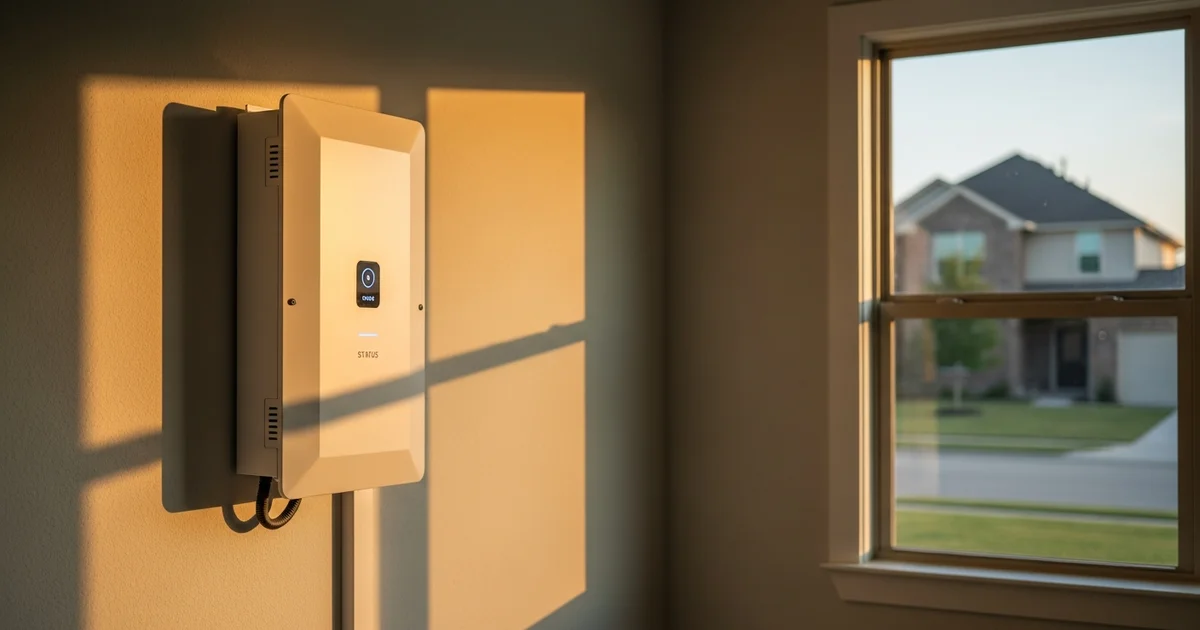
Picture a home battery bolted to your garage wall, sitting idle 360 days a year, waiting for a storm that may never come. That is the mental image that stops a lot of Houston buyers cold. Then July 2024 happened. Hurricane Beryl knocked out power to 2.2 million CenterPoint customers, and eight days later 88,000 homes were still dark (CBS News, 2024).
So which is it? An expensive appliance that rarely runs, or the one thing standing between your family and an eight-day blackout? The honest answer is both, and it depends on how you set the system up.
This post gives you real numbers, not a sales pitch: how many outages Houston actually sees, how long they last, and the difference between a battery used only for backup and one cycled every single day.
Key Takeaways
- The average U.S. customer loses power about 1.3 times per year for roughly 5.5 hours total (U.S. EIA, 2024), and Houston's storm exposure pushes the high end well past that.
- Houston's risk is the long tail: Beryl left 88,000 homes dark after 8 days (CBS News, 2024), not the frequency of everyday blips.
- In backup-only mode a battery may run just 20 to 60 hours a year, by design.
- Daily off-peak cycling turns that same battery into a 365-day appliance, no solar required.
[INTERNAL-LINK: get a Houston battery backup quote in under 2 minutes -> /home-backup-planner?source=blog&slug=home-battery-usage-frequency-houston]
How Many Power Outages Does Houston Actually Have Per Year?
The average U.S. electricity customer experiences about 1.3 sustained interruptions and 5.5 hours without power per year (U.S. EIA, 2024). That national figure is the right starting point, and Houston's hurricane and ice-storm exposure pushes a typical year toward the higher end of it.
Utilities track this with two metrics worth knowing. SAIFI counts how often the average customer loses power. SAIDI measures how many total minutes they spend in the dark. A low SAIFI with a high SAIDI means few outages, but long ones, which is exactly Houston's profile in a bad storm year.
Most of what your meter records are momentary blips: a recloser trips during a thunderstorm, power flickers, and it is back in seconds. Those barely register as "usage" for a battery owner. The events that matter are the sustained ones, where the lights stay off for hours or days.
According to the U.S. Energy Information Administration, the typical American home loses grid power around 1.3 times a year for a combined 5.5 hours (U.S. EIA, 2024). For a Houston household, a normal year often looks like a small number of sustained interruptions plus a scattering of brief flickers, with the real risk concentrated in storm season.
For the bigger reliability picture, see what ERCOT reliability data means for Houston homes.
How Long Do Those Outages Last, and Why the Tail Matters
Most Houston outages are short, but the city's real exposure is the rare multi-day event. Beryl was only a Category 1 storm, yet it left 2.2 million customers without power and 88,000 still dark after a full week (CBS News, 2024). That tail, not the everyday blip, is what defines the risk.
Look at the pattern across major events. Hurricane Ike in 2008 took out roughly 2.8 million CenterPoint customers. Winter Storm Uri in 2021 left around 1.5 million Houston-area homes freezing for days. Beryl repeated the lesson in 2024. The frequency is low, but when it hits, restoration is measured in days, not minutes.
A battery's value concentrates almost entirely in those rare severe events. Ninety-five percent of the year, the grid holds. The other slice is when an idle-looking appliance suddenly becomes the most useful thing you own.
The takeaway here is simple. Houston's outage risk is defined by rare multi-day events, not by frequency. Beryl alone left 88,000 homes without power after eight days, which is why owners measure a battery by what it does in a crisis, not by how busy it looks the rest of the year. For the fundamentals, read home battery backup basics for Houston.
Backup-Only Use: How Often the Battery Really Kicks In
In pure backup mode, a Houston battery actively runs during only a handful of meaningful events a year. A realistic estimate is 3 to 6 sustained outages, each lasting a few hours to a few days, which adds up to roughly 20 to 60 hours of active duty annually. The rest of the time it sits charged and quiet.
What counts as "meaningful"? Not a two-second flicker. A meaningful event is one where the lights stay off long enough that you would otherwise be reaching for flashlights, worrying about the fridge, or losing your home office. Those are the moments owners remember.
Here is the honest part most installers skip: if you only ever run backup mode, your battery is idle most of the year by design. That is not a flaw. It is insurance. You do not judge a smoke detector by how often it goes off. You judge it by whether it works the one night it matters.
In backup-only mode, a typical Houston battery runs an estimated 20 to 60 hours per year across a handful of sustained outages. That is intentional. The system is an insurance leg that stays dormant until a Beryl-scale event arrives, then carries your essential circuits for hours or days.
[INTERNAL-LINK: check if your home qualifies for a 9 to 45 kWh system -> /home-backup-planner?source=blog&slug=home-battery-usage-frequency-houston]
Daily Cycling Without Solar: Using the Battery Every Single Day
With off-peak charging, a Houston home can put the battery to work every day, no solar panels required. The system charges when grid electricity is cheapest and discharges during expensive peak hours, shifting your usage instead of just storing it for emergencies. That alone changes the math from "idle 360 days" to "active 365 days."
How does daily cycling work on a standalone battery? You set a schedule. Overnight or in low-demand windows, the battery pulls cheap power from the grid. During the afternoon and evening peak, your home draws from the battery instead of the meter. One full charge-and-discharge is one cycle, and daily cycling means about 365 cycles a year.
Is that sustainable for the hardware? Yes. Modern lithium iron phosphate (LFP) cells are commonly rated for several thousand full cycles before meaningful degradation. At roughly 365 cycles a year, that rated life supports daily cycling for many years, which is why standalone batteries are built for everyday work, not just emergencies.
Off-peak daily cycling turns a backup battery into a 365-day appliance with no solar attached. At about 365 cycles a year against an LFP cell rated for several thousand cycles, daily use is well within the hardware's design life, so the same system that waits out storms can also trim your everyday grid draw.
Eos offers tiers from the Essential 9 kWh up through the Plus 18 kWh, Pro 27 kWh, Premium 36 kWh, and Ultimate 45 kWh, so you can size capacity to how aggressively you plan to cycle. To see the full lineup, compare battery tiers from 9 to 45 kWh. Daily cycling also pairs well with standalone setups covered in our guide to daily off-peak cycling without solar.
Backup-Only Value vs Everyday-Cycling Value: Which Mode Fits You?
The two modes deliver different kinds of value, and most owners end up using both. Backup mode is the insurance leg: rare, decisive, and idle by design. Daily cycling is the engagement leg: routine, hands-on, and active every day. Frequency alone is the wrong yardstick because it only measures one of the two jobs the battery does.
A backup-only buyer wants peace of mind. They size for essential circuits, run the system a few dozen hours a year, and consider it money well spent the first time a storm rolls through. A cycling buyer wants daily utility on top of that protection, so they engage with the app, shift their peak usage, and watch the system work every afternoon.
In our experience installing across the Houston metro, plenty of customers who bought "just for outages" enable daily off-peak charging within the first few months, usually once they open the app and see the battery sitting there. The backup events, though infrequent, are still the moments those same owners point to as the reason they bought it.
The honest takeaway: most owners use both modes, so frequency alone is the wrong way to judge a battery. The rare-but-severe outage is the insurance leg, and the daily cycle is the usage leg. To weigh the full cost picture, see whether a home battery is worth it in Texas.
[INTERNAL-LINK: see your monthly payment for whole-home backup -> /home-backup-planner?source=blog&slug=home-battery-usage-frequency-houston]
Prefer to talk it through? Call us at (832) 224-5025 and we will walk you through both modes for your specific home.
Frequently Asked Questions
How many power outages does Houston have per year?
The average U.S. customer sees about 1.3 sustained interruptions and 5.5 hours without power per year (U.S. EIA, 2024). Houston's storm exposure tends to push the duration higher, so a typical year means a few sustained outages plus brief flickers, with most of the risk in storm season.
Do you use a home battery every day or only during outages?
Both are options. In backup-only mode, the battery runs only during sustained outages, roughly 20 to 60 hours a year. With off-peak daily cycling, it works every day, about 365 cycles a year, charging on cheap power and discharging at peak. Most owners eventually run both modes.
Is a home battery worth it if outages are rare?
Yes, if you value the rare-but-severe event or daily cycling. Beryl left 88,000 Houston homes dark after 8 days (CBS News, 2024). Judging a battery by frequency alone undersells it, because the insurance leg plus optional daily use together justify the system.
How long do Houston power outages usually last?
Most are short, often minutes to a few hours. The real risk is the multi-day tail seen in major storms. Beryl left 2.2 million customers out and 88,000 still dark after a week (CBS News, 2024). A battery's value concentrates in those rare, long events.
The Honest Bottom Line
So how often will you actually use a home battery in Houston? It depends on which job you give it.
- Houston sees a handful of meaningful sustained outages in a typical year, on top of brief flickers that barely count.
- Outage durations skew short, but the risk lives in the multi-day tail, like Beryl's 88,000 homes still dark after 8 days.
- In backup-only mode the system runs an estimated 20 to 60 hours a year, idle by design the rest of the time.
- Turn on off-peak daily cycling and the same battery becomes a 365-day appliance, no solar needed.
- Judge it by modes, not frequency: the rare outage is insurance, the daily cycle is usage, and most owners want both.
The right question was never "how often." It was "in how many ways." A battery is an always-on appliance with two duty cycles, and you choose how hard it works.
[INTERNAL-LINK: get a fixed-price install quote for your address -> /home-backup-planner?source=blog&slug=home-battery-usage-frequency-houston]