Home Battery Financing in Texas: Cash, Loan, or Monthly Pay

Home Battery Financing in Texas: Cash, Loan, or Monthly Pay
A whole-home battery is one of the larger upgrades a Texas family buys, and the first question after "which size" is almost always "how do I pay for it." Texas homeowners have three real paths: pay cash, take a storage loan, or choose a fixed monthly plan. Each one carries a different lifetime cost and a different effect on your monthly budget.
Most cost articles stop at the sticker price. They tell you a system runs roughly $9,915 to $23,030, then leave you stuck on the question that actually stalls the decision: how do you spread that out, and is spreading it worth the interest?
This guide lays out all three options, what each really costs over the full term, and a simple rule for choosing. One thing up front: none of these options require you to also buy solar.
[INTERNAL-LINK: see your monthly payment for whole-home backup → /home-backup-planner]
TL;DR Texas homeowners can pay for a home battery three ways: cash (lowest lifetime cost, full ownership day one), a secured or unsecured storage loan (spreads the cost, adds interest), or a fixed monthly plan (no large upfront, predictable bill). Eos residential systems run from about $87 to $227 a month on the 240-month plan, or pay cash to skip all interest. None of these require solar.
Can You Finance a Home Battery Backup in Texas?
Yes. Texas homeowners have three standard ways to pay: cash, a storage loan, or a fixed monthly payment plan. Eos offers terms from a 6-month zero-interest option up to a 240-month plan, with residential systems starting around $87 a month for the smallest tier.
Financing does not require solar. A common assumption is that battery storage has to ride on a solar loan, but that is not the case. Battery backup can be financed as a standalone system, with or without panels on the roof. If you want backup power and nothing else, you can finance exactly that.
According to Eos plan data, Texas homeowners can finance a home battery on terms ranging from a 6-month zero-interest option to a 240-month plan, with residential systems starting near $87 a month (Eos plans.ts, 2026). Storage financing does not require solar, so a battery can be bought as a standalone backup system.
Why does this matter so much right now? Texas recorded 263 power outage events from 2019 to 2023, more than any other state in the country (Governing.com, 2023). Demand for backup is high, and the payment question is the last thing standing between most homeowners and a quote.
[INTERNAL-LINK: compare battery backup plans and sizes → /plans]
Option 1: Paying Cash (Lowest Lifetime Cost)
Paying cash is the cheapest way to own a home battery over its life, because you pay zero interest and own the system outright on day one. Eos residential systems range from $9,915 to $23,030 cash, depending on size, from the Essential 9 kWh up to the Ultimate 45 kWh.
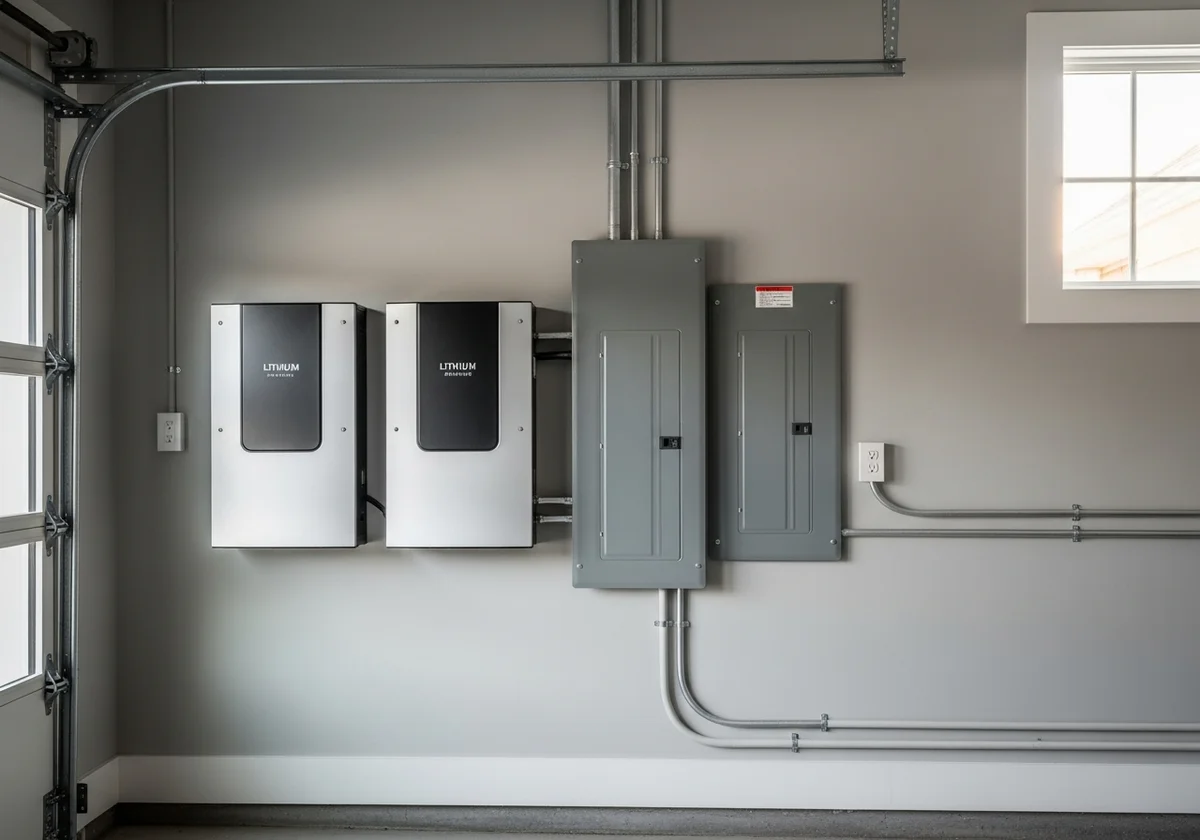
Cash is the simplest path. There is no application, no monthly obligation, and no interest to track. You buy the system, it gets installed, and you own it. That ownership also adds to your home's value, which matters when you sell.
Eos residential battery systems range from $9,915 cash for the Essential 9 kWh up to $23,030 cash for the Ultimate 45 kWh (Eos plans.ts, 2026). Paying cash means zero interest over the system's life and full ownership on day one, making it the lowest lifetime-cost path for owners who plan to stay in the home long term.
Cash makes the most sense when two things are true: you have the funds available without straining your reserves, and you plan to stay in the home long enough to enjoy the years of free backup after the system is paid off. For a deeper look at total installed pricing, see our [INTERNAL-LINK: full home battery cost breakdown for Texas → /blog/home-battery-backup-cost-texas].
Option 2: Storage Loans (Secured vs Unsecured)
A storage loan spreads the cost into monthly installments and adds interest, so you pay more over the full term but avoid a large upfront. Loans come in two forms: secured, which carries a lower APR because it is backed by the system or home equity, and unsecured, which is faster and needs no collateral but usually carries a higher APR.
The tradeoff is straightforward. Secured loans cost less in interest but take longer to approve and put an asset behind the debt. Unsecured loans approve quickly and risk no collateral, but you pay for that convenience with a higher rate. Both turn a five-figure purchase into a manageable monthly number.
Term length is the other big lever. A longer term lowers your monthly payment but raises the total you pay over the life of the loan. The chart below shows how the monthly payment for the popular Pro 27 kWh system changes across Eos terms.
A separate 6-month zero-interest option exists for buyers who want to spread the payment without paying any interest at all. That one is a short bridge, not a long-term loan.
[INTERNAL-LINK: get a fixed-price install quote for your address → /home-backup-planner]
Option 3: Fixed Monthly Payment Plans
A fixed monthly plan turns the system into a predictable bill with no large upfront. Eos residential plans run from about $87 a month for the Essential 9 kWh to about $227 a month for the Ultimate 45 kWh on the 240-month term, with shorter terms available at higher monthlies.
The appeal is budgeting certainty. You know the exact number every month, it does not move, and there is no five-figure check to write at the start. The monthly scales with system size, so you can match the payment to both the backup you need and the budget you have.
Eos residential battery plans run from about $87 a month for the Essential 9 kWh system to about $227 a month for the Ultimate 45 kWh, both on the 240-month term (Eos plans.ts, 2026). A fixed monthly plan removes the large upfront cost and turns whole-home backup into a predictable bill that does not change month to month.
In our Houston quotes, most homeowners who choose financing pick the longest term for the lowest monthly, then prepay when they can. The 6-month zero-interest option is the one cash-flush buyers use to spread payment with no interest cost.
Cash vs Financing: How to Compare APR Against Paying Cash
To compare, multiply the monthly payment by the number of months to get total paid, then subtract the cash price. The difference is your cost of financing. If that cost is less than what your cash could earn elsewhere, financing can make sense even when you could pay cash outright.
Here is the method on a real system. The Pro 27 kWh costs $16,472 cash or $169.90 a month on the 240-month plan. Multiply $169.90 by 240 and you get the total paid over the full term. Subtract the $16,472 cash price, and the remainder is what the financing costs you in plain dollars. That single number, not the monthly, is what you actually compare.
The honest comparison is simple: multiply the Eos monthly payment by the number of months, then subtract the cash price to see the dollar cost of financing. The Pro 27 kWh runs $16,472 cash versus $169.90 a month on the 240-month plan (Eos plans.ts, 2026), so the gap between those two totals is the price of spreading the cost.
Now the part no competitor frames clearly: the right choice is not about the lowest monthly, it is about how long you plan to own the home. Owners staying ten or more years lean toward cash or a short term, because they capture years of paid-off backup. Owners who may move sooner can lean toward the low monthly, since a battery raises resale value, so the spend is not lost when they sell. See [INTERNAL-LINK: how a battery can raise your home's resale value → /blog/is-home-battery-backup-worth-it-texas] for the resale side of that math.
If you are still weighing the system itself against the cost, our guide to [INTERNAL-LINK: home battery backup in Houston → /blog/home-battery-backup-houston-texas] rounds out the decision.
Frequently Asked Questions
Can you finance a home battery without solar in Texas?
Yes. Battery storage can be financed on its own, and solar is not required. Eos offers standalone backup financing with terms from a 6-month zero-interest option up to 240 months (Eos plans.ts, 2026). You can add panels later or never, and the battery financing stands on its own.
What is the monthly payment for a home battery backup?
Eos residential plans run from about $87 a month for the Essential 9 kWh system to about $227 a month for the Ultimate 45 kWh, both on the 240-month term (Eos plans.ts, 2026). Shorter terms cost more per month but less in total, since you pay interest over fewer months.
Is it cheaper to pay cash or finance a battery backup?
Cash is cheaper over the life of the system because you pay zero interest. Eos cash prices run $9,915 to $23,030 (Eos plans.ts, 2026). Financing costs more in total but preserves your cash and gives you a predictable monthly bill instead of a large upfront payment.
What loan terms are available for home battery storage?
Eos offers a 6-month zero-interest option plus 60, 120, and 240-month plans (Eos plans.ts, 2026). The longer the term, the lower the monthly payment and the higher the total paid. For the Pro 27 kWh, that ranges from $325.72 a month over 60 months down to $169.90 over 240 months.
Ready to Move Forward?
Three ways to pay, one simple rule. Cash gives you the lowest lifetime cost and full ownership on day one. A storage loan spreads the cost and adds interest, but avoids a big upfront. A fixed monthly plan turns whole-home backup into a predictable bill from about $87 to $227 a month. None of them require solar.
The right choice comes down to how long you plan to own the home. Stay ten or more years and cash or a short term usually wins. Plan to move sooner and a low monthly makes sense, because the battery raises resale value.
The fastest way to see your real numbers is an exact quote for your address and system size.
[INTERNAL-LINK: get a Houston battery backup quote in under 2 minutes → /home-backup-planner]
Prefer to talk it through? Call our Houston team and we will walk you through cash and monthly options for your exact system size.