Galveston Battery Backup: Hurricane, Surge Zone, and Salt-Air Survival Guide

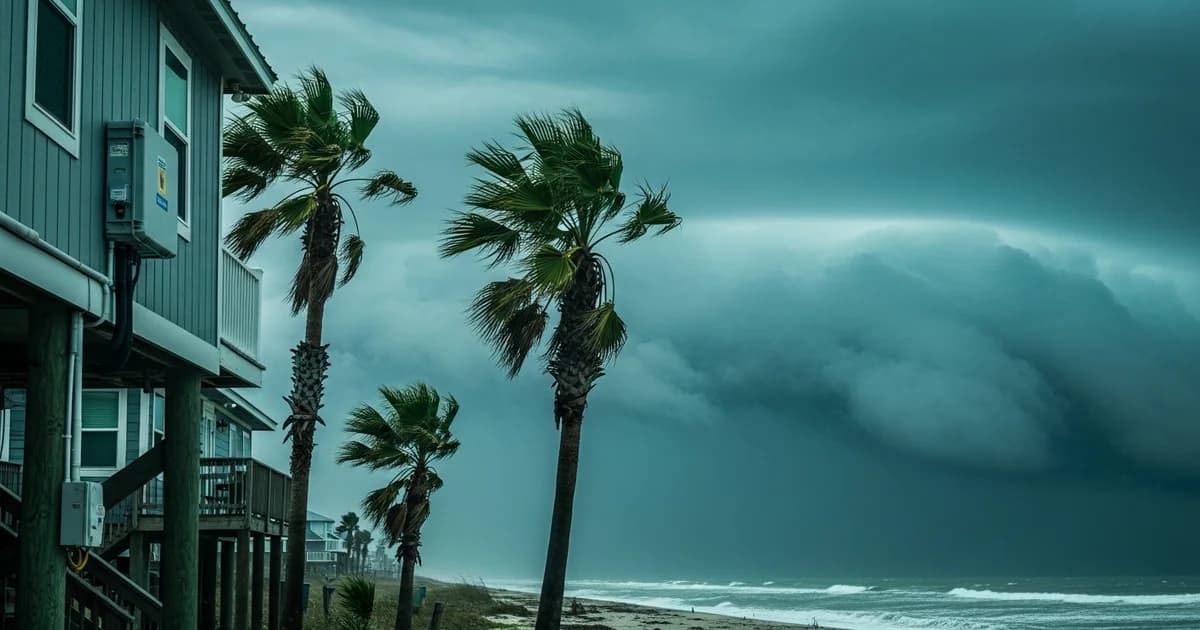
Hurricane Ike came ashore at Galveston Island on September 13, 2008, and cut power to more than 3 million homes and businesses across the region (National Weather Service Houston/Galveston, 2008). Mainland neighborhoods mostly had lights back within days. On the island, restoration stretched into weeks. That is the honest baseline for anyone planning backup power here: Galveston homeowners face outage risk from two directions at once, the storms themselves and a small utility territory sitting at the literal end of the line.
This guide is a four-step survival spec for battery backup that actually lasts on a barrier island. Size for air conditioning first. Mount above the flood line. Spec against salt air. Plan for evacuation, not just ride-out.
Key Takeaways
- Hurricane Ike cut power to 3+ million area customers in 2008, and parts of Galveston Island waited weeks for restoration (NWS Houston/Galveston, 2008).
- Base flood elevation on the island runs roughly 8 to 18 feet, so the battery mounts at living level, never at slab or garage grade.
- Salt air demands a NEMA 4X enclosure, stainless hardware, and a periodic fresh-water rinse.
- Texas-New Mexico Power, not CenterPoint, runs the island's wires, and a battery decouples your home from that restoration queue.
[INTERNAL-LINK: get a Galveston battery backup quote in under 2 minutes → /home-backup-planner?source=blog&slug=galveston-battery-backup-coastal-hurricane]
Why Is Galveston the Hardest Place in the Houston Metro to Keep the Lights On?
Four days after Ike's landfall, roughly 875,000 Texas customers were still in the dark, and the island sat at the back of that line (NBC News, 2008). Galveston is a barrier island. It takes the first landfall, the full surge, and the slowest restoration in the metro.
[IMAGE: Elevated Galveston beach houses on wooden pilings under dark hurricane storm clouds near the seawall - search "Galveston elevated beach houses storm clouds"]
The geography explains the timeline. Repair crews, bucket trucks, and replacement transformers all reach the island over the causeway, and they only roll in after the surge recedes and the bridge is inspected. After Ike, basic services on the island took a week or more to return, and the hardest-hit blocks waited weeks (CBS News, 2008). Beryl repeated the lesson in July 2024, tearing through the island with widespread outages and damage before it ever reached Houston (FOX Weather, 2024).
Here is the passage worth remembering: Galveston Island is the maximum outage-risk zone in the Houston metro. Hurricane Ike knocked out power to more than 3 million regional customers in 2008, and island restoration was measured in weeks while mainland suburbs recovered in days (NWS Houston/Galveston, 2008). Backup planning on the island has to assume long-duration events, not the 2-hour blips inland homeowners plan around.
Who Runs the Wires on Galveston Island?
Texas-New Mexico Power, not CenterPoint, is the transmission and distribution utility for Galveston Island. TNMP serves roughly 270,000 Texas customers in scattered pockets, including Galveston, Texas City, and League City, making it the smallest of ERCOT's five poles-and-wires utilities (Texas-New Mexico Power, 2025). Nearly every Houston-metro backup guide assumes CenterPoint. On the island, that assumption is simply wrong.
Why does the name on the pole matter for your backup plan? Because after a named storm, TNMP runs its own restoration sequence with its own crews and mutual-aid contracts, separate from CenterPoint's mainland effort. Your neighbors 30 miles inland can be fully repowered while island feeders are still being rebuilt. We covered the mainland side of that county in our League City hurricane battery guide, and the contrast is the point: a home battery removes the question of whose queue you are in, because your fridge, lights, and AC keep running either way.
Step 1: Size for Air Conditioning First, Everything Else Second
In Galveston's July humidity, air conditioning is a health load, not a comfort load, so island sizing starts from the AC and works down. As a site standard, each 9 kWh battery module delivers up to 6 hours of backup at a minimal household load of about 1.5 kWh per hour (Eos plan specifications, 2026). Add AC and that math changes fast, so plan for it honestly.
Here is how the tiers map to island life:
- Essential (9 kWh): fridge, Wi-Fi, lights, phone chargers, medical devices. Up to 6 hours at minimal load. A ride-out minimum, not an AC plan.
- Plus (18 kWh): adds one cooling zone, a window unit or a single mini-split. Up to 12 hours at minimal load.
- Pro (27 kWh): whole-home coverage with managed central AC through a smart panel. Up to 18 hours at minimal load.
- Premium (36 kWh): multi-day, AC-priority runtime for extended restorations, up to 24 hours at minimal load. For more capacity, the Ultimate tier steps up to 45 kWh.
[CHART: horizontal bar chart, title="Backup Runtime by Battery Tier at Minimal Load", data=[{"Essential 9 kWh":6},{"Plus 18 kWh":12},{"Pro 27 kWh":18},{"Premium 36 kWh":24}], unit="hours at about 1.5 kWh per hour household draw", source="Eos plan specifications, 2026"]
Running central AC hard will shorten every one of those figures. That is physics, and any installer who tells you otherwise is selling, not engineering. The smart panel is what makes the smaller numbers livable: it holds the AC to a schedule, protects the fridge and freezer, and stretches usable runtime through a multi-day event.
[INTERNAL-LINK: check if your home qualifies for a 9 to 45 kWh system → /home-backup-planner?source=blog&slug=galveston-battery-backup-coastal-hurricane]
Step 2: Mount It Above the Flood Line
Base flood elevation on Galveston Island runs from about 8 to 18 feet depending on where you stand, and the current FEMA flood maps date to the 2012 post-Ike restudies (City of Galveston, Flood Protection Information, 2024). The battery, controller, and smart panel all belong above that line. Never at slab. Never at ground-floor garage level on a piling home.
[IMAGE: Cross-section style illustration of a Galveston piling-elevated beach house showing a wall-mounted home battery at living level above the base flood elevation line - search "elevated coastal house pilings diagram"]
On elevated homes, that means a wall mount at living level or on a purpose-built elevated platform. On older slab homes built before the 2012 map updates, it means resisting the temptation to tuck equipment into the garage just because the conduit run is shorter. There is a second reason placement matters: under FEMA's substantial-damage rule, repairs exceeding 50 percent of a structure's pre-damage value trigger full compliance with current elevation requirements (FEMA, 2025). Equipment that survives the surge is equipment you do not rebuild, re-permit, and re-purchase after the storm.
From our install experience: an island install differs from a mainland Houston install in three specific ways. The mounting height conversation happens first, not last. Hardware specs step up to marine-grade fasteners by default. And commissioning includes extra checks on every conduit penetration, because a sealed wall on the island is a warranty decision, not a detail.
Step 3: Spec Against Salt Air
Salt aerosol is the slow storm. It corrodes standard outdoor electrical gear year-round, no hurricane required, and it is the single biggest spec difference between an island install and one in Katy. The fix is threefold: a NEMA 4X-rated enclosure, stainless steel fasteners, and sealed conduit penetrations at every entry point.
What does NEMA 4X actually certify? Corrosion resistance plus protection against hose-directed water, which is exactly the combination a seawall-adjacent wall takes during a tropical system (NEMA enclosure standards, 2025). Galvanized hardware that lasts decades inland can show rust bloom within a couple of coastal seasons, so stainless is not an upgrade here, it is the baseline.
Owner maintenance is refreshingly simple. Rinse the enclosure exterior with fresh water a few times a year, more often after blowing spray events, and give penetrations an annual visual check. The strongest corrosion defense of all is placement: an indoor mount at living level, above BFE, keeps the electronics out of the salt stream entirely. The same logic applies at lower intensity across the bay, which we cover in our guide to salt-air considerations for Clear Lake homes.
Step 4: Plan for Evacuation, Not Just Ride-Out
Galveston is an evacuation zone, and that changes what backup power is actually for. Inland guides picture a family riding out the outage at home. On the island, the more common reality is a mandatory evacuation order, a packed car heading up I-45, and a house left behind for days.
This is the use case nobody writes about, and it is the one island owners thank us for. While you are in San Antonio or Dallas, the battery runs the fridge, the freezer, the security cameras, and the network, unattended. You watch it all from the app. When TNMP repowers the feeder, the system recharges itself automatically, so the house re-arms between restoration and your return. No spoiled freezer full of fish. No dark house on a camera feed. No drive back across the causeway just to check.
Fold the battery into your broader storm plan alongside water, fuel, and documents. Our hurricane season power outage checklist covers the full preparation sequence for the metro, and every item on it gets easier when the house keeps its own power.
What About Windstorm Insurance?
Galveston County is the single largest exposure area for the Texas Windstorm Insurance Association, which has added more than 50,000 policies in the past two years as coastal coverage tightens (TWIA Q3 2025 Fact Book, 2025). TWIA covers wind and hail only, and it expects windstorm building-code compliance, inspections, and paperwork done right.
To be clear: a battery does not change what you pay for windstorm coverage, and we will not pretend otherwise. The relevant point is cultural. Island homeowners already live in a documentation-heavy compliance world of certified inspections and engineered structures. A professionally installed, permitted, code-compliant battery system fits that world. Eos handles the permits and inspection scheduling with the City of Galveston, so the paper trail is complete from day one.
[INTERNAL-LINK: book a free Galveston home assessment → /home-backup-planner?source=blog&slug=galveston-battery-backup-coastal-hurricane]
Prefer to talk it through with a person? Call us at +1 833-989-3737 and ask for an island install consult.
Frequently Asked Questions
Does salt air ruin home batteries on Galveston Island?
No, not when the install is specced for the coast. A NEMA 4X-rated enclosure, stainless fasteners, sealed conduit penetrations, and a periodic fresh-water rinse handle the salt aerosol. The strongest defense is mounting the equipment indoors at living level, above base flood elevation, where the electronics stay out of the salt stream entirely.
Where should a battery be mounted on an elevated Galveston home?
Above base flood elevation, which runs roughly 8 to 18 feet across the island under the 2012 FEMA flood maps (City of Galveston, 2024). On piling homes, that means a living-level wall mount or an elevated platform. Ground-floor garage mounting puts the system below the surge line.
Who is the electric utility on Galveston Island?
Texas-New Mexico Power delivers electricity on the island, serving about 270,000 Texas customers overall as the smallest of ERCOT's five poles-and-wires utilities (TNMP, 2025). You still choose your own retail provider. A home battery bridges TNMP's post-storm restoration timeline, which historically runs longer than the mainland's.
What size battery runs AC in Galveston humidity?
For AC-priority backup, the Pro (27 kWh) or Premium (36 kWh) tiers, paired with a smart panel that manages the cooling load. The Plus (18 kWh) tier can carry one cooling zone alongside essentials. Runtime at minimal load is up to 6 hours per 9 kWh module, and heavy AC use shortens that, so an in-home assessment is worth the two minutes it takes to book.
What does the battery do if I evacuate?
It keeps the fridge, freezer, security cameras, and network running unattended while you are off the island, and you monitor everything from the app. When grid power returns, the system recharges automatically, so the home is protected again before you cross the causeway back. That evacuation mode is the most-used feature in our coastal installs.
The Island-Proof Spec, in Four Lines
Size from the AC down, with the smart panel stretching runtime. Mount above BFE, at living level, never at garage grade. Spec NEMA 4X and stainless against the salt. And plan for evacuation mode, because the battery's finest hour is the week you are not home. Ike proved what the island's grid can lose. Your house does not have to prove it again.
[INTERNAL-LINK: compare 9 to 45 kWh battery plans built for coastal Texas → /plans]
Sources
- National Weather Service Houston/Galveston, Hurricane Ike 2008 review, retrieved 2026-07-18, https://www.weather.gov/hgx/projects_ike08
- NBC News, "875,000 Texans still without power after Ike", retrieved 2026-07-18, https://www.nbcnews.com/id/wbna26837432
- CBS News, "Ike-battered Texas coast remains unsafe", retrieved 2026-07-18, https://www.cbsnews.com/news/ike-battered-texas-coast-remains-unsafe/
- FOX Weather, "Hurricane Beryl damage in Galveston, Texas", retrieved 2026-07-18, https://www.foxweather.com/weather-news/hurricane-beryl-damage-galveston-texas
- Texas-New Mexico Power, service territory overview, retrieved 2026-07-18, https://www.tnmp.com/
- City of Galveston, Flood Protection Information, retrieved 2026-07-18, https://www.galvestontx.gov/925/Flood-Protection-Information
- FEMA, Substantial Damage guidance, retrieved 2026-07-18, https://www.fema.gov/floodplain-management/wildfire-earthquake-flood/substantial-damage
- Texas Windstorm Insurance Association, Q3 2025 Fact Book, retrieved 2026-07-18, https://www.twia.org/wp-content/uploads/Q3-2025-TWIA-Fact-Book.pdf
- NEMA, Enclosure Types standard, retrieved 2026-07-18, https://www.nema.org/standards/view/nema-enclosure-types