Pairing a Home Battery with a Texas Time-of-Use Electricity Plan: How the Savings Work

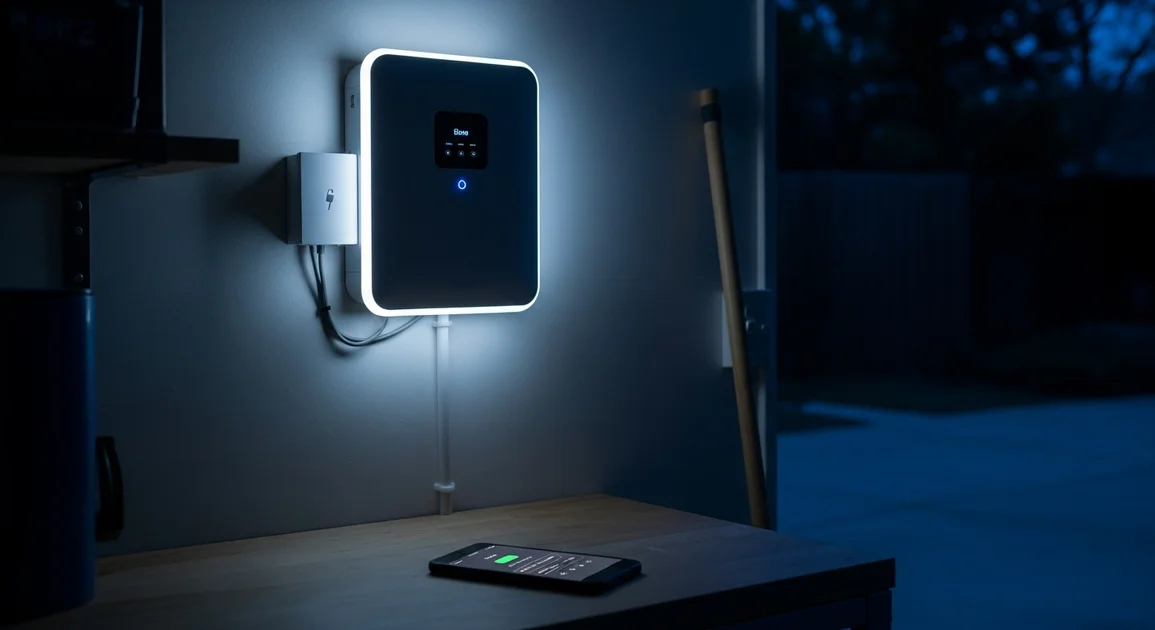
Pairing a Home Battery with a Texas Time-of-Use Electricity Plan: How the Savings Work
A home battery can trim your electricity bill on a Texas time-of-use plan, but the honest version of this story is modest, not magical. The battery charges from the grid when power is cheap or free and runs your home when power is expensive, so you buy less at the high rate. How much that saves depends entirely on your plan and your usage, and a chunk of the energy is lost to round-trip losses along the way. Think of savings as a bonus on top of the real reason to own a battery: keeping the lights on during outages.
Key Takeaways
- The average Texas residential electricity price was about 17 cents per kWh in April 2026 (EIA, 2026).
- A battery loses energy each cycle. The U.S. utility-scale fleet averaged about 82% round-trip efficiency, and home battery spec sheets cite roughly 85 to 90% (EIA, 2021).
- Free-nights and free-weekends plans are real, but the free hours are offset by higher rates at other times (PUCT, 2026).
- Savings only appear if your plan has a real price spread and you shift enough usage into the cheap window.
- This is a bonus, not a payback guarantee. The main value of a battery is outage protection, and any bill savings are extra.
[INTERNAL-LINK: see backup that can also shift your usage → /home-backup-planner?source=blog&slug=battery-backup-time-of-use-electricity-plan-texas]
Can a home battery lower your bill on a Texas time-of-use plan?
Yes, modestly, if the plan and your habits line up. On a time-of-use plan, some hours cost less than others, and a battery lets you use cheap energy during expensive hours by storing it earlier. Federal data confirms this is exactly how batteries are used at scale: buy when prices are low, discharge when prices are high (EIA, 2025).
The catch is that the savings are bounded. They come from the gap between your cheap-hour and expensive-hour rates, minus what the battery loses in the round trip. On a flat-rate plan, there is no gap to work with, so there is nothing to save.
How does load-shifting actually work?
The mechanic is simple: charge low, discharge high. Your battery fills up during the cheap or free window, often overnight, then powers your home during the expensive window instead of the grid. You still use the same electricity, you just buy it at the lower price.
What holds the savings back is efficiency. Every kilowatt-hour you store comes back a little smaller, because storing and retrieving energy loses some of it. The chart shows the gap, and it is why arbitrage can trim a bill but not transform it.
Which Texas plans make this worthwhile?
Only plans with a real price spread. Time-of-use, free-nights, and free-weekends plans exist across the Texas competitive market, and they are the ones a battery can work with. The important honesty here is that free is not free: the Public Utility Commission notes that the price of the free or discounted hours is offset by higher rates during the other hours (PUCT, 2026).
So the strategy only pays off if you can move enough of your usage into the cheap window to come out ahead of those higher rates. If your household runs hard during the expensive hours regardless, the plan can cost you more, battery or not. Read the Electricity Facts Label before you switch. The best fit is a household that can run its heaviest loads, like laundry, the dishwasher, and a pool pump, in the cheap window and lean on the battery the rest of the day.
How much can you realistically save?
It depends, and anyone who gives you a firm number without seeing your bill is guessing. Your savings scale with three things: the size of the gap between your cheap and expensive rates, how much load you actually shift, and your battery's capacity. Round-trip losses of 10 to 18% then shave the result (EIA, 2021).
For most Texas homes this is a nice-to-have that lowers the bill somewhat, not an investment that pays for the battery on its own. For the full return-on-investment picture, see our honest look at [INTERNAL-LINK: whether a home battery is worth it in Texas → /blog/is-home-battery-backup-worth-it-texas].
Why backup is the main value and savings are the bonus
Because the dollars that matter most are the ones you do not lose during an outage. A battery that keeps your fridge, medical devices, and air conditioning running through a multi-day Houston storm is doing its real job. The time-of-use savings are a pleasant addition that runs quietly in the background the rest of the year.
When we quote a Houston home, we frame it that way on purpose: buy the battery for the outages, and let the bill savings be a bonus. If you also have solar, the math shifts in your favor, since you can store your own generation instead of buying from the grid at all. Our guide on [INTERNAL-LINK: solar plus battery storage in Houston → /blog/solar-battery-storage-houston] covers that combination.
[INTERNAL-LINK: get a home battery quote in under 2 minutes → /home-backup-planner?source=blog&slug=battery-backup-time-of-use-electricity-plan-texas]
Prefer to talk it through? Call Eos at 713-207-2222 for a same-week Houston site survey.
Frequently asked questions
Can a home battery save money on electricity in Texas?
It can trim your bill on a time-of-use plan by shifting usage from expensive hours to cheap ones. The savings are modest and depend on your plan and usage, and they are a bonus on top of the battery's main job, outage protection.
Do I need a special electricity plan for this to work?
Yes. You need a plan with a real price difference between hours, such as a time-of-use or free-nights plan. On a flat-rate plan there is nothing to shift, so a battery saves nothing on the energy charge.
How much energy does a battery lose in the round trip?
Roughly 10 to 18%. The U.S. utility-scale fleet averaged about 82% round-trip efficiency, and home battery spec sheets cite around 85 to 90% (EIA, 2021). That loss caps how much load-shifting can save.
Is a home battery a payback investment in Texas?
Not on time-of-use savings alone, for most homes. The savings help, but the battery is bought primarily for backup power. Treat any bill reduction as a bonus rather than a payback plan.
Does solar change the math?
Yes, favorably. With solar, the battery can store energy you generated for free rather than buying it from the grid, which improves the economics beyond simple time-of-use shifting.
This article explains pairing a home battery with a Texas time-of-use electricity plan and reflects Eos specifications as of July 2026. It does not promise specific savings; actual results depend on your plan, usage, and rates. Electricity prices update monthly, so confirm current figures before switching plans.