Battery Backup for a Houston Rental Property: A Landlord's Guide

Battery Backup for a Houston Rental Property: A Landlord's Guide
For a Houston landlord, a home battery is one of the few upgrades that helps the tenant, protects the asset, and asks almost nothing of you afterward. The tenant gets power through the outages that hit this city every year. You get a differentiated listing, an owned improvement on the property, and a wall-mounted system that runs silently for a decade with no fuel to buy and no maintenance visits to schedule. In a market where most households rent, that combination is worth a look.
Key Takeaways
- Houston is a renter's city: 57.9% of occupied units are renter-occupied (City of Houston Planning, 2024), so amenities that retain tenants matter.
- Turnover is expensive. Apartment turnover costs run near $4,000 per resident once advertising, repairs, and lost rent are counted (Multifamily Dive, 2023).
- A battery is an owned improvement to the property. Owned solar homes have sold for about 4.1% more, a useful precedent for owned energy upgrades (Zillow, 2019), though a battery is not solar and this is not a guarantee.
- The tenant gets the backup power. On a separately metered unit, the tenant pays for their own electricity, so the battery does not raise your utility bill.
- It is built for hands-off ownership: wall-mounted, silent, a 10-year warranty, and automatic grid recharge, with no fuel or maintenance visits.
[INTERNAL-LINK: add backup to your Houston rental → /home-backup-planner?source=blog&slug=battery-backup-rental-property-landlord-houston]
Should a landlord install a battery in a Houston rental?
Yes, if your goals are keeping good tenants and protecting the property, rather than a quick payback. A reliable-power amenity stands out in Houston, where outages are a yearly event, and it gives your listing something most competing rentals do not have. Renter surveys consistently find that quality-of-living factors, not gimmicks, drive whether a tenant renews (NMHC, 2024).
Just as important for an owner, this is a low-drama improvement. It does not demand your attention after install, and it stays with the property as an asset you own, not an expense that walks out when a tenant leaves.
What is the landlord case: retention and property value?
It rests on two owner priorities. First, retention: every vacancy carries a real cost, with apartment turnover running near $4,000 per resident once you count marketing, make-ready repairs, and lost rent (Multifamily Dive, 2023). A property that keeps the lights on through a storm gives a good tenant one more reason to sign again.
Second, asset value. A battery is a permanent, owned improvement, and owned energy upgrades have a track record of adding resale value: Zillow found homes with owned solar sold for about 4.1% more (Zillow, 2019). A battery is not solar, so treat that as a directional precedent rather than a promise. For the owner-occupied version of this argument, see our guide on [INTERNAL-LINK: how a home battery affects home value in Texas → /blog/home-battery-increases-home-value-texas].
The size of the opportunity comes down to how many renters there are, and in the Houston area that number is large.
Single-family rental versus a small multi-unit
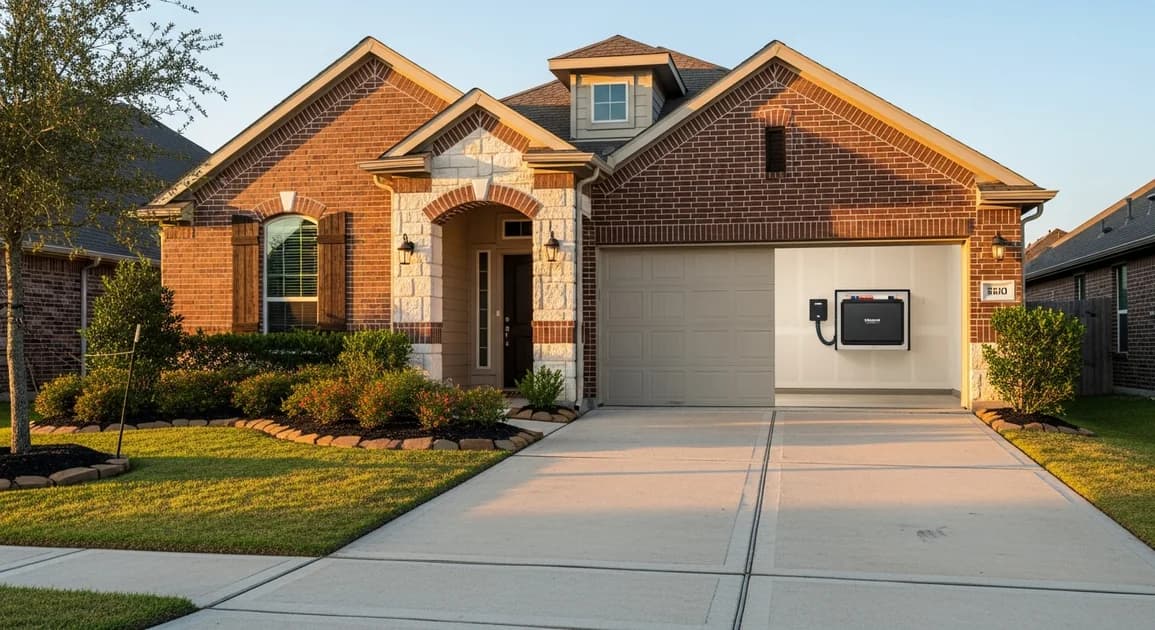
The right setup depends on the property. A single-family rental is the simplest case: one system on the home, exactly like an owner-occupied install, backing up the tenant's essential circuits. You own it, the tenant uses it, and it transfers with the house if you sell.
A small multi-unit is a different animal, closer to a commercial decision, with choices about per-unit systems versus a common-area battery and how metering is arranged. If that is your property, our guide on [INTERNAL-LINK: multi-family battery backup for Texas apartments and condos → /blog/multi-family-battery-backup-texas-apartments-condos] covers the at-scale considerations.
Who benefits, and who pays for the power?
The split is clean, which is part of the appeal. The tenant is the one who benefits day to day, since the battery keeps their home running during an outage. On a separately metered unit, the tenant also pays for the electricity the system stores and returns, so adding a battery does not add to your utility bill as the owner.
You, the owner, hold the asset. You paid for a permanent improvement that raises the property's appeal and can be financed on the income property like any capital upgrade. It is a rare case where the person who benefits and the person who owns the value are not the same, and both come out ahead.
Why is it built for hands-off owners?
Because it is designed to be forgotten. The system is wall-mounted and silent, carries a 10-year warranty on the battery and controller, and recharges from the grid automatically after every outage, so there is no fuel to deliver and no routine service call. For a property you do not live at, that matters more than anything.
When we install for Houston landlords, the appeal is almost always the same: it protects the tenant and the asset without becoming another thing to manage. You can also finance it on the income property, spreading the cost rather than paying up front.
[INTERNAL-LINK: see the modular, low-maintenance plans → /plans]
[INTERNAL-LINK: get a landlord battery quote in under 2 minutes → /home-backup-planner?source=blog&slug=battery-backup-rental-property-landlord-houston]
Prefer to talk it through? Call Eos at 713-207-2222 for a same-week Houston site survey.
Frequently asked questions
Does a battery help with tenant retention?
It can, as a reliability amenity in a city with frequent outages. Renter surveys find quality-of-living factors drive renewals (NMHC, 2024), and every avoided turnover saves the roughly $4,000 a vacancy costs (Multifamily Dive, 2023). We do not promise a specific retention lift.
Does a battery add to my property's value?
As an owned improvement, it can contribute to value the way owned solar does, which sold for about 4.1% more in Zillow's data (Zillow, 2019). A battery is not solar, so treat this as a precedent, not a guaranteed premium, and confirm with an appraiser.
Who pays for the electricity the battery uses?
On a separately metered rental, the tenant does, since it runs on their meter. The battery shifts and stores power on the tenant's account, so it does not raise your utility bill as the owner.
Can I finance a battery on a rental property?
Yes. A battery can be financed on an income property like other capital improvements, which lets you add it without a large one-time outlay. The exact terms come with your quote.
Is it different for a single-family rental versus a multi-unit?
Yes. A single-family rental takes one system like a regular home. A small multi-unit involves per-unit or common-area decisions and metering, which our multi-family guide covers in detail.
This article is general information for Houston landlords on battery backup and reflects Eos specifications as of July 2026. It does not promise a specific rent increase, retention rate, or resale premium. Confirm value and financing for your property with the appropriate professionals.