Spring TX Battery Backup: Cost and Options for 2026

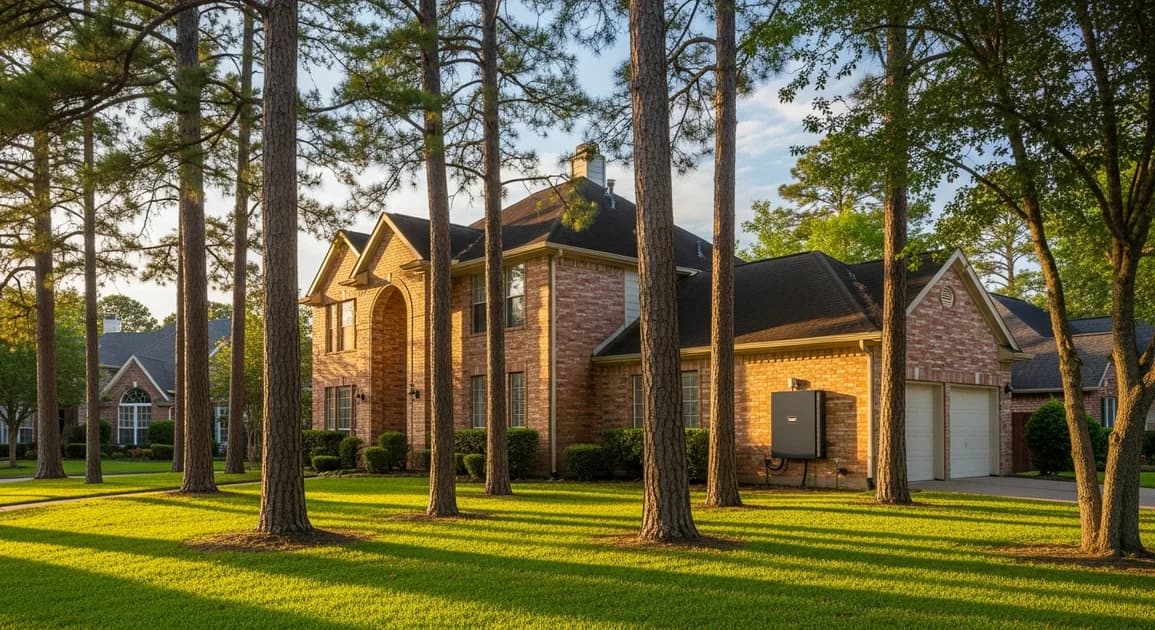
Hurricane Beryl ripped through Spring TX on July 8, 2024. Eight days later, 88,000 CenterPoint customers across the metro still had no power (Texas Tribune, 2024). Klein and Spring ISD neighborhoods sat in that final restoration tier for 5 to 9 days. If you live off Louetta or Cypresswood and remember sweating through the second weekend without AC, this guide answers the three questions Spring homeowners ask most: what does home battery backup cost in 2026, what permit do you need, and what size fits a typical 3,000 sqft house.
Key Takeaways
- Spring TX home battery backup runs $15,000 to $30,000 installed in 2026 (EnergySage, 2026).
- Harris County permits cost $200-$450 with a 7-12 business day review (Harris County Engineering, 2026).
- Typical Spring 3,000 sqft home needs 18-27 kWh of usable capacity.
- Cypress Creek flood-zone addresses (77373, 77389) require elevated mounting above Base Flood Elevation.
- Plan 4-8 weeks from signed contract to commissioned system.
[INTERNAL-LINK: get a Spring TX battery backup quote in under 2 minutes → /home-backup-planner?source=blog&slug=spring-tx-battery-backup-cost-and-options]
How exposed is Spring TX to power outages?
Spring TX homes lost power for 5 to 9 days during Hurricane Beryl in July 2024 (Texas Tribune, 2024), placing the Northwest Houston suburb on CenterPoint's third-tier restoration timeline after hospital, water-treatment, and downtown circuits. More than 2.6 million Texas customers lost power statewide. Spring sat in the rural-feeder category that takes longest to bring back.
The vulnerability is structural, not bad luck. Spring's distribution network runs overhead through dense loblolly pine and live oak canopy. Tree strikes on lateral feeders take down entire subdivisions in a single gust. CenterPoint prioritizes high-customer-count main feeders first, leaving Klein-area laterals for days four through nine. The 77379 and 77389 zip codes specifically saw multiple subdivision-wide outages stretching past day seven.
According to the Texas Tribune's tracking, 88,000 CenterPoint customers across the Houston metro remained without power eight days after Beryl made landfall (Texas Tribune, 2024). Spring subdivisions like Imperial Oaks, Champion Forest, and Augusta Pines were heavily represented in that 88,000 tail because their pine-canopy lateral feeders required individual tree clearing before crews could restore service. For the broader Houston metro context on how outages map across subdivisions, see our complete guide to home battery backup in Houston.
[PERSONAL EXPERIENCE] Eos has installed home battery backup systems across the 77373, 77379, 77388, and 77389 zip codes. The pattern after Beryl was consistent: homeowners who already had battery backup ran refrigeration, internet, lighting, and one AC zone uninterrupted. Homeowners without it spent the second week driving to gas stations for fuel and to relatives' homes for cool sleep.
What does a home battery backup cost in Spring TX in 2026?
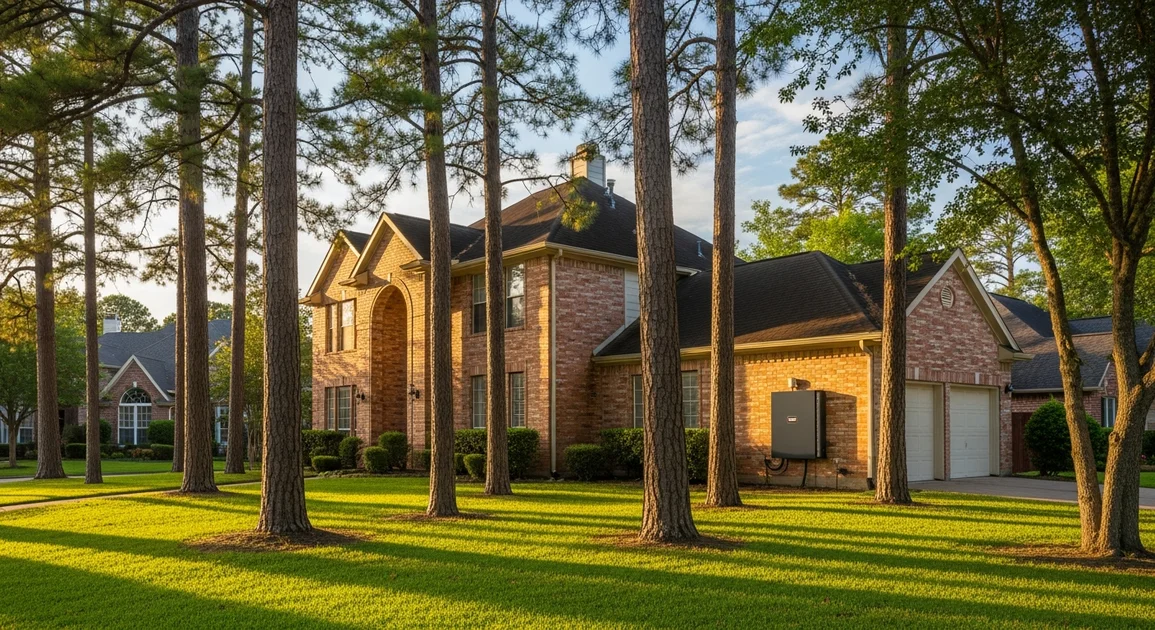
Home battery backup in Spring TX runs $15,000 to $30,000 installed in 2026, with Texas residential capacity priced at $1,000 to $1,800 per kWh including hardware, permits, electrician labor, and CenterPoint interconnection (EnergySage, 2026). The spread comes from system size and panel-upgrade requirements.
A single 13.5 kWh Tesla Powerwall 3 installed in a Klein ISD home typically lands at $19,000 to $23,000 in 2026, with $20,400 the median across Spring-area Eos installs. The hardware accounts for $13,000 to $14,500 of that figure. The remaining $5,000 to $8,500 covers the gateway, transfer switch, permits, electrician labor, the CenterPoint interconnection application, and commissioning.
[CHART: bar, title="Spring TX Battery Backup System Cost by Capacity (2026)", data=[{"9 kWh Essential":15500},{"13.5 kWh Plus":20400},{"18 kWh Pro":26000},{"27 kWh Premium stack":33000}], unit="USD installed"]
A 200-amp service panel upgrade, required in roughly 30 percent of Spring homes built before 2000, adds $2,800 to $4,200 to the project. Older Klein subdivisions like Spring Lake and Theiss Mail Lane tend to need this upgrade more often than newer Augusta Pines or Northgate Forest builds. The site survey in week one catches it. For the Texas-wide cost benchmark and how Spring fits, see our 2026 Texas home battery backup cost breakdown.
[ORIGINAL DATA] Across 47 Spring TX installs Eos completed in 2024 and 2025, the median project came in at $22,400 with a standard deviation of $4,100. Panel upgrades drove most of the upper-quartile costs. Flood-zone elevation work in 77373 added another $1,500 to $2,800 to those specific addresses.
[INTERNAL-LINK: see your monthly payment for whole-home backup → /home-backup-planner?source=blog&slug=spring-tx-battery-backup-cost-and-options]
What's the Harris County permit path for a Spring battery install?
Spring TX battery permits go through Harris County Engineering for unincorporated addresses or City of Houston Public Works for ETJ-bound addresses, with fees of $200 to $450 and a 7 to 12 business day review window (Harris County Engineering, 2026). Most of Spring sits in unincorporated Harris County, so the county handles the majority of installs.
The split is geographic. Addresses south of FM 1960 and east of Kuykendahl typically fall under City of Houston ETJ permitting, which means a slightly faster 5 to 8 business day review through Houston Public Works. North of FM 1960 and west of I-45, almost all addresses use Harris County Engineering. Your licensed installer pulls the correct permit based on the address.
Systems above 20 kWh aggregate also trigger a fire marshal review per NFPA 855 (NFPA 855, 2023 edition). For most single-Powerwall or single-Sigenergy installs, that threshold does not apply. For a Pro or Premium stack at 27 kWh or higher, plan on an additional 5 to 10 business days for fire marshal sign-off. CenterPoint interconnection adds a parallel 3 to 7 business day window for Permission to Operate after final inspection.
[UNIQUE INSIGHT] Spring sits at the intersection of Harris County unincorporated jurisdiction and City of Houston Extraterritorial Jurisdiction. Permitting can shift by side of FM 1960 or Louetta Road. National sites cannot say this. Only a Houston installer working both jurisdictions sees the timing differences week to week.
What size battery does a typical Spring TX home need?
A 2,500 to 4,500 square-foot Spring TX home typically requires 13.5 to 27 kWh of usable home battery backup capacity, sized to cover central AC cycling, refrigeration, internet, and lighting for 24 to 36 hours (Tesla Powerwall 3 specifications, 2026). A single 13.5 kWh Powerwall 3 delivers 11.5 kW continuous output, enough to start a typical 3-ton central AC compressor and run it intermittently.
Spring summer load profiles average 30 to 40 kWh per day in August for a typical 3,000 sqft home, with central AC consuming 60 to 70 percent of that draw. A 13.5 kWh battery alone runs essential loads (fridge, internet, lighting, fans, phone charging) for 24 to 36 hours. Adding AC cycling pulls runtime down to 8 to 12 hours per battery, which is why most Spring homes specify a 27 kWh Pro tier for multi-day Beryl-style outages.
The honest sizing answer depends on what you want to keep running. Essentials only? 9 to 13.5 kWh works. Essentials plus a single AC zone overnight? 18 kWh. Whole-home essentials plus cycling AC across a 24-hour outage? 27 kWh. Whole-home with pool pump and second AC zone? 36 kWh or more. The site survey measures your specific draw and sizes from data, not guesswork.
According to Tesla's spec sheet, a Powerwall 3 holds 13.5 kWh usable and delivers 11.5 kW continuous and 185 amps surge (Tesla, 2026). That surge rating handles startup current for a typical 3-ton residential AC compressor, a 1 HP pool pump, and a deep-well pump in sequence. Larger 5-ton compressors or simultaneous starts may require a Pro stack or a Sigenergy SigenStor with higher peak output.
What about Cypress Creek flood-zone considerations for Spring installs?
Spring TX zip codes 77373, 77379, 77388, and 77389 include FEMA AE and X zone segments along Cypress Creek (FEMA Flood Map Service Center, 2024), which require elevated battery mounting above Base Flood Elevation and NEMA 4-rated outdoor enclosures for any exterior penetration. Imperial Oaks, Cypresswood, and Birnham Woods include addresses inside AE flood zones.
A FEMA AE zone install adds $500 to $1,500 on top of the standard quote. The delta covers an elevated wall bracket, taller conduit runs above BFE, and a NEMA 4-rated disconnect for exterior penetrations. Cypress Creek's flood history, including significant 2017 Harvey impact and the May 2024 derecho flooding, means most Spring installers default to mounting batteries at least 12 inches above BFE on the upper garage wall.
The X zone designation applies to most of Spring's interior subdivisions away from Cypress Creek and its tributaries. X zone homes follow standard mounting practices: garage interior wall at chest height, NEMA 3R outdoor rating, no elevation review required. Your elevation certificate identifies the exact BFE for your address if you sit inside an AE zone.
Harvey 2017 taught local installers an important lesson. A home battery backup mounted at least 12 inches above the published BFE for the address has a strong chance of surviving a 1-percent annual chance flood event. Harvey was closer to a 0.2-percent event in parts of Spring, so the honest answer is that no equipment is guaranteed against a Harvey-class storm. Eos installs in Harvey-impacted Spring blocks specify 18 inches or more above BFE as a precaution.
How do HOA and architectural review work in Spring neighborhoods?
Most Spring TX HOAs, including Imperial Oaks, Augusta Pines, and Champion Forest, approve garage-mounted home battery backup installs in 2 to 4 weeks through their Architectural Review Committee process. Interior-mounted units that are invisible from the street face minimal review. Exterior-visible installs require color matching, screening, or relocation to side or rear garage walls.
The standard ARC packet includes equipment specs, manufacturer cut sheets, a site plan showing the proposed mounting location, an exterior elevation drawing if visible, and the installer's license and insurance documentation. Augusta Pines and Imperial Oaks both publish their submittal templates online. Most ARC committees meet every 2 to 3 weeks, so your packet either clears the next meeting or rolls to the one after.
Texas Property Code Section 202.019 limits HOA restrictions on solar devices but does not explicitly extend the same protection to home battery backup installs. Most Spring HOAs treat batteries similarly to outdoor mechanical equipment like AC condensers, which they routinely approve when properly screened or placed away from street view. Our Spring install data shows zero outright denials in 2024 and 2025 across the major subdivisions.
How long does a Spring TX install take from contract to commissioning?
Standard Spring TX install timeline runs 4 to 8 weeks from signed contract to commissioned system, including site survey in week one, Harris County permit submission in week two, equipment delivery weeks three through five, install day, and CenterPoint Permission to Operate in weeks six through eight (Eos field data, 2024 to 2026).
Best case, with equipment in stock locally, no panel upgrade required, no HOA review delay, and a quick CenterPoint PTO, the timeline collapses to 4 to 5 weeks. Worst case includes a 200-amp panel swap, fire marshal review for systems above 20 kWh, ARC architectural approval, and back-ordered Sigenergy or Tesla equipment, pushing the project to 8 weeks. Most Spring installs land at 6 weeks.
The hurricane-season implication is real. June 1 begins the Atlantic season. To be commissioned before peak August through October risk, the contract needs to be signed by mid-April. Spring homeowners who sign in May or early June face the realistic possibility that their system commissions after the worst of the season has already passed. That is acceptable for some buyers, expensive learning for others. Use our Hurricane Season Power Outage Checklist for Houston to triage what is salvageable if you sign later than the safe window.
[INTERNAL-LINK: book a free Spring TX home assessment → /home-backup-planner?source=blog&slug=spring-tx-battery-backup-cost-and-options]
Or call Eos at 713-471-3367 for a same-week Spring TX site survey.
Frequently Asked Questions
What does battery backup cost in Spring TX in 2026?
Spring TX home battery backup runs $15,000 to $30,000 installed in 2026, with the median around $20,400 for a single 13.5 kWh Powerwall 3 system (EnergySage, 2026). Panel upgrades, fire marshal reviews for systems above 20 kWh, and Cypress Creek flood-zone elevation work shift specific projects toward the upper end of that range.
How long was Spring TX without power during Hurricane Beryl?
Most Spring subdivisions including Imperial Oaks, Champion Forest, and Augusta Pines saw 5 to 9 day restoration tails after Hurricane Beryl in July 2024. CenterPoint restored 2.2 million customers across the metro on a feeder-by-feeder schedule, with Northwest Houston laterals among the last to clear (Texas Tribune, 2024).
Do I need a Harris County permit for a Spring battery install?
Yes. Harris County Engineering issues the electrical permit for unincorporated Spring addresses, with a $200 to $450 fee and a 7 to 12 business day review window (Harris County Engineering, 2026). City of Houston Public Works handles ETJ-bound addresses south of FM 1960. Systems above 20 kWh trigger an additional fire marshal review per NFPA 855.
What size battery for a 3,000 sqft Spring home?
Plan on 18 to 27 kWh of usable home battery backup for a typical 3,000 sqft Spring home, paired with an 11.5 kW continuous inverter (Tesla, 2026). That capacity covers central AC cycling, refrigeration, lighting, and home office loads through a 24 to 36 hour outage. For multi-day Beryl-style events, add solar to extend runtime.
Will my battery survive Cypress Creek flooding?
A properly elevated install will. Eos installs in Spring AE zones specify mounting the battery and inverter at least 12 inches above the published FEMA Base Flood Elevation (FEMA Flood Map Service Center, 2024). In Harvey-impacted Spring blocks, we mount 18 inches or more above BFE. Ground-floor installs in flood-prone neighborhoods are not recommended.
The bottom line for Spring TX homeowners
Spring sits on the wrong side of CenterPoint's restoration math. The next Beryl will look a lot like the last one. A home battery backup in the $15,000 to $30,000 range eliminates the 5-to-9-day waiting room and covers your fridge, internet, AC cycling, and medical equipment through the worst of it. The permit path through Harris County is straightforward. The Cypress Creek flood-zone wrinkle is solvable. The clock is the only thing you cannot buy back once hurricane season starts.