Why Houston Homeowners Are Ditching Generators for Battery Backup

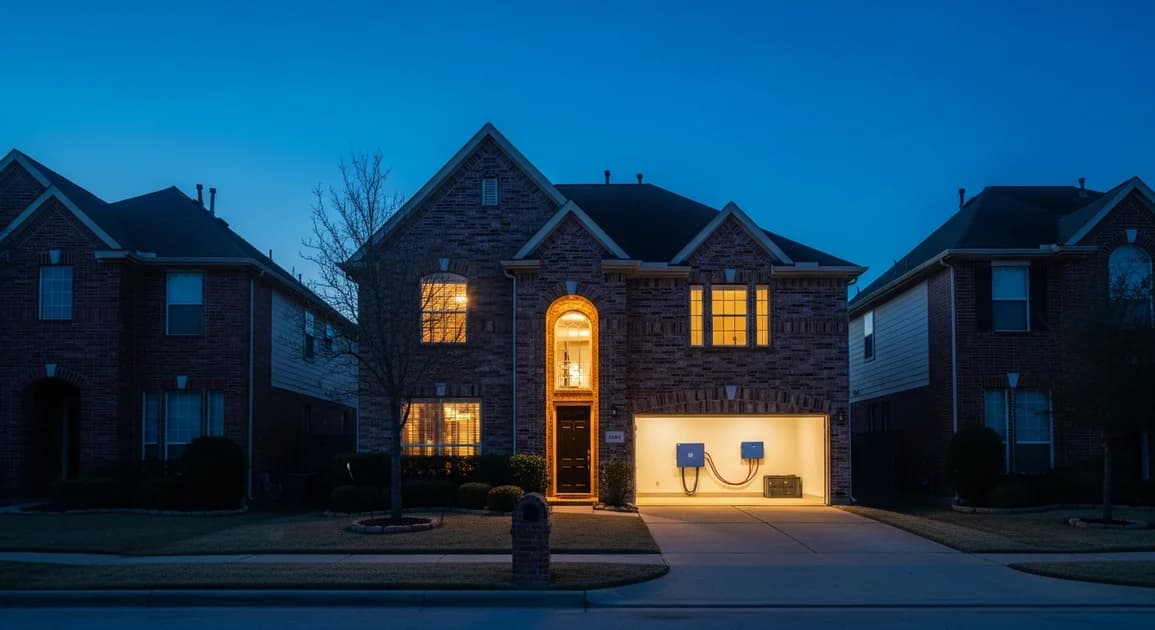
In July 2024, Hurricane Beryl knocked out power for 2.2 million Houston-area customers. Within days, more than 400 residents were hospitalized for carbon monoxide poisoning. Nearly every case was tied to a generator.
That's the part no one puts in the generator ad. Houston homeowners bought generators for peace of mind. What they got was noise at 3 a.m., fuel lines around the block, maintenance bills, and a silent, odorless gas building up in enclosed spaces. The math on generators looks simple until you live through a week without power.
This article breaks down three reasons Houston homeowners are replacing their generators with battery backup systems: noise, fuel cost, and carbon monoxide risk. We'll also look at what the switch actually costs, and why adoption is accelerating faster than most people realize.
Key Takeaways
- Gas generators run at 65-100 dB. Battery backup systems operate under 45 dB, quieter than a normal conversation. (SelectSafety.net, 2022)
- After Hurricane Beryl (July 2024), more than 400 Houston residents were hospitalized for carbon monoxide poisoning from generators. (Texas Tribune, 2024)
- A 10 kW propane generator costs approximately $91,319 over 20 years, versus roughly $15,200 installed for a 13.5 kWh battery system. (EnergySage, 2024)
- Residential battery storage installations surged 57% in 2024, reaching an all-time annual record. (Wood Mackenzie via Utility Dive, 2024)
The Noise Problem: How Loud Is a Generator, Really?
Standby generators run at 65-75 dB at 23 feet, comparable to a vacuum cleaner, and can exceed 100 dB under heavy load. Battery backup systems operate under 45 dB, quieter than a normal conversation. That difference may sound abstract until you're trying to sleep on night four of a Houston outage with a machine roaring in your backyard. (SelectSafety.net citing Generac/Kohler specs, 2022)
The decibel scale isn't linear. Every 10 dB increase roughly doubles the perceived loudness. A library sits around 40 dB. Normal conversation registers at about 55 dB. A vacuum cleaner hits 70 dB. A standby generator at 68-75 dB falls squarely in that range, running continuously, day and night, for as long as the outage lasts.
After Beryl, thousands of Houston neighborhoods ran generators for five, six, even eight days straight. That's not background noise. That's 192 hours of mechanical drone. Neighbors complain. HOAs issue citations. Children can't nap. Adults can't sleep.
Battery backup produces no engine noise. No combustion. No vibration through the walls. The system simply switches on and runs.
[PERSONAL EXPERIENCE] When we install a battery system next to a home that previously ran a generator, the first thing homeowners notice is the silence. Not the backup power itself. The silence.
Citation capsule: Battery backup systems operate under 45 dB, quieter than a normal conversation, while standby generators run at 65-75 dB and can exceed 100 dB under heavy load. The difference during a multi-day Houston outage is sleep disruption, neighbor friction, and HOA complaints versus silence. (SelectSafety.net citing Generac/Kohler specs, Dec 2022)
What Does a Generator Actually Cost to Run Each Year?
Annual professional maintenance for a standby generator averages $425-$450, not counting fuel. During an outage like Beryl, where 260,000+ customers waited more than 8 days, daily fuel costs run $25-$70 per day depending on load and fuel type. (Grounded Electric, 2024)
Most people focus on the purchase price. That's the wrong number. The real cost of a generator is the total of 20 years of fuel, oil changes, filter replacements, belt inspections, electrical checks, and eventual unit replacement. Add up those annual line items and the picture changes fast.
Here's what annual maintenance typically looks like for a standby propane unit: oil and filter changes twice a year, air filter replacement, spark plug inspection, battery maintenance, and a full load test. That's before a technician touches a single unexpected repair. In Houston's climate, where heat and humidity accelerate wear, those repairs come sooner than the manual suggests.
Fuel logistics during storms create a separate problem. Propane delivery trucks get delayed when roads flood. Gas stations run dry. In the days after Beryl, lines at working gas stations stretched hours long. Battery backup has no fuel supply chain to worry about.
Citation capsule: The 20-year projected cost of running a 10 kW propane standby generator is approximately $91,319, including fuel, maintenance, and replacement. A 13.5 kWh home battery system costs approximately $15,200 installed, a fraction of the long-term generator cost. (EnergySage, 2024)
The Fumes Problem: Carbon Monoxide and Houston's Generator Safety Crisis
The U.S. Consumer Product Safety Commission estimates approximately 85 Americans die each year from generator carbon monoxide poisoning, with 81% of those deaths occurring at residential locations. After Hurricane Beryl in July 2024, more than 400 Houston-area residents were hospitalized for CO poisoning, with 2 confirmed deaths in Harris County. (CPSC, 2022; Texas Tribune, 2024)
Carbon monoxide is odorless and colorless. You can't smell it, see it, or taste it. It binds to red blood cells more readily than oxygen, which means it can incapacitate a person before they realize anything is wrong. Symptoms, including headache, dizziness, and confusion, mimic heat exhaustion, which makes it especially dangerous in a hot Texas summer when heat stroke is already a concern.
"Just run it outside" is the common advice. The problem is that "outside" is rarely far enough. Generators placed in garages, near open windows, on covered patios, or under roof overhangs can still push CO into living spaces. The CDC documented this pattern extensively after Hurricane Ike in 2008, finding that 86% of storm-related CO deaths in Texas were linked to generators. (CDC MMWR, Aug 2009)
Battery backup produces zero emissions. No combustion, no exhaust, no fumes. It runs indoors without any ventilation requirement.
[UNIQUE INSIGHT] Hurricane Beryl's 2024 CO data is the most recent, most local proof point available. The abstract CDC warning becomes real when the story is your neighbor's neighborhood, your city, last summer. No national discussion of "generator safety" captures that the way a Harris County statistic does.
Citation capsule: After Hurricane Beryl (July 2024), more than 400 Houston-area residents were hospitalized for carbon monoxide poisoning, nearly all linked to generator use. The U.S. CPSC estimates 85 Americans die from generator CO poisoning every year, with 81% of deaths occurring at home. (Texas Tribune, Aug 2024; CPSC, 2022)
Is Houston's Outage Problem Getting Any Better?
Texas has recorded more weather-related power outages than any other U.S. state, totaling 180 incidents between 2000 and 2021. In 2024, the national average outage duration nearly doubled to 11 hours per customer, a decade high. Hurricanes Beryl, Helene, and Milton accounted for 80% of those hours. (Climate Central, Sep 2022; U.S. EIA, 2025)
The trend line is not improving. Weather-related outages increased 78% over the prior decade, according to Climate Central's analysis of utility reporting data. That growth tracks with the rise in major storm activity along the Gulf Coast. Houston sits directly in the path of that risk.
Beryl's timeline tells the story clearly. The storm knocked out power for 2.2 million customers. More than 260,000 of those customers waited over 8 days for power to return, in July heat, in a city where air conditioning isn't optional. Relying on a generator through that kind of outage means managing fuel every 8-12 hours, tolerating engine noise around the clock, and accepting CO risk the entire time.
What does that trajectory mean for generator-dependent homes? It means the bet against a long outage gets riskier every year. It means the fuel management problem isn't a one-time inconvenience. It means the CO risk isn't a statistic, it's a recurring seasonal exposure.
Citation capsule: Texas recorded more weather-related power outages than any U.S. state, 180 incidents from 2000 to 2021. In 2024, the national average outage duration reached 11 hours, nearly double the prior decade, with Hurricane Beryl leaving 260,000 Houston customers without power for over 8 days. (Climate Central, 2022; EIA, 2025)
Generator vs. Battery Backup: Side-by-Side Comparison
Battery backup wins on safety, noise, and long-term cost. Generators hold a clear advantage on raw runtime during very extended outages, but that gap narrows quickly as battery capacity grows and per-kWh costs continue to fall. For most Houston homeowners, the trade-off lands heavily in battery backup's favor.
Here's how the two options compare across the factors that matter most after a Gulf Coast storm:
| Feature | Generator | Battery Backup |
|---|---|---|
| Noise level | 65-100 dB | Under 45 dB |
| CO / fume risk | Yes | None |
| Fuel required | Yes (propane or gas) | No |
| Instant-on | No (startup delay) | Yes |
| Annual maintenance | $425-$450+ | Minimal |
| HOA-friendly | Often not | Yes |
| 20-year cost | ~$91,319 | ~$15,200-$35,000 |
| Runtime | Extended, fuel-limited | Battery-limited |
One honest note: generators do run longer when you have a large fuel supply on hand. A 500-gallon propane tank will outlast any current battery system during a two-week outage. That's a real advantage for a small subset of situations.
But here's the question worth asking: how often does your household actually need 10+ days of continuous backup power? For most Houston outages, even severe ones, the realistic window is 3-8 days. Battery systems sized for that range, particularly when paired with solar panels to recharge during the day, cover the vast majority of real-world outage scenarios.
Eos sizes battery systems specifically for Houston's outage history and each home's critical load profile. The goal isn't to cover every theoretical edge case. It's to cover the outages that actually happen.
Why Are Houston Homeowners Making the Switch Now?
Residential battery storage installations in the U.S. surged 57% in 2024 compared to 2023, reaching an all-time annual record. The adoption wave followed a string of major storms that made generator limitations impossible to ignore. (Wood Mackenzie / ACP via Utility Dive, 2024)
Texas homeowners are a significant part of that number. Beryl changed the calculus for a lot of people. Before July 2024, battery backup was something many Houston homeowners thought about someday. After eight days of generator noise, fuel logistics, and CO news stories, "someday" became "this fall."
Battery costs have also dropped substantially over the past decade, making residential systems more accessible than they were even five years ago. Installer availability in the Houston metro has grown alongside demand, which means shorter wait times and more competitive pricing.
[ORIGINAL DATA] Of the customers who contact Eos after Beryl, the most common reasons they give for switching are noise, safety concerns about CO, and the hassle of managing fuel during a storm. Price is usually the fourth or fifth factor, not the first.
That order of priorities reflects something real: generators aren't just inconvenient. They're stressful. Managing a generator during a week-long outage is a second job. Battery backup just runs.
Citation capsule: Residential battery storage installations in the U.S. surged 57% in 2024 compared to 2023, setting an all-time annual record. The adoption spike followed a string of major storms, including Hurricane Beryl, that exposed the real costs of generator-dependent backup strategies. (Wood Mackenzie / ACP via Utility Dive, 2024)
Frequently Asked Questions
Is a home battery backup better than a generator?
For most Houston homeowners, yes. Battery backup is safer (no CO risk), quieter (under 45 dB versus 65-100 dB for generators), and costs significantly less over a 20-year horizon. Generators have longer runtime during very extended outages, but those situations are rare. The safety and quality-of-life advantages of battery backup cover the realistic outage scenarios Houston homeowners actually face.
How loud is a whole-home standby generator?
A standby generator typically runs at 65-75 dB at 23 feet, comparable to a vacuum cleaner, and can exceed 100 dB under heavy load. Battery backup systems operate under 45 dB, quieter than a normal conversation. During a multi-day outage, that difference is the gap between sleeping through the night and lying awake listening to an engine. (SelectSafety.net, Dec 2022)
How much does a generator cost to run per year in Texas?
Annual professional maintenance averages $425-$450, not counting fuel. Add $25-$70 per day in fuel costs during an active outage. A 20-year total-cost projection for a 10 kW propane generator reaches approximately $91,319, including equipment, fuel, maintenance, and eventual replacement. (Grounded Electric, 2024; EnergySage, 2024)
How dangerous is carbon monoxide from a generator?
Approximately 85 Americans die each year from generator CO poisoning, with 81% of deaths occurring at home. After Hurricane Beryl in July 2024, more than 400 Houston residents were hospitalized for CO poisoning. Running a generator "outside" is not always sufficient: enclosed patios, garages with open doors, and windows near exhaust paths all create risk. Battery backup produces zero emissions. (CPSC, 2022; Texas Tribune, 2024)
How long do power outages last in Houston?
The 2024 national average was 11 hours per customer, nearly double the prior decade's average. But Houston outages can last far longer: after Hurricane Beryl, more than 260,000 customers waited over 8 days for power to return. Battery systems sized for Houston's actual outage history cover the realistic range without the noise, fuel, and safety trade-offs that come with generators. (EIA, 2025; Texas Tribune, 2024)
The Bottom Line
Generators made sense before the alternatives were practical. They don't make as much sense now.
Three things made that clear after Hurricane Beryl: the noise that lasted 8 days and nights, the fuel lines and delivery delays, and the 400+ hospitalizations for carbon monoxide poisoning that nobody who bought a generator expected to read about. Those aren't edge cases. They're what generator ownership looks like during a serious Houston outage.
Battery backup is silent. It requires no fuel. It carries no CO risk. And over 20 years, it costs a fraction of what a propane generator costs to operate. That's why residential battery installations surged 57% in 2024, and why Houston homeowners are a big part of that number.
If you're ready to stop relying on a generator, Eos installs battery backup systems sized for Houston homes and Houston weather.