Can You Take Your Home Battery With You When You Move?


Yes, you can take your home battery with you when you move. It is a bolted, wired appliance, not a structural part of the house, so a licensed electrician can remove it. The harder question is whether you should. Once you add up de-installation, a fresh permit, new electrical work, and re-commissioning at the next address, moving the battery often costs more than the used unit is worth. This guide walks through the real numbers, what happens to your warranty, and the narrow cases where relocation actually makes sense.
[INTERNAL-LINK: get a Houston battery backup quote in under 2 minutes -> /home-backup-planner?source=blog&slug=home-battery-portability-when-moving]
Key Takeaways
- A home battery is removable by a licensed electrician, but it is a permitted electrical job in both directions.
- De-installation, transport, a new permit, new electrical work, and re-commissioning usually cost more than a used unit's residual value.
- An owned, permanently installed battery is treated as a contributory home improvement, similar to owned solar, which lifted Texas sale prices about 6.8% in 2024.
- For most major brands, the manufacturer warranty is tied to the installed unit and transfers to the home's new owner.
- Relocation only makes sense in narrow cases: very short tenure, a highly custom system, or a sale that will not credit the battery.
Can a home battery be removed and reinstalled?
Yes. A home battery is a wall-mounted, hardwired appliance, not a built-in structural element, so a licensed electrician can safely disconnect and remove it. The cells just need to be handled and transported under the right conditions, the same way any lithium storage system is moved.
The catch is that removal and reinstallation are both permitted electrical jobs. Taking the battery off the wall at your old home may need a sign-off so the panel is left safe and code-compliant. Installing it at the new address means a fresh permit, a new interconnection review, and a new inspection, just like a first-time install. So "technically removable" is true, but it does not mean the move is simple or cheap.
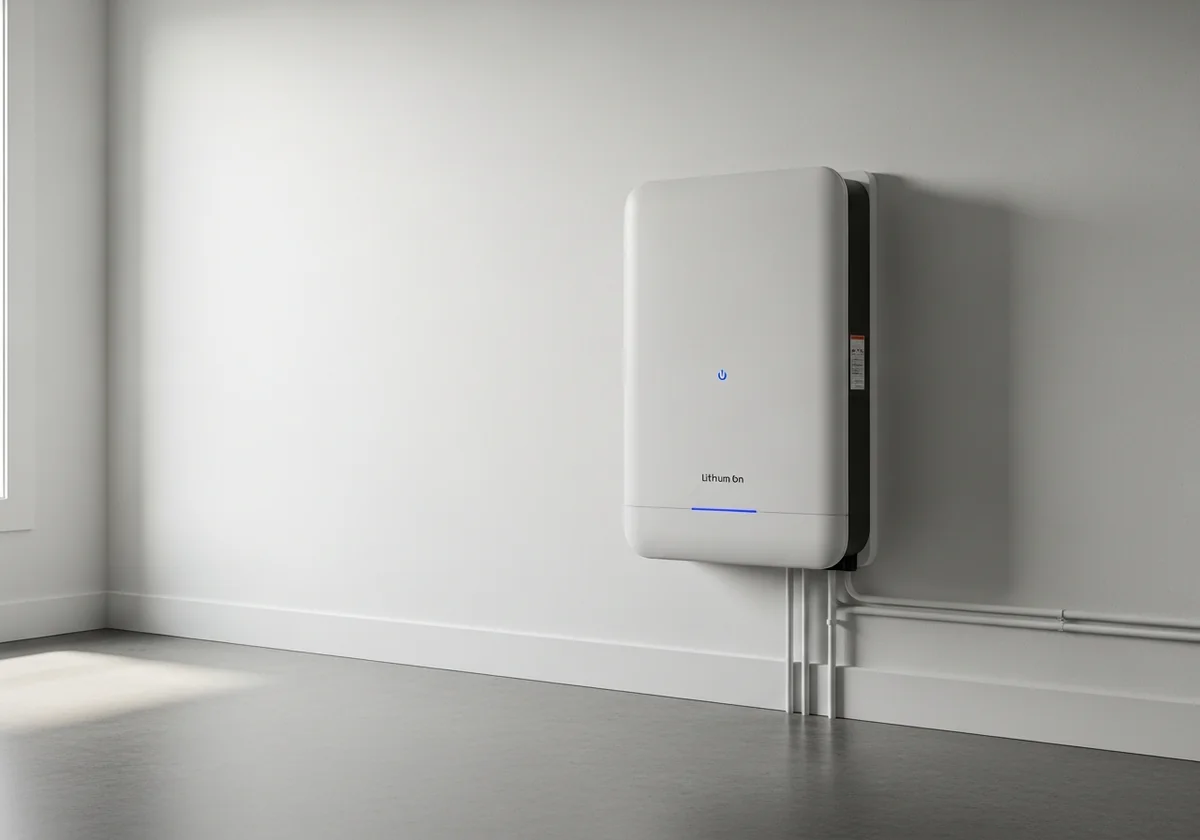
A home battery is a removable, re-permittable electrical appliance, not a structural fixture, so a licensed electrician can take it off one wall and mount it on another. The constraint is regulatory, not physical: each end of the move is its own permitted, inspected job, which is where the real cost and time of relocation come from.
What does it actually cost to move a home battery?
Moving a home battery stacks several full-price line items, and together they often exceed what the used unit is worth. You pay for de-install labor at the old home, transport, a new permit at the new home, fresh electrical and panel or interconnect work, and re-commissioning. None of these are discounted just because the hardware already exists.
Meanwhile, a three to five year old battery is worth a fraction of its original price on the secondary market, the same way most installed equipment depreciates. So you are paying near-new install costs to relocate a used asset. The chart below shows why the math usually points to leaving it in place: the relocation cost stack tends to land near or above the residual value of the unit you are carrying.
Relocating a home battery means paying near-new install costs to move a depreciated asset: de-install labor, transport, a new permit, fresh electrical and interconnect work, and re-commissioning. A three to five year old battery is worth only a fraction of its original price, so the relocation stack frequently exceeds the residual value, which is why the economics usually favor leaving it behind. Your system size shapes the math too, since a larger Plus 18 kWh or Pro 27 kWh install carries more wiring and interconnect work than an Essential 9 kWh unit.
[INTERNAL-LINK: check if your home qualifies for a 9 to 45 kWh system -> /home-backup-planner?source=blog&slug=home-battery-portability-when-moving]
Why most owners leave the battery as a resale asset
A permanently installed, owned battery is treated as a contributory home improvement, similar to owned solar, which means it helps sell the home you are leaving. Owned solar-equipped homes in Texas sold for about 6.8% more than comparable homes without in 2024 (SolarReviews, 2024), and storage that is documented and transferable rides that same logic.
In Houston, the resale case is even stronger. After Hurricane Beryl knocked out power for more than 2.6 million customers, some for days (The Texas Tribune, 2024), backup capability went from a nice-to-have to a real listing feature. A buyer touring your home in storm season sees a battery and reads it as protection they do not have to install. That is value you capture by leaving it, not by carrying it to the next driveway. For the full picture, see our guide on [INTERNAL-LINK: how a home battery affects your resale value in Texas -> /blog/home-battery-increases-home-value-texas].
An owned, permanently installed battery counts as a contributory home improvement, the same way owned solar lifted Texas sale prices about 6.8% in 2024. In post-Beryl Houston, where 2.6 million customers lost power, documented backup reads to buyers as built-in resilience. The value is realized by leaving the system in place as a transferable asset, not by paying to relocate it.

Does the warranty transfer to the new owner?
For most major battery brands, the manufacturer warranty is tied to the installed unit and transfers to the home's new owner, often automatically or with a simple registration update. These warranties typically run around ten years and are based on cycles or energy throughput, so the clock follows the hardware, not the original buyer.
That transferability is part of why leaving the battery makes sense. The new owner inherits a documented, warranty-backed system, which makes your home an easier sell. To keep that intact, hand over the permits, the warranty registration, and the install paperwork at closing. The opposite is also worth knowing: removing the battery and reinstalling it elsewhere can complicate or even void coverage if the work is not done by an authorized installer. Carrying the unit can cost you the very warranty that made it valuable.
For most major brands, the home-battery warranty is attached to the installed unit, runs around ten years on a cycle or throughput basis, and transfers to the new homeowner, usually with a simple registration update. Leaving the system in place keeps that coverage intact and hands the buyer a warranty-backed asset, while an unauthorized removal and reinstall risks voiding it.
When does relocating the battery actually make sense?
Relocation is worth considering only in a few narrow cases. If none of them describe your situation, leaving the battery is almost always the better call. There are three honest scenarios where carrying it can pencil out.
First, very short tenure. If you installed the battery recently, its residual value is still high and you have not accrued much resale credit, so moving a nearly new unit loses less. Second, a highly custom or oversized system the next buyer is unlikely to pay for, where the new home can actually reuse the same setup. Third, a sale structure that will not credit the battery at all, such as a financing or buyer arrangement that ignores it, which removes the resale argument for leaving it. Outside these cases, the relocation cost stack wins and the smart move is to leave it.
Relocating a home battery makes financial sense only in narrow cases: very short tenure with high residual value still intact, a highly custom or oversized system the next buyer will not pay for, or a sale that will not credit the battery. For roughly nine out of ten owners, none of these apply, and leaving the documented, installed system in place is the better decision.
[INTERNAL-LINK: get a fixed-price install quote for your address -> /home-backup-planner?source=blog&slug=home-battery-portability-when-moving]
How to decide: take it or leave it
Run a short checklist before you decide. Ask four questions: How long have you owned the battery? Does the relocation cost stack beat the unit's residual value? Does the new home need the battery and can it physically host the install? And will your current sale actually credit the battery to your sale price?
If you have owned it for years, the relocation cost is high relative to residual value, the new home is uncertain, and your sale will credit the system, leave it. That is the common case. The reframe that helps most owners: the real question is not "can I take it" but "where does this battery create the most value." For nearly everyone, that is staying put as a documented, transferable improvement on the home being sold. If you want to see what a new install at your next address would involve, here is [INTERNAL-LINK: what a Houston battery installation actually involves -> /blog/home-battery-installation-timeline-houston].
When we field the "can I take it" question from Houston homeowners, it comes up often, usually as the last worry before someone moves forward. Almost everyone, after seeing the relocation cost stack against residual value, decides to leave the battery and let it count toward the sale. The math is consistent, and so is the decision.
Frequently Asked Questions
Can I take my home battery with me when I move?
Yes, it is removable by a licensed electrician, but the combined de-install, transport, re-permit, and re-commission cost usually exceeds the used unit's residual value. A three to five year old battery is worth only a fraction of new, so most owners leave it in place rather than pay near-new install costs to relocate it.
Does a home battery transfer to the buyer when I sell?
Yes. A permanently installed, owned battery transfers with the home and is generally treated as a contributory improvement, like owned solar. Owned solar-equipped Texas homes sold for about 6.8% more in 2024 (SolarReviews, 2024), and documented, transferable storage rides that same value logic.
Does the battery warranty transfer to the new homeowner?
For most brands, yes. The warranty is tied to the installed unit, typically runs around ten years on a cycle or throughput basis, and transfers to the new owner, often with a simple registration update. Hand over permits and warranty docs at closing. Removing and reinstalling elsewhere can void coverage if not done by an authorized installer.
When is it worth relocating my home battery?
Only in narrow cases: very short tenure with high residual value still intact, a highly custom or oversized system the next buyer will not pay for, or a move where the sale will not credit the battery. After Beryl, when 2.6 million Texans lost power (The Texas Tribune, 2024), Houston buyer demand makes leaving it the stronger play.
Conclusion
So, can you take your home battery when you move? Yes, but it rarely pays to. A battery is removable, but the relocation cost stack of de-install, transport, new permit, fresh electrical work, and re-commissioning usually beats the residual value of a used unit. Meanwhile, an owned, installed battery counts as a transferable resale asset, the warranty follows the hardware to the buyer, and in post-Beryl Houston that backup is a real selling point.
For nearly everyone, the answer is to leave it and let it work for you at the sale. Relocation only makes sense in the narrow cases above. For the bigger picture on home backup in the region, start with [INTERNAL-LINK: the full guide to home battery backup in Houston -> /blog/home-battery-backup-houston-texas] or [INTERNAL-LINK: compare battery backup plans from 9 to 45 kWh -> /plans].
Ready to move forward? Call us or [INTERNAL-LINK: book a free Houston home assessment -> /home-backup-planner?source=blog&slug=home-battery-portability-when-moving] to get a fixed-price quote for your address.