Adding a Home Battery During a Roof or Solar Install in Houston: How to Coordinate

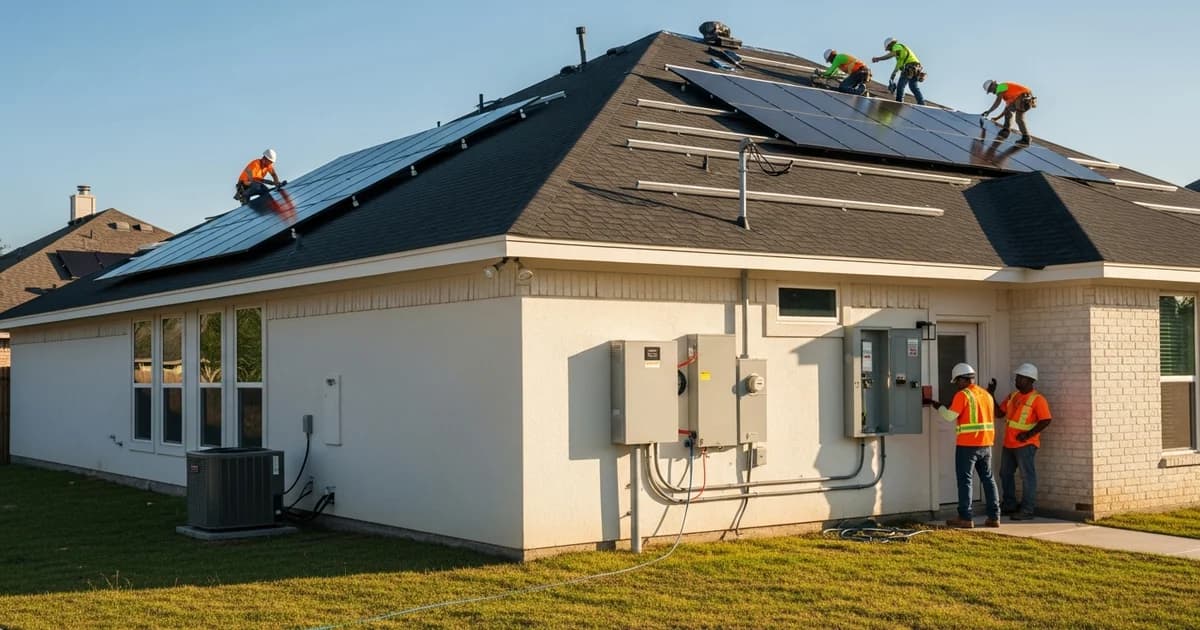
Most homeowners picture roof, solar, and battery as three separate projects on three separate calendars. They are not. The electrical and permitting work overlaps heavily, so doing them apart means paying twice for the same mobilization, the same permit cycle, and the same panel work. Worse, an uncoordinated order can force a crew to undo what another crew already built: an array detached so a roof can be replaced, conduit run to the wrong wall, a panel left with no open breaker space. This guide walks through the right sequence and the exact things to tell your roofer and solar installer so the battery drops in cleanly.
[INTERNAL-LINK: get a coordinated battery and solar quote in under 2 minutes -> /home-backup-planner?source=blog&slug=home-battery-during-roof-or-solar-install]
Key Takeaways
- U.S. homes averaged about 5.5 hours of electric interruptions per customer in 2022, per the U.S. Energy Information Administration, which is why more Houston homeowners are adding storage during solar or roof work.
- Bundling means one permit cycle, one electrical mobilization, and one inspection window instead of two.
- The correct order is roof first, then the solar array, then the battery and interconnection.
- The biggest hidden savings is the electrician's mobilization, not the hardware.
- Tell both your roofer and your solar installer a battery is coming before either starts work.
Why bundle the battery into the project you are already doing?
If the electrical panel is already open and the crew is already on site, adding the battery now avoids a second full setup. Texas leads the nation in major weather-related outage events (Climate Central, 2024), so most homeowners doing solar or a roof are already thinking about resilience. The marginal cost of folding storage into active work is low, because the battery shares the same point of interconnection and panel work as solar.
Think about what a battery install actually requires: a permit, a truck roll, a panel de-energization, conduit runs, and an inspection. Every one of those already happens during a solar project. Run them again six months later for a standalone battery and you repeat the whole setup. Done together, the jurisdiction reviews one combined plan set, the utility sees one interconnection touchpoint, and the inspector signs off once.
Citation capsule. Folding a battery into an active solar or roof project lets one permit cycle, one electrical mobilization, and one inspection cover both systems instead of two. Because the battery ties into the same panel and point of interconnection as solar, the marginal coordination cost of adding storage during the original job is low compared with a later standalone retrofit.
What order should roof, solar, and battery go in?
Roof first, then the solar array, then the battery and interconnection. Never mount an array on a roof you plan to replace within a few years. The sequence is not arbitrary: it protects your roof warranty and avoids detach-and-reset charges on solar that can run into thousands of dollars.
Here is the flow that keeps every crew from undoing another's work:
- Roof. Complete and inspect the roof replacement first, so all penetrations land in new material and the manufacturer warranty stays intact.
- Solar array. Mount racking and panels next, with conduit runs planned for the eventual battery location, not just the array.
- Battery and interconnection. Set the battery, gateway, and final panel and meter work last, so the load center is split correctly and energized once.

When does the roof step matter most? If your roof is near the end of its service life, replacing it before solar is non-negotiable. Detaching and resetting an array later, called a detach-and-reset, is a real line item that homeowners pay for when they skip the roof first.
[INTERNAL-LINK: adding a battery to existing solar -> /blog/battery-backup-when-you-already-have-solar-texas]
How one permit and one mobilization saves the most
The largest hidden savings is the electrician's mobilization, not the hardware. Most coordination guides obsess over the homeowner's calendar, but the real cost driver is the truck roll: one panel pull, one de-energization, and one inspection that can cover both systems when the work is bundled.
A single combined permit submission, where the jurisdiction allows it, replaces two separate review cycles. One CenterPoint interconnection touchpoint replaces two. And one crew mobilization, where the electrician shows up, de-energizes the panel, and does the tie-ins, replaces a second full setup later. A standalone battery added months after solar repeats every one of those steps from scratch.
Citation capsule. The electrician's mobilization is the real hidden cost of adding a battery, not the equipment itself. Each install requires a truck roll, a panel de-energization, and a separate inspection. Bundling the battery into an active solar or roof job lets one mobilization absorb the setup, tie-ins, and inspection for both systems instead of paying for that sequence twice.

In our Houston jobs, folding a battery into an active solar or roof project typically adds only a handful of working days to the overall timeline, because the panel is already open and the crew is already on site. Retrofitting the same battery as a standalone job later means scheduling a fresh mobilization, a fresh permit, and a fresh inspection, which is why the bundled path almost always lands cheaper.
[INTERNAL-LINK: see your monthly payment for whole-home backup -> /home-backup-planner?source=blog&slug=home-battery-during-roof-or-solar-install]
Avoiding rework on conduit and panel ties
Most coordination failures show up not as hardware problems but as conduit run the wrong way or a panel with no room for the battery. The three we see most often: an array mounted before the roof was finished, conduit stubbed in the wrong spot for the battery, and a load center with no open breaker space and no busbar capacity left for the new circuit.
Each of those forces rework. To avoid them, the design has to account for the final system from day one:
- Size conduit for solar plus battery from the start, not just the array.
- Reserve breaker space and confirm busbar capacity for the battery circuit.
- Decide the gateway location and the backed-up loads before the array is energized.
- Locate the battery pad or wall mount before conduit is stubbed.
The battery's backed-up loads should be chosen during design, not after solar is already live. That decision drives how the load center is split, and getting it right the first time means the panel never has to be reworked.
Citation capsule. Most battery coordination failures trace to conduit or panel space rather than hardware: an array on an old roof, conduit run to the wrong wall, or a load center with no open breaker space. Sizing conduit for solar plus battery, reserving busbar capacity, and choosing backed-up loads during design prevents the rework that a poorly sequenced job creates.
[INTERNAL-LINK: book a free Houston home assessment -> /home-backup-planner?source=blog&slug=home-battery-during-roof-or-solar-install]
What to tell your roofer and your solar installer
Tell both crews a battery is coming before either one starts. That single conversation prevents most of the rework above. The roofer needs to know an array and possibly conduit penetrations are coming, so flashing and shingle layout account for it. The solar installer needs the battery model, location, and backed-up loads, so racking, conduit, and the gateway are planned around the final system.
Put it in writing. A verbal handoff between separate trades is where details get lost. A short written scope that names the battery model, its mounting location, the backed-up circuits, and the conduit path gives every crew the same picture. Ideally, one installer owns the electrical scope end to end, so there is a single party responsible for the panel, the conduit, and the interconnection.
[INTERNAL-LINK: compare battery system sizes from 9 to 45 kWh -> /plans]
When a single installer should own the whole job
When the electrical scope spans both solar and the battery, a single installer owning the interconnection removes the handoff risk entirely. A common and clean setup is a dedicated roofer plus one installer who owns solar, the battery, and the interconnection. The roofer does what roofers do best, and one electrical team carries the permit, the panel work, and the utility coordination for both energy systems.
That structure matters most on permits and interconnection, where a single point of accountability prevents finger-pointing if an inspection flags something. Eos coordinates directly with a homeowner's roofer on timing and penetrations, then owns the solar, battery, and CenterPoint interconnection scope as one package. A licensed electrician carrying that scope is what keeps the tie-ins, the load split, and the inspection clean.
Whether you are sizing an Essential 9 kWh system for critical loads or a Premium 36 kWh or Ultimate 45 kWh system for whole-home backup, the coordination principles are the same: one permit, one mobilization, one team owning the wires.
[INTERNAL-LINK: get a fixed-price install quote for your address -> /home-backup-planner?source=blog&slug=home-battery-during-roof-or-solar-install]
Prefer to talk it through? Call Eos at (713) 922-9215 and we will map the right order for your roof, solar, and battery in one call.
Frequently asked questions
Should I add a battery at the same time as new solar?
Yes, in most cases. The panel, permit, and interconnection work overlaps almost completely, so bundling avoids a second mobilization and a second inspection. With U.S. homes averaging about 5.5 hours of outages per customer in 2022 (EIA, 2023), adding storage while the panel is already open is the efficient moment to do it.
Do I have to replace my roof before installing solar and a battery?
If the roof is near the end of its life, replace it first. Mounting an array on an aging roof means detaching and resetting it later, a real charge that can reach thousands of dollars. Roof first protects the warranty and lets all penetrations land in new material, per Eos field practice.
Can one company handle solar and the battery but not the roof?
Yes. A common setup is a dedicated roofer plus one installer who owns solar, the battery, and the interconnection. That keeps the electrical scope under a single licensed team while the roofer handles the roof, which removes the handoff risk on permits and inspections.
Does adding a battery later cost more than doing it with solar?
Generally yes. A later standalone install repeats the mobilization, permitting, and panel work that a bundled job covers once. Since the electrician's truck roll and inspection are the real cost drivers, doing both during one mobilization is the cheaper path, per Eos field observation.
The bottom line
If you are already replacing your roof or adding solar, fold the battery in now. The wins compound:
- Bundle when the crew is already mobilized and the panel is already open.
- Sequence the work roof first, then the array, then the battery and interconnection.
- Use one permit and one mobilization to cover both systems.
- Plan conduit and panel ties for the final system, not just the array.
- Tell every crew a battery is coming before any of them start.
The difference between a clean bundled install and an expensive retrofit later is mostly coordination, decided before the first truck shows up.
[INTERNAL-LINK: what the Houston installation process looks like -> /blog/battery-backup-installation-houston]
[INTERNAL-LINK: coordinating a battery with a roof replacement -> /blog/home-battery-roof-replacement-coordination]
[INTERNAL-LINK: get a coordinated battery and solar quote in under 2 minutes -> /home-backup-planner?source=blog&slug=home-battery-during-roof-or-solar-install]