Do You Need a Home Battery If You Already Have Solar in Texas?

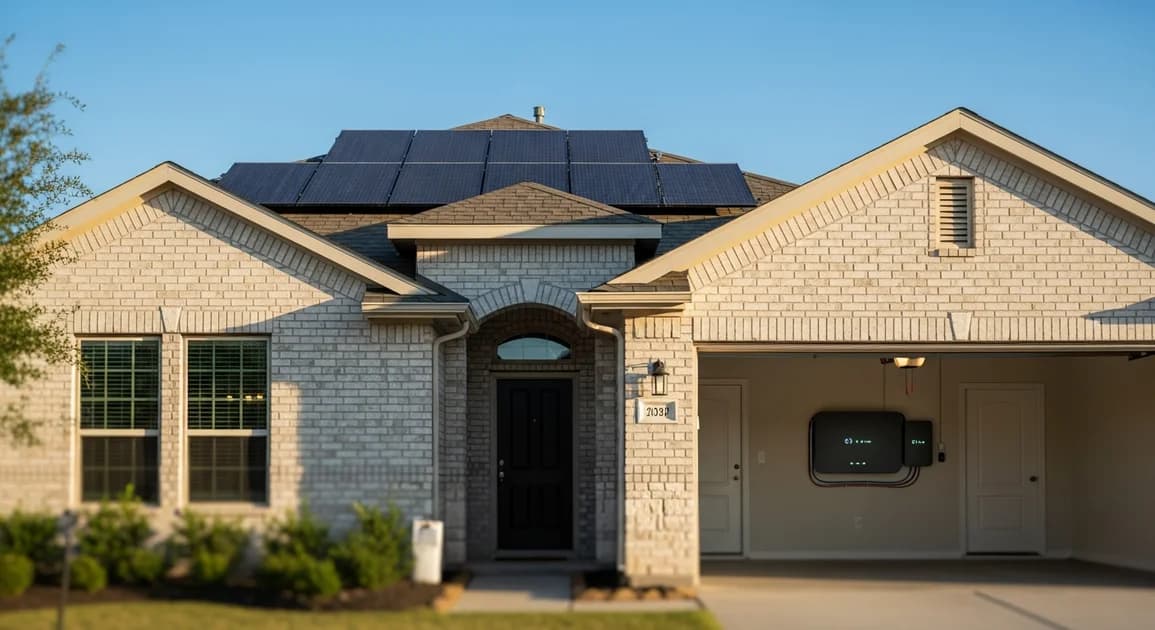
It is the most surprising thing Texas solar owners learn, usually at the worst possible moment: when the grid goes down, their solar panels go down too. If you already have rooftop solar and you are wondering whether a battery is worth adding, the honest answer is yes, if you want any power during an outage. Standard grid-tied solar is legally required to shut off when the grid fails, so on a sunny afternoon during a blackout your panels produce nothing. This guide explains exactly why, what a battery changes, and what it costs to add one.
[INTERNAL-LINK: see what adding a battery to your solar would cost -> /home-backup-planner?source=blog&slug=battery-backup-when-you-already-have-solar-texas]
Key Takeaways
- Grid-tied solar disconnects the instant the grid goes down, under the UL 1741 anti-islanding requirement that protects utility line workers, per Underwriters Laboratories.
- That means solar panels alone give you no outage power; a battery is the piece that unlocks it.
- Adding an AC-coupled battery to an existing solar system typically runs $10,000 to $20,000 installed, depending on capacity.
- With a battery, your panels can recharge it during a daytime outage, extending backup well past a single night.
- Most existing solar arrays in Houston can take an AC-coupled battery without replacing the original inverter.
Does solar work during a power outage?
No. A standard grid-tied solar system shuts down the moment the grid loses power, even in full sun. This is not a defect; it is a safety requirement called anti-islanding, defined in the UL 1741 inverter standard. If your inverter kept pushing power onto the lines during an outage, it could energize wires that utility crews believe are dead, creating a lethal hazard. So the inverter detects the outage and disconnects within seconds.
The result catches almost every new solar owner off guard. You can be sitting under a roof full of panels, sun blazing, neighbors' generators humming, and your own system produces nothing because it has safely taken itself offline. Without a battery and the right equipment to "island" your home from the grid, solar is a utility-bill tool, not a backup tool.
[INTERNAL-LINK: full Houston home battery backup guide -> /blog/home-battery-backup-houston-texas]
What does a battery add to existing solar?
A battery plus a transfer device lets your home safely disconnect (island) from the grid during an outage, so your solar and battery can keep powering the house. This is the whole point. The battery stores energy, and a gateway or microgrid interconnection device handles the safe separation from the grid that lets your system run while the utility lines stay de-energized.
Better still, during a daytime outage your panels can recharge the battery. That is the combination that turns a one-night battery into multi-day resilience: the battery carries you overnight, the sun refills it the next morning, and the cycle repeats. For a Houston household that lived through Beryl's multi-day restoration in July 2024, solar-plus-battery is the configuration that actually keeps the lights on through that kind of event.
[INTERNAL-LINK: see how Eos sizes a battery for a solar home -> /home-backup-planner?source=blog&slug=battery-backup-when-you-already-have-solar-texas]
Citation capsule. Grid-tied solar inverters are required by the UL 1741 standard to stop producing power within seconds of a grid outage (anti-islanding), per Underwriters Laboratories, so a solar array alone provides no backup; adding a battery and an islanding-capable gateway is what lets the panels and stored energy power the home during an outage.
AC-coupled vs DC-coupled: which retrofit fits your solar?
For an existing solar system, an AC-coupled battery is usually the simpler retrofit because it works alongside your current solar inverter rather than replacing it. The battery has its own inverter and ties in on the AC side, so your original panels and inverter keep doing their job and the battery is added in parallel. Most Houston retrofits go this way.
A DC-coupled battery connects on the panel (DC) side and is typically more efficient, but on an existing system it often means replacing or reworking the original inverter, which adds cost and complexity. DC coupling shines on brand-new solar-plus-storage installs designed together. For a retrofit onto solar you already own, AC coupling is the path of least resistance.
How much does adding a battery cost?
Expect roughly $10,000 to $20,000 installed to add a battery to an existing solar system in the Houston market, depending on the capacity you choose and any electrical work your panel needs. A single-battery critical-load setup sits at the lower end; a larger multi-battery whole-home configuration reaches the upper end. Because your panels are already in place, you are paying for the battery, its inverter or gateway, and the interconnection, not a whole new solar array.
We never post a flat price, because the right number depends on your existing inverter, your main panel, and which loads you want backed up. This guide is about the decision, not a quote. The point is that adding storage to existing solar is a far smaller project than the original solar install was.
[INTERNAL-LINK: compare the home battery brands we install in Texas -> /blog/best-home-battery-brands-texas]
Sizing a battery for your existing solar
Size the battery to the loads you want to keep running overnight, then let your panels handle daytime recharge. A typical Houston home wanting fridge, internet, a cooling zone in cycles, and lights through the night lands around 18 to 27 kWh of usable capacity. Your solar array's daytime production then tops the battery back up, so you rarely draw it all the way down during a sunny multi-day outage.
If your roof produces a strong midday surplus, you can often run a slightly smaller battery than a no-solar home would need, because the recharge cycle does part of the work. Pairing the two is the most resilient residential setup available. For the deeper integration details, see our solar battery storage in Houston guide.
Ready to move forward?
If you already have solar, adding a battery is the upgrade that finally makes it work when you need it most. The decision is straightforward: if you want power during outages, panels alone will not do it, and a battery will. The next step is a quick look at your existing inverter and panel to confirm the cleanest retrofit path for your home.
[INTERNAL-LINK: book a free assessment to add a battery to your solar -> /home-backup-planner?source=blog&slug=battery-backup-when-you-already-have-solar-texas]
Or call our Houston office at (713) 462-2202 and we will tell you whether your current solar setup takes an AC-coupled battery as-is.
FAQ
Does my solar work during a power outage?
Not by itself. A standard grid-tied solar system shuts off within seconds of a grid outage under the UL 1741 anti-islanding requirement, which protects utility line workers, per Underwriters Laboratories. Even in full sun, the panels produce no usable power for your home during a blackout unless you have added a battery and an islanding-capable gateway that lets your home safely run disconnected from the grid.
Can I add a battery to my existing solar system?
Yes, in almost all cases. An AC-coupled battery ties in alongside your existing solar inverter without replacing it, which is the simplest retrofit and the most common path in Houston. The battery brings its own inverter and a gateway that handles safe islanding. Your original panels and inverter keep working as before, with the battery added in parallel.
How much does it cost to add a battery to solar?
Adding a battery to an existing solar system typically costs $10,000 to $20,000 installed in the Houston area, depending on capacity and any panel work required. Because your solar array is already installed, you are only paying for the battery, its inverter or gateway, and the interconnection. A single-battery critical-load system sits at the low end; whole-home configurations reach the high end.
Will my panels recharge the battery during a long outage?
Yes, and that is the biggest advantage of solar-plus-battery. During a daytime outage, your panels recharge the battery, which then carries your home through the night. The cycle repeats each day the sun is out, turning a single-night battery into multi-day resilience. This is the configuration that kept solar-plus-battery homes running through Beryl's multi-day restoration in 2024.
The bottom line
If you already own solar in Texas, you own a great utility-bill tool that does nothing for you in a blackout, because grid-tied systems are required to shut off during outages. A battery is the missing piece. Adding an AC-coupled battery to existing solar usually costs $10,000 to $20,000, rarely requires touching your original panels, and unlocks the multi-day resilience that solar alone cannot provide. If outage protection is why you went solar in the first place, the battery is how you finish the job.
[INTERNAL-LINK: get a quote to add battery backup to your solar -> /home-backup-planner?source=blog&slug=battery-backup-when-you-already-have-solar-texas]