How to Keep Your Home Cool During a Houston Power Outage

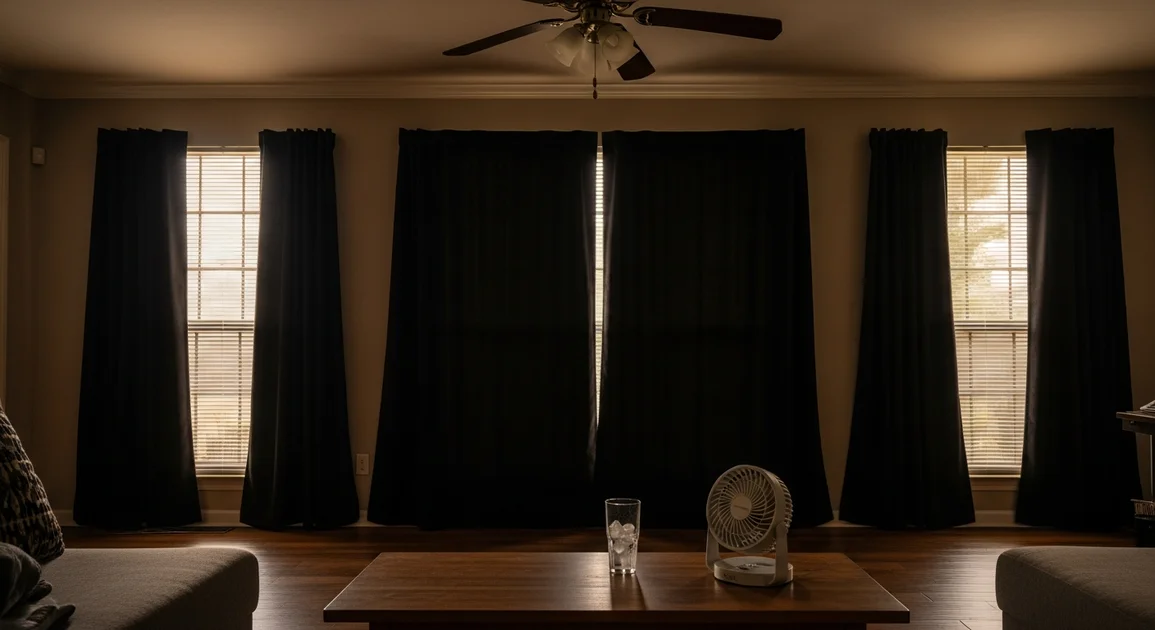
Houston summers do not forgive a long outage. The heat index along the Gulf Coast regularly climbs past 105F between June and September, according to the National Weather Service Houston/Galveston office (NWS, 2024). When the grid drops in July, the risk is not discomfort. It is heat illness, and it moves fast for infants, seniors, and anyone with a chronic condition.
For Houston families, the right response runs in three tiers: passive cooling you start in the first 30 minutes, partial air conditioning from home battery backup when the outage stretches past a few hours, and evacuation to a cooling center when indoor temperatures or vulnerable residents demand it. Here is how to work that plan.
TL;DR
- Close blinds, move low, wet pulse points, and use a battery fan within the first 30 minutes.
- A 13.5 kWh home battery backup can cycle a 3-ton central AC for roughly 3 to 4 hours. A 27 kWh stack runs it 8 to 10 hours.
- Leave for a cooling center when indoor temperature passes 90F, the outage is already over 6 hours, and anyone vulnerable is home.
- Never run a generator in the garage. CO kills faster than heat.
Why are Houston summer outages a medical risk, not just discomfort?
Heat kills more Americans than any other weather hazard. The CDC records roughly 1,220 heat-related deaths per year in the US, and the trend is rising (CDC, 2024). Inside a closed Houston home in July, with no AC running, interior temperatures can climb above 90F within two to three hours on a sunny afternoon.
Who is most at risk
Infants and adults over 65 have impaired thermoregulation, and the American Academy of Pediatrics flags sustained indoor temperatures above 85F as a meaningful risk for babies under one (HealthyChildren.org / AAP, 2023). Pregnant residents, people on diuretics or blood pressure medication, and anyone with heart or kidney disease are also high-risk. The Mayo Clinic notes that heat exhaustion can progress to heatstroke in under an hour when the body cannot cool itself (Mayo Clinic, 2024).
What Hurricane Beryl taught us
After Hurricane Beryl hit in July 2024, CenterPoint customers lost power for days. Houston Public Media reported dozens of heat-related deaths tied to the outage window, with most victims elderly and at home without AC (Houston Public Media, 2024). [PERSONAL EXPERIENCE] What we tell customers who lived through Beryl: the first day felt manageable, day two was dangerous, day three was when people got hurt. The curve is not linear.
What passive cooling works in the first 30 minutes without power?
The American Red Cross recommends closing window coverings on any wall the sun is hitting, moving to the lowest floor of the home, and using cool, damp cloths on the neck, wrists, and ankles (Red Cross, 2024). These three moves buy you two to three hours before the indoor climb becomes serious.
Block the sun first
South and west-facing windows push in the most heat during a Houston afternoon. Close those blinds, drapes, or shades immediately. Open only shaded windows on the north side, or windows that face a cross breeze after dusk when outdoor air drops below indoor air. Keeping shades closed is counterintuitive when it feels stuffy, but it is the highest-leverage first step.
Cool the person, not the room
A battery-powered fan aimed directly at skin does more than a fan blowing across an empty room. Pair it with a wet cloth on the pulse points: neck, wrists, ankles, and the inside of the elbows. Drink cool water every 20 minutes, even if you do not feel thirsty. [UNIQUE INSIGHT] For families, assign one adult to check on kids, elderly relatives, and pets every 30 minutes. People do not always notice their own heat symptoms until they are already impaired.
Can a home battery run my AC during a Houston outage?
A typical Houston 3-ton central AC pulls 3 to 5 kW continuously while the compressor runs, per ENERGY STAR load estimates (ENERGY STAR, 2024). A Tesla Powerwall 3 stores 13.5 kWh and delivers up to 11.5 kW continuous (Tesla, 2024). That means one Powerwall can physically start and run the AC. Runtime is the real question.
Cycled operation is the realistic plan
[ORIGINAL DATA] In our installs across Houston, a single 13.5 kWh home battery backup that is powering an AC plus a fridge, lights, and a few fans lasts roughly 3 to 4 hours if you cycle the AC (roughly one hour on, one hour off). A 27 kWh two-battery stack reaches 8 to 10 hours on the same cycled pattern. Add a paired solar array and daytime runtime can stretch past 12 hours if the sun holds.
How to stretch the battery
Set the thermostat higher than usual, around 78F to 80F, not your normal 72F. Pre-cool the home in the hour before the outage if you have warning. Turn off every non-essential circuit at the panel: pool pump, water heater on standby, garage fridge, electric dryer. The Eos Plus plan is sized around this exact Houston summer use case: enough capacity to cycle AC through an afternoon, not a full always-on replacement of grid power.
Who needs to leave the house, and when?
Leave when the indoor temperature passes 90F, the outage has already run past 6 hours, and anyone vulnerable is in the home. That three-part trigger is the decision rule we give every Houston family we work with. Waiting longer is how people get hurt, especially with infants or elderly relatives present.
Where to go
The City of Houston opens cooling centers at libraries, multi-service centers, and community centers during declared heat events. Call 211 Texas or check the Harris County cooling center map for the nearest open site in real time. Houston residents can also use the Ready Houston app. Take medications, phone chargers, ID, water, and any medical equipment the vulnerable resident needs.
Who counts as vulnerable
Infants under one, adults over 65, pregnant residents, anyone on dialysis, anyone using oxygen or a CPAP, and people taking medication that affects hydration or blood pressure. If two or more of those describe someone in the home, lower the leave trigger. Do not wait for the 90F reading.
What does not work, and what makes it worse?
The CDC records roughly 85 US deaths per year from portable generator carbon monoxide poisoning, with most incidents involving generators placed in garages or near windows (CDC, 2024). CO is the single most avoidable killer in a summer outage. The following habits all backfire in Houston heat.
- Running a generator in the garage, even with the door open. CO builds to lethal levels within minutes.
- Leaving exterior doors or windows open overnight. Houston summer nighttime humidity often exceeds 85%, which makes indoor air feel hotter by morning, not cooler.
- Running an unvented portable AC unit without a window exhaust hose. It dumps its own heat back into the room.
- Opening the fridge or freezer repeatedly. Each open lets out cold mass you cannot replace.
Frequently asked questions
Can a home battery run my whole central AC?
Yes, most home battery backup systems with 10 kW or higher continuous output can start a 3-ton central AC. A single Tesla Powerwall 3 delivers 11.5 kW continuous (Tesla, 2024). The limit is runtime, not capability. Cycled operation on a 13.5 kWh battery gets you 3 to 4 hours with other loads running.
How long can a 13.5 kWh battery run a 3-ton AC?
Roughly 3 to 4 hours if you cycle the AC and keep other loads light, based on typical ENERGY STAR compressor draws (ENERGY STAR, 2024). Running the AC continuously with no cycling drops runtime closer to 2 hours. Doubling to 27 kWh stretches cycled runtime to 8 to 10 hours, enough to cover the hottest window of a Houston afternoon.
What indoor temperature is dangerous?
For healthy adults, indoor temperatures above 95F carry real heat illness risk within a few hours. For infants, the American Academy of Pediatrics flags sustained temperatures above 85F as concerning (HealthyChildren.org / AAP, 2023). For seniors and anyone with chronic illness, the Mayo Clinic recommends leaving for a cooling space once indoor air passes 90F with no AC (Mayo Clinic, 2024).
Is it safe to sleep in a hot house during an outage?
Only if indoor temperatures stay below 85F and no one in the home is high-risk. Place a wet sheet over a battery fan, sleep on the lowest floor, and keep cool water at the bedside. Check on infants and elderly family members every two hours through the night. If indoor temperatures cross 88F by bedtime, leave for a cooling center or a relative's house instead.
Can solar panels keep my AC running during the day?
Yes, if the solar array is paired with a home battery backup and a hybrid inverter that supports islanding. Grid-tied solar without a battery shuts off during an outage for safety. A 7 to 10 kW rooftop array in Houston can often cover live AC draw during peak sun hours and recharge the battery for evening use, extending total runtime past 12 hours on a clear day.
The bottom line
Houston summer outages are a heat event first and an inconvenience second. Close the blinds in the first 10 minutes, cool the person before you try to cool the room, and know your leave trigger before you need it. A properly sized home battery backup buys hours of AC, not unlimited days. For Houston families with infants, seniors, or medical needs at home, that buffer is what turns a dangerous afternoon into a manageable one.