EcoFlow Delta Pro Ultra vs Home Battery: Texas Guide

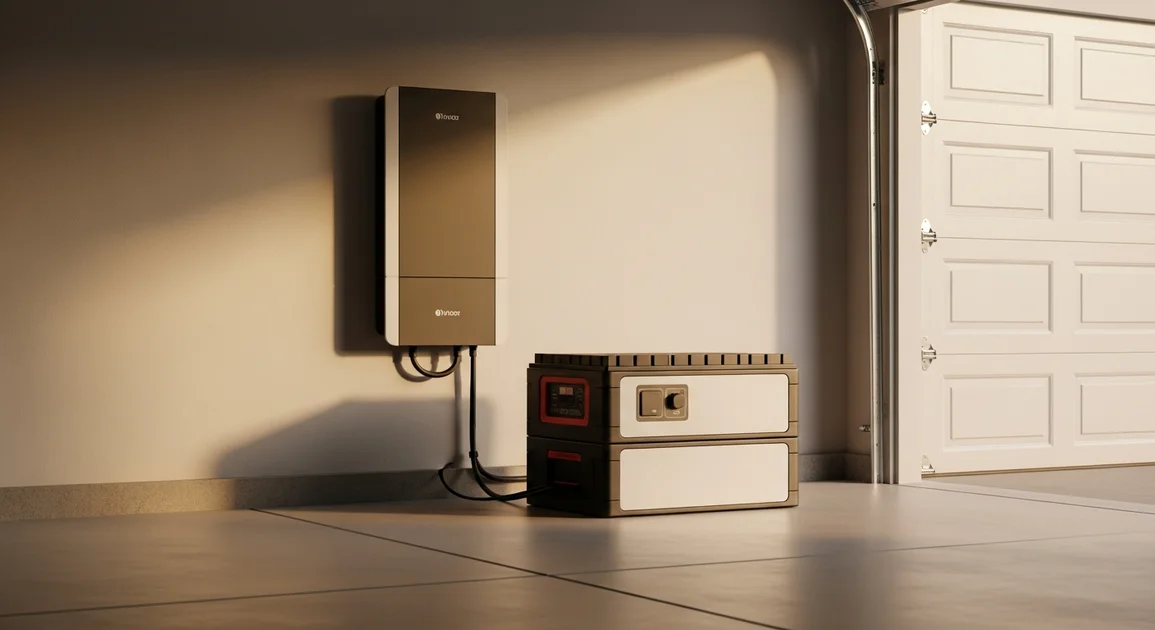
The EcoFlow Delta Pro Ultra expands to 90 kWh, double the capacity of the largest installed tier we sell (EcoFlow, 2026). So why do installers still file it under portable? In practice, three rows on the spec sheet, transfer scope, warranty length, and heat rating, decide a Texas outage long before capacity does.
EcoFlow markets the Ultra as whole-home backup, and it comes closer than any portable ever has. Even so, Texas homeowners deserve a straight answer on where that marketing holds up and where it quietly stops. What follows is an honest, axis-by-axis comparison, and the Ultra genuinely wins several rows.
TL;DR: The EcoFlow Delta Pro Ultra is the strongest portable on the market. It packs a 6 kWh base expandable to 90 kWh, a 7.2 kW inverter stackable to 21.6 kW, and semi-automatic transfer through the Smart Home Panel 2 (EcoFlow, 2026). However, it carries a 5-year warranty, backs up only assigned circuits, and never becomes a permitted fixture of your home. In contrast, an installed whole-home battery transfers the entire panel automatically, carries a 10-year warranty, and scales from 9 to 45 kWh sized to your load. Overall, the Ultra wins for renters and partial backup, while installed wins whole-home coverage, central AC, and longevity.
[INTERNAL-LINK: get a Houston battery backup quote in under 2 minutes → /home-backup-planner?source=blog&slug=ecoflow-delta-pro-ultra-vs-whole-home-battery-texas]
What Is the EcoFlow Delta Pro Ultra and What Can It Run?
The Delta Pro Ultra is a modular home backup station built around a 7,200 W inverter with a 10.8 kW surge rating and one 6 kWh LFP battery in its base configuration (EcoFlow, 2026). From there it stacks: up to 15 batteries for 90 kWh of storage, and up to 3 inverters for 21.6 kW of combined output.
That base unit comfortably runs a fridge, lights, ceiling fans, a window AC unit, electronics, and a CPAP. With stacked inverters, it can start some 240V loads too. Additionally, each inverter accepts up to 5.6 kW of solar input, so a solar-paired build can recharge mid-outage (EcoFlow, 2026). The LFP chemistry is rated around 3,500 cycles, which is respectable for daily use.
The piece that changes the category is the Smart Home Panel 2. The Smart Home Panel 2 is an electrician-installed subpanel that lets the Ultra switch over automatically for up to 12 assigned circuits (EcoFlow, 2026). Once that panel goes on your wall, though, the Ultra stops being a suitcase battery and becomes something new: a semi-installed system.
In 2026, the Delta Pro Ultra spans 6 to 90 kWh of storage and 7.2 to 21.6 kW of output, the widest range of any portable platform on the market (EcoFlow, 2026). Even so, no other portable gets this close to installed-system behavior, which is exactly why the comparison deserves an honest look.
What Does an Installed Whole-Home Battery Do Differently?
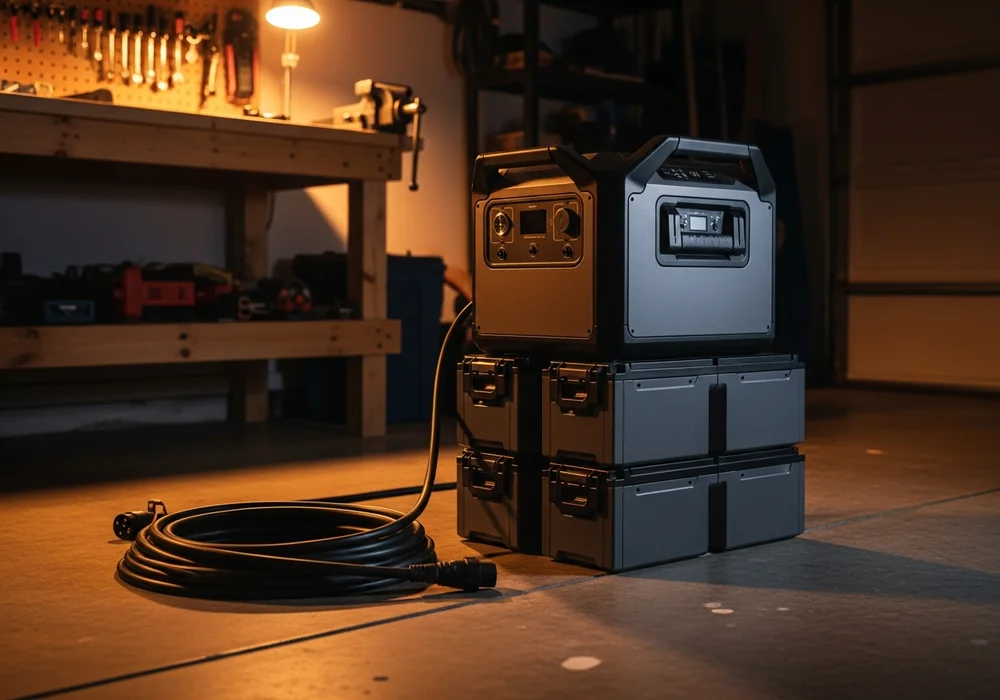
An installed whole-home battery is a permanently wired backup system. It hardwires to your main electrical panel, detects an outage, and switches the entire house to battery power in milliseconds. Not a list of assigned circuits. The whole panel, including 240V loads like central AC and well pumps, within your system's sizing.
It scales in named tiers: Essential at 9 kWh, Plus at 18 kWh, Pro at 27 kWh, Premium at 36 kWh, and Ultimate at 45 kWh. Each install is sized to your actual load profile, permitted, inspected, and interconnected with your utility. As a result, it becomes part of the house, the way a water heater or an HVAC system is.
A whole-home battery transfers the full electrical panel automatically and scales from 9 to 45 kWh in tiers sized to your measured load (Eos plans, 2026). Because sizing happens before install, it isn't guessing at what you'll need during an outage. It already knows.
The trade is permanence. You can't take it to a job site, and it stays with the house when you move. For a homeowner planning to stay put, that permanence is precisely the point.
[INTERNAL-LINK: compare whole-home battery tiers → /plans]
Automatic Transfer: Assigned Circuits vs the Whole Panel
Here's where the Ultra earns real credit. With the Smart Home Panel 2, it switches over automatically when the grid drops, no cords, no 3 a.m. scramble. Indeed, that's a genuine step past fully manual portables like the Bluetti AC500, and it's the closest a portable has come to hands-free operation (EcoFlow, 2026).
However, read the fine print: automatic transfer covers only the circuits assigned to that subpanel, up to 12 of them. Everything else in your house stays dark. Meanwhile, in a Houston outage at 3 a.m., the assigned fridge and bedroom circuits carry on while the central AC, the electric water heater, and any unassigned 240V loads sit dead until the grid returns.
With the Smart Home Panel 2, the Delta Pro Ultra transfers automatically but only for up to 12 assigned circuits, while an installed whole-home battery transfers the entire main panel (EcoFlow, 2026). The difference isn't speed. It's scope.
There's a deeper point competitors never name. The moment you buy the Smart Home Panel 2, you've hired an electrician, modified your electrical system, and spent four figures on panel hardware. In other words, you've already accepted everything people buy portables to avoid. At that crossover, the honest question isn't "portable or installed?" It's "why stop halfway?"
Capacity, Runtime, and the Texas Multi-Day Outage Test
On paper, a maxed-out Ultra at 90 kWh out-caps any single installed tier. In practice, almost nobody buys 15 batteries. The base configuration is one 6 kWh battery, and at a typical essentials load that empties in well under a day. Each added battery buys you another 6 kWh, at four figures per module (EcoFlow, 2026).
Texas is where runtime claims meet reality. In July 2024, Hurricane Beryl knocked out power to roughly 2.2 million CenterPoint Energy customers in the Houston area, and restoration for many homes took the better part of a week (CenterPoint Energy, 2024). So a base Ultra running essentials is empty before the first night ends. Without solar input, it stays empty until the grid comes back.
During Hurricane Beryl in July 2024, roughly 2.2 million CenterPoint customers lost power, and many waited days for restoration (CenterPoint Energy, 2024). By contrast, a base 6 kWh Delta Pro Ultra covers less than one day of household essentials (EcoFlow, 2026). Multi-day events, in short, are exactly where base-configuration portables run out.
How do the configurations actually stack up?
[INTERNAL-LINK: check if your home qualifies for a 9 to 45 kWh system → /home-backup-planner?source=blog&slug=ecoflow-delta-pro-ultra-vs-whole-home-battery-texas]
Price per Usable kWh, Permits, and What "No Install" Really Costs
A base Delta Pro Ultra, one inverter plus one 6 kWh battery, lists at $5,799 and streets between roughly $5,000 and $6,500 in mid-2026 (SolarReviews, 2026; HomeBackupLab, 2026). In other words, that works out to roughly $900 to $1,100 per usable kWh before you add a single expansion battery, a Smart Home Panel 2, or an electrician's invoice.
Our finding: In Eos site surveys around Houston, we've found that homeowners who price a fully expanded Ultra build, three inverters, a stack of batteries, and the Smart Home Panel 2, are consistently surprised. Past roughly 18 kWh, in our experience, the semi-installed portable path costs about as much per usable kWh as a permanent permitted install. And it still arrives without the permit, the inspection, or the 10-year warranty.
Permits are the quiet row on this spec sheet. The Ultra itself is an appliance and needs none. The Smart Home Panel 2 is different: it's a wired subpanel that requires an electrician and, in most Texas jurisdictions, a permit. As a result, a "no install" product ends up half-permitted, while its batteries remain outside your home's inspected electrical system. An installed whole-home battery, meanwhile, is fully permitted, inspected, and interconnected, which matters for insurance conversations and resale.
Then there's the warranty gap. EcoFlow covers the Delta Pro Ultra for 5 years (EcoFlow, 2026). Installed whole-home systems carry a 10-year warranty. In a product category where you're buying a decade of outage protection, one of these warranties covers half the decade.
Houston Heat, Garage Storage, and Longevity
EcoFlow rates the Delta Pro Ultra's discharge operating range up to 113 F (EcoFlow, 2026). Houston summers press directly against that ceiling. The National Weather Service recorded extended triple-digit stretches across recent Houston summers, and an enclosed garage routinely runs 10 to 20 degrees hotter than the ambient air (NWS Houston, 2025). As a result, that puts a garage-floor Ultra at or past its rated limit on the exact afternoons you're most likely to need it.
Heat above rating does two things: it throttles output in the moment, and it accelerates LFP cell aging over the years. In our experience installing across Houston, we engineer thermal placement in from the start: wall mounting, shade orientation, and clearances are all part of the permitted design. A portable parked on the slab, by contrast, rides whatever temperature the garage reaches that day. Nobody plans a portable's thermal environment, and in Houston, that's not a small omission.
Longevity also shows up at resale. A permitted installed battery conveys with the house, appears in the appraisal conversation, and signals storm readiness to Houston buyers who lived through Beryl. A portable leaves in the moving truck, along with every dollar you put into it.
Which One Is Right for Your Situation?
The EcoFlow Delta Pro Ultra is the strongest portable power station sold today, full stop. It earns that reputation honestly: a 6 kWh base that expands to 90 kWh, a 7.2 kW inverter stackable to 21.6 kW, and semi-automatic transfer through its Smart Home Panel 2 (EcoFlow, 2026). It's the right call for renters, for partial backup of a dozen chosen circuits, for mobile and job-site power, and for anyone who can't modify their electrical panel. An installed whole-home battery answers a different question, though. It transfers the entire main panel automatically, keeps central AC and well pumps running, carries a 10-year warranty (double the Ultra's), and scales from 9 to 45 kWh sized to a home's measured load (Eos plans, 2026). Homeowners who want the whole house covered, not just a dozen circuits, ultimately choose installed.
In our experience running Eos site surveys, we've found one pattern repeats: homeowners buy a strong portable first, live through one Texas outage with half the house dark, then call about a permanent system. Buying the Ultra first is rarely a mistake. It just often isn't the finish line.
Want the wider context? See how the Bluetti AC500 compares to a whole-home battery for the fully manual end of the portable spectrum. For the category-level breakdown, read the full portable vs installed battery comparison. And if you're weighing an install with no panels on the roof, see standalone battery backup without solar in Houston.
[INTERNAL-LINK: book a free Houston home assessment → /home-backup-planner?source=blog&slug=ecoflow-delta-pro-ultra-vs-whole-home-battery-texas]
Prefer to talk it through first? Call our Houston team and we'll size the right system for your home before you spend a dollar.
Frequently Asked Questions
Can the EcoFlow Delta Pro Ultra power a whole house in Texas?
Only the circuits assigned to its Smart Home Panel 2, up to 12 of them, within its stacked inverter limit of 21.6 kW (EcoFlow, 2026). A fully expanded build approaches whole-home coverage, but an installed battery backs the entire main panel automatically.
Does the Delta Pro Ultra run central air conditioning?
Sometimes. A single 7.2 kW inverter can start some smaller condensers, but reliable central AC backup through a Texas summer typically needs stacked inverters plus significant battery expansion (EcoFlow, 2026). Installed whole-home systems are sized for the AC from day one.
How long does a Delta Pro Ultra last during a Houston outage?
A base 6 kWh unit covers household essentials for well under a day, and each added battery contributes another 6 kWh (EcoFlow, 2026). Without solar input it can't recharge until the grid returns, and Beryl-scale Houston outages ran multiple days.
Does the Delta Pro Ultra need a permit?
The unit itself doesn't; it's an appliance. The Smart Home Panel 2 that enables automatic transfer is an electrician-installed subpanel that generally does require a permit in Texas jurisdictions. An installed whole-home battery is fully permitted, inspected, and interconnected from the start.
Is the Delta Pro Ultra warranty shorter than an installed battery's?
Yes. EcoFlow warranties the Delta Pro Ultra for 5 years (EcoFlow, 2026), while installed whole-home systems carry a 10-year warranty. Over a decade of outage protection, that's the difference between one covered system and one covered half.
The Bottom Line
The Delta Pro Ultra deserves its reputation. It also deserves an honest label.
- The Ultra is the best-in-class portable: 6 to 90 kWh, semi-automatic transfer with the Smart Home Panel 2, and real 240V capability. However, it's capped by a 5-year warranty, a 113 F heat rating, and circuit-by-circuit coverage.
- An installed whole-home battery, by comparison, transfers the entire panel automatically, carries a 10-year warranty, and is a permitted fixture that conveys with the home.
- Ultimately, renters and partial-backup buyers win with the Ultra, while Houston homeowners who want the whole house, the AC, and the decade of coverage win with installed.
If you're leaning permanent, the fastest next step is a sizing-based quote for your address.
[INTERNAL-LINK: get a fixed-price install quote for your address → /home-backup-planner?source=blog&slug=ecoflow-delta-pro-ultra-vs-whole-home-battery-texas]