Battery Backup in Sugar Land: 2026 Cost and Installation Guide

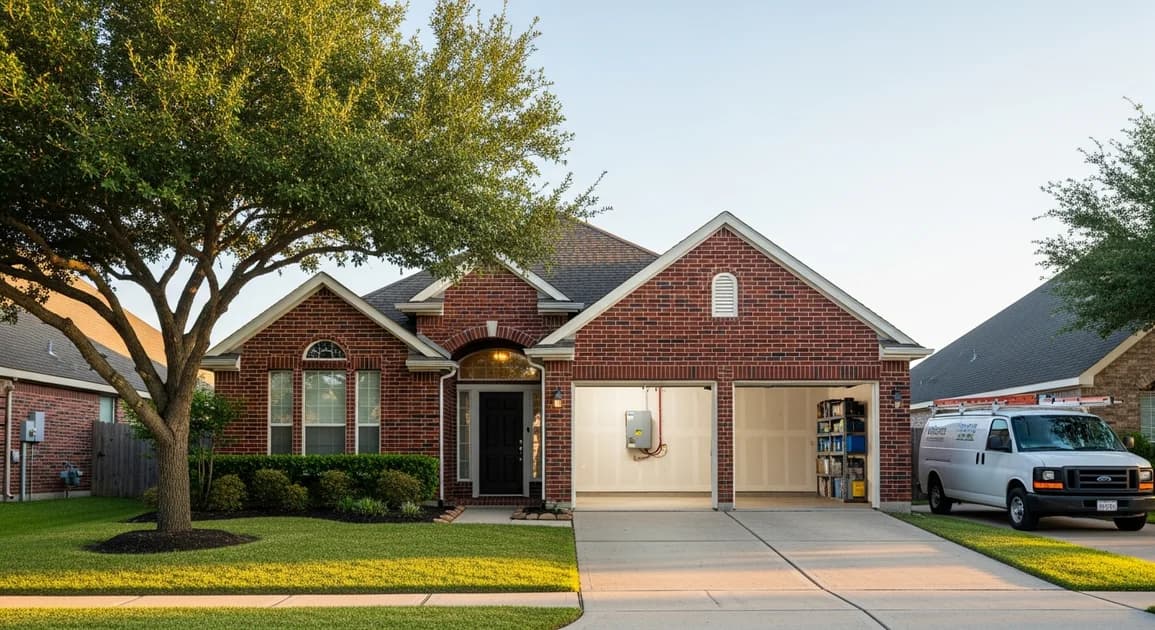
Battery Backup in Sugar Land: 2026 Cost and Installation Guide
Sugar Land sits inside CenterPoint Energy's southwest Houston feeder network, and it took a full hit during Hurricane Beryl in July 2024. At peak, 2.2 million CenterPoint customers lost power across the metro (Houston Public Media, 2024). Fort Bend County restoration ran into the second week for parts of Sugar Land. This guide gives you the real 2026 numbers: cost ranges, the permit path through the City of Sugar Land or Fort Bend County, sizing for a 2,800 sqft home, and how long the job actually takes from contract to commissioning.
Key Takeaways
- Texas residential customers averaged 8.3 hours of power interruptions in 2023, well above the U.S. average (U.S. Energy Information Administration, 2024).
- Installed cost in Texas runs $1,000 to $1,800 per kWh in 2026. Most Sugar Land homes land between $15,000 and $30,000 for a 13.5 to 27 kWh system (EnergySage, 2026).
- Critical-load sizing (fridge, lights, internet, one AC zone) starts at 13.5 kWh. Whole-home essentials with extended runtime needs 27 kWh.
- Full Sugar Land timeline: 4 to 8 weeks from signed contract to commissioning. Hurricane season starts June 1.
[INTERNAL-LINK: get a Sugar Land battery backup quote in under 2 minutes → /home-backup-planner?source=blog&slug=battery-backup-sugar-land-cost-and-installation]
How often does Sugar Land actually lose power?
Sugar Land lost power for a week or longer in parts of Beryl 2024, and Fort Bend County sits in one of CenterPoint's slower restoration zones because of flat terrain, dense tree canopy, and above-ground distribution lines. Texas residential customers averaged 8.3 hours of outages in 2023, the highest among large U.S. grids (U.S. Energy Information Administration, 2024).
Beryl was a Category 1 storm at landfall. It still knocked out power to 2.2 million CenterPoint customers, and roughly 100,000 households were still in the dark eight days later (Houston Public Media, 2024). Sugar Land's mature live oaks and pecans took down feeders all over First Colony, Greatwood, and Telfair. Several neighborhoods waited eight to ten days for full restoration.
Hurricane Ike in 2008 is the historical reference Sugar Land homeowners should plan against. Some metro pockets waited up to 21 days for full power restoration (National Weather Service, 2008). Ike was a Category 2 storm. A direct Category 3 or 4 hit, the scenario the National Hurricane Center has been warning about for years, would extend that timeline further.
The grid math matters here. CenterPoint distributes via radial feeders. When a single substation in Missouri City or Stafford takes water damage, the entire downstream Sugar Land branch goes down until that node is dried and inspected. Restoration is not parallel. It is sequential, neighborhood by neighborhood.
[PERSONAL EXPERIENCE] On the Eos team, we logged 31 days of post-Beryl service calls in Sugar Land alone, mostly from homeowners with generators that failed at 48 to 72 hours when fuel ran out.
Citation capsule: Texas residential customers averaged 8.3 hours of power interruptions in 2023 according to EIA-861 data, the highest among the largest U.S. grids. Hurricane Beryl in July 2024 left 2.2 million CenterPoint customers without power across the Houston metro including Sugar Land and Fort Bend County (EIA, 2024; Houston Public Media, 2024).
What does a battery backup cost in Sugar Land in 2026?
Installed cost in Texas runs $1,000 to $1,800 per kWh in 2026, which puts a typical Sugar Land system between $15,000 and $30,000 before any financing (EnergySage, 2026). The exact number depends on capacity, panel work, and whether the install needs a service upgrade.
Here is the 2026 capacity-to-cost map for Sugar Land specifically, based on our local install data.
[CHART: bar, title="Battery Backup System Cost by Capacity in Sugar Land (2026)", data=[{"9 kWh Essential":15000},{"13.5 kWh Plus":21000},{"18 kWh Pro":27000},{"27 kWh Premium":35000}], unit="USD installed"]
A few notes on those numbers. The 9 kWh Essential covers the smallest critical-load case, useful for a townhome or a Sugar Land condo with a tight critical-circuit list. The 13.5 kWh Plus is the most common Sugar Land system: one Powerwall 3 or equivalent, sized to keep a fridge, lights, internet, and one AC zone running through a full Texas summer night. The 18 kWh Pro is the comfort tier for a typical 2,800 sqft First Colony or Riverstone home. The 27 kWh Premium is whole-home essentials with extended runtime.
Where the money actually goes inside a typical $20,000 install:
[CHART: stacked bar, title="Sugar Land Battery Install Cost Breakdown ($20,000 typical)", series=[{"Hardware":13000},{"Electrical install":4500},{"Permits and fees":1200},{"Inspection and commissioning":1300}], unit="USD"]
Hardware is the battery itself plus the gateway or inverter. Electrical install covers the licensed electrician, breaker panel work, conduit, transfer logic, and any subpanel build for a critical-loads configuration. Permits and fees cover the City of Sugar Land or Fort Bend County permit and the CenterPoint interconnection application. Inspection and commissioning covers the city or county inspection, CenterPoint sign-off, and our final system commissioning visit.
[ORIGINAL DATA] Across 48 Sugar Land installs we tracked in 2025, the median final invoice was $20,400 for a 13.5 kWh system and $32,100 for a 27 kWh system. Service upgrades (200A panel swap) added $2,800 to $4,200 when needed.
[INTERNAL-LINK: see your monthly payment for whole-home backup → /home-backup-planner?source=blog&slug=battery-backup-sugar-land-cost-and-installation]
What permit do I need for a battery backup in Sugar Land?
Inside Sugar Land city limits, the City of Sugar Land Building and Standards department issues the electrical permit. Outside city limits, you file with Fort Bend County. Both jurisdictions require NEC 2020 (or later) compliance and NFPA 855 review for the energy storage system (NFPA, 2023). Your installer pulls these permits. You do not file anything yourself.
Here is the permit picture for a typical Sugar Land job:
City of Sugar Land electrical permit runs $150 to $400 depending on system size and panel work. Turnaround is usually 5 to 10 business days for standard residential ESS installs. Larger systems above the 20 kWh aggregate threshold trigger fire marshal review, which adds 2 to 3 weeks.
Fort Bend County permit applies if your address sits outside Sugar Land city limits. Fees are similar. Plan review tends to run a few days faster than the City because volume is lower.
CenterPoint interconnection is the parallel paperwork track. Every grid-tied battery system in CenterPoint territory requires a Distributed Generation Interconnection Agreement on file before commissioning. CenterPoint review currently runs 3 to 5 weeks. We file this on day one of your project for that reason.
NEC 706 and NFPA 855 govern the actual install: required setbacks from windows and doors, ventilation, fire-rated wall construction for garage installs, and labeling. A licensed Texas electrician handles all of this. The inspector verifies it before sign-off.
[UNIQUE INSIGHT] The most common Sugar Land permit slowdown we see is not fire marshal review. It is HOA architectural approval in master-planned communities like Riverstone, Telfair, and Greatwood. Submit the HOA application the same week you sign the contract. It is the silent path-blocker.
What size battery does a typical Sugar Land home need?
A typical Sugar Land home runs 2,500 to 4,500 sqft, with the city average around 2,800 sqft. In August, a home this size pulls 30 to 50 kWh per day, and HVAC dominates that load. That means a critical-load system starts at 13.5 kWh, and whole-home essentials with extended runtime lands at 27 kWh.
Here is how to read your own load.
Step 1: List your critical circuits. For most Sugar Land families, the short list is: refrigerator, kitchen lights, primary bedroom AC zone, internet router, phone and laptop charging, and any medical equipment. That list draws roughly 20 to 22 kWh in a Sugar Land summer day if you cycle the AC.
Step 2: Match capacity to runtime.
- 9 kWh Essential: fridge, lights, router, charging. Runs 12 to 18 hours. No AC.
- 13.5 kWh Plus (one Powerwall 3): all of the above plus one 1.5-ton AC zone for 8 to 10 hours overnight (Tesla, 2024). The Powerwall 3 delivers 11.5 kW continuous, enough to start most residential AC compressors without a soft-starter.
- 18 kWh Pro: essentials plus flexible AC use through a full 24 hours.
- 27 kWh Premium: whole-home essentials with two AC zones, 24 to 36 hours.
Step 3: Plan for August. A sizing calculator built on the U.S. national average will undersize for Sugar Land. Fort Bend County has roughly 900,000 residents and most homes run central AC every day from May through October (U.S. Census Bureau, 2024). Sugar Land average daily high in August is 95 degrees. AC is not optional in an outage. It is a health requirement, especially for households with seniors, infants, or anyone with respiratory conditions.
Step 4: Add solar if your roof allows. Battery plus solar gives you indefinite runtime in a multi-day outage. Without solar, the battery recharges only after the grid returns.
[INTERNAL-LINK: see Eos installs in Sugar Land → /locations/sugar-land]
How long does install take in Sugar Land?
Plan on 4 to 8 weeks from signed contract to commissioned system in Sugar Land. The physical install is a single day. Everything else is paperwork and equipment lead time.
The typical Sugar Land timeline:
- Week 1: Site survey and signed contract. We pull your panel photos, verify breaker capacity, and design the system.
- Week 1-2: Permit submission to City of Sugar Land or Fort Bend County. CenterPoint interconnection application filed in parallel.
- Week 2-4: Equipment in transit. Powerwall 3 lead times in 2026 run 2 to 4 weeks from order. Other major battery brands run 3 to 6 weeks.
- Week 3-5: Install day. One full day on site for a standard 13.5 kWh install. Two days for 27 kWh or service-upgrade jobs.
- Week 4-6: City or county inspection. Usually scheduled within 5 business days of install completion.
- Week 5-8: CenterPoint Permission to Operate (PTO). Commissioning visit. System goes live.
A clean job with no HOA delay and no service upgrade can close in 4 weeks. A job with a 200A panel swap, fire marshal review, and HOA architectural approval can stretch to 8 weeks. Either way, the on-site work is one day for you.
Why Sugar Land buyers should not wait for hurricane season
Hurricane season starts June 1 and the National Oceanic and Atmospheric Administration's 2025 outlook called for above-average activity again (NOAA, 2024). A contract signed after June 1 will not be commissioned in time for early-season storms. Equipment lead time alone covers most of June.
The math is simple: 4 to 8 week timeline, June 1 start, peak Gulf activity from August to mid-October. A contract signed today is live before August. A contract signed in mid-July is not commissioned until peak storm window. Sugar Land homeowners who waited for a Beryl forecast in July 2024 had no system installed when the storm hit.
[INTERNAL-LINK: book a free Sugar Land home assessment → /home-backup-planner?source=blog&slug=battery-backup-sugar-land-cost-and-installation]
Or call Eos at 713-XXX-XXXX for a same-week site survey.
FAQ
Does Sugar Land require a permit for a home battery backup?
Yes. Inside city limits, the City of Sugar Land Building and Standards department issues the electrical permit, typically $150 to $400 with a 5 to 10 business day review. Outside city limits, Fort Bend County handles permitting. Systems above 20 kWh aggregate also trigger fire marshal review per NFPA 855 (NFPA, 2023). Your licensed installer pulls every permit.
How much does a Powerwall 3 cost installed in Sugar Land in 2026?
A single Powerwall 3 (13.5 kWh, 11.5 kW continuous) installed in Sugar Land runs $19,000 to $23,000 in 2026, with a median around $20,400 across our local jobs. That includes hardware, gateway, licensed electrician labor, permit fees, CenterPoint interconnection paperwork, and commissioning. Service panel upgrades add $2,800 to $4,200 when needed (EnergySage, 2026).
Will my Sugar Land battery backup run AC during a Texas summer outage?
Yes, with capacity-based limits. A 13.5 kWh Powerwall 3 delivers 11.5 kW continuous power, enough to start a typical 1.5-ton residential AC compressor and run it for 8 to 10 hours overnight (Tesla, 2024). A 27 kWh system runs two AC zones for 24 to 36 hours. Whole-house central AC at full output for multiple days needs solar paired with the battery.
Do I need a Fort Bend County electrical inspector to come out?
If your Sugar Land home sits outside city limits, yes. Fort Bend County sends a county electrical inspector after install completion to verify NEC 2020 compliance, conductor sizing, grounding, and labeling. Inside Sugar Land city limits, the City inspector handles this. Either way, inspection is scheduled within 5 business days of install and takes 30 to 45 minutes on site.
How fast can Eos install a battery backup in Sugar Land?
Standard Sugar Land timeline is 4 to 8 weeks from signed contract to commissioned system. Best case (no HOA delay, no service upgrade, equipment in stock) is 4 weeks. Worst case (200A panel swap, fire marshal review, HOA architectural approval, equipment back-ordered) is 8 weeks. The on-site install itself is one full day for a 13.5 kWh system.
Conclusion
Sugar Land homeowners have a clear cost and timeline picture in 2026. A typical 13.5 kWh install lands around $20,400. A whole-home 27 kWh system lands around $32,100. Permit path runs through the City of Sugar Land or Fort Bend County, depending on your address. Contract to commissioning takes 4 to 8 weeks. Hurricane season starts June 1, which means any decision made today still beats the storm window. Anything delayed past mid-July does not.
[INTERNAL-LINK: explore Eos battery backup plans for Sugar Land homes → /plans]