Indoor vs Outdoor Battery Backup Installation in Houston Heat: Tradeoffs

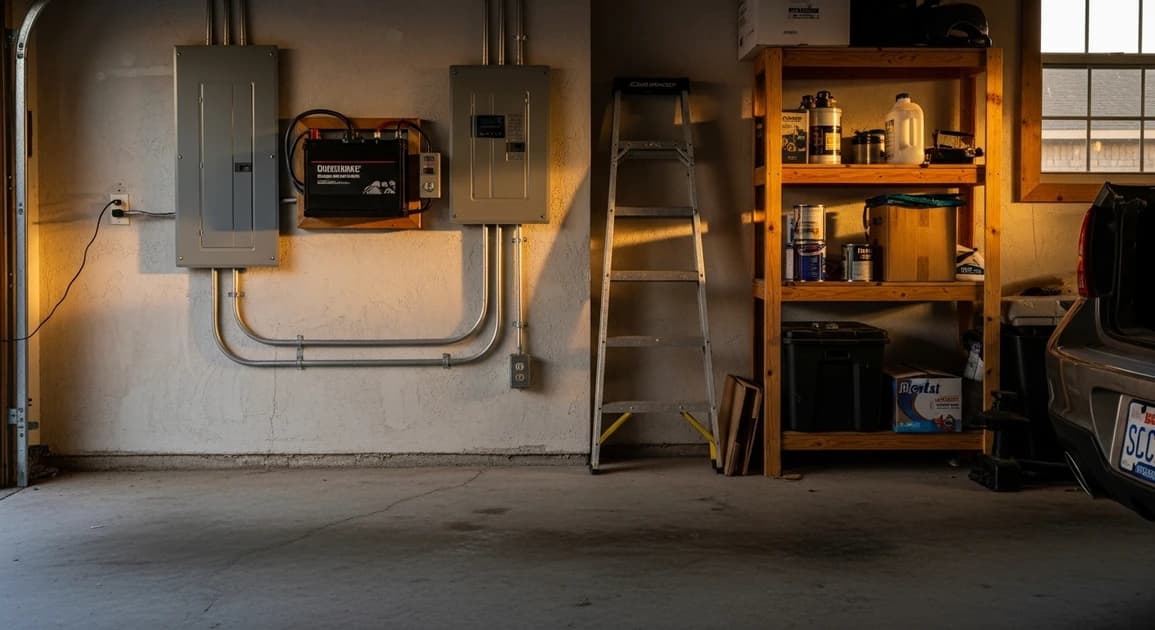
Once you have chosen a home battery, the next question installers get is where to put it: outside on an exterior wall, or inside the garage? In most of the country this is a coin flip. In Houston it is a longevity decision, because sustained 100F-plus heat is the single biggest enemy of lithium battery lifespan. This guide walks through the real tradeoffs between an outdoor and an indoor mount, the code setbacks that constrain both, and what we actually recommend for the Houston climate.
[INTERNAL-LINK: get a Houston install assessment in under 2 minutes -> /home-backup-planner?source=blog&slug=battery-backup-indoor-vs-outdoor-installation-houston]
Key Takeaways
- Modern home batteries are rated for outdoor installation in weatherproof NEMA 3R or higher enclosures, so an exterior wall is allowed in Houston.
- But heat shortens battery life, and a west- or south-facing Houston wall in July is a brutal thermal environment for cells.
- A shaded indoor garage mount keeps the battery in a milder, more stable temperature band, which generally extends real-world lifespan.
- NFPA 855 sets the fire-safety setbacks and separation rules that govern both indoor and outdoor placement.
- Distance from the battery to your main panel also affects cost and complexity, and sometimes overrides the thermal preference.
Can you install a home battery outdoors in Houston?
Yes. Major home batteries are rated for outdoor installation, sealed in weatherproof enclosures (typically NEMA 3R or higher) and built to operate across a wide temperature range, per Tesla Powerwall and Sigenergy specifications. An exterior wall mount is fully code-compliant and common across Texas. The unit handles rain, humidity, and ambient heat within its rated band.
The catch is what sustained heat does over years. Lithium cells degrade faster at high temperatures, and while a battery will keep operating in Houston summer conditions, a unit baking on a west-facing wall in direct afternoon sun spends more of its life near the top of its thermal range than one in a shaded spot. Many systems also reduce output (thermal derating) when they get too hot, so peak performance during a summer outage can dip exactly when you need it.
The case for an indoor garage mount
For most Houston homes, a garage interior wall is the longevity-friendly choice. A garage is not air conditioned, but it is shaded, and its temperature swings are milder than a sun-struck exterior wall, which keeps the cells in a gentler band year-round. That translates to slower capacity fade over the 10-year-plus life of the system.
A garage mount also keeps the inverter electronics out of driving rain and direct UV, simplifies wiring runs to a panel that is often already in the garage, and puts the status display somewhere you actually see it. The tradeoff is floor or wall space and adherence to fire-separation rules, which we cover next.
[INTERNAL-LINK: see how Eos plans and prices a Houston install -> /home-backup-planner?source=blog&slug=battery-backup-indoor-vs-outdoor-installation-houston]
Citation capsule. Home batteries from Tesla and Sigenergy are rated for outdoor installation in weatherproof enclosures, per manufacturer specs, but because lithium cells degrade faster at sustained high temperatures, a shaded indoor garage mount in Houston keeps the battery in a milder thermal band than a sun-exposed exterior wall, generally extending real-world lifespan.
Code and safety: NFPA 855 setbacks
Both indoor and outdoor placements are governed by NFPA 855, the fire-safety standard for energy storage systems. It defines how much energy can be installed in a given location, required separation distances between units and from doors, windows, and living spaces, and when a wall rated for fire separation is required, per the National Fire Protection Association. Houston-area inspections enforce these rules at the energy-storage permit stage.
In practice, a typical residential battery within common capacity limits installs cleanly on a garage wall with standard setbacks. Larger multi-battery stacks may trigger additional separation or a rated wall. A conditioned interior closet is allowed in limited cases but is constrained by these same rules, which is why it is rare for residential. Your installer designs placement to meet NFPA 855 before pulling the permit.
[INTERNAL-LINK: how the battery ties into your electrical panel -> /blog/battery-backup-electrical-panel-connection]
Distance to panel and other placement factors
Thermal preference is not the only factor; the distance from the battery to your main electrical panel matters too. Longer conductor runs add cost, conduit, and a small efficiency loss, so a placement that is thermally ideal but 60 feet from the panel can lose to a slightly warmer spot right next to it. Wall structure (the mount needs solid backing), service access for future maintenance, and flood elevation all factor in as well.
This is why placement is decided at the site survey, not from a catalog. A good installer weighs heat, code, panel distance, and access together. For the broader install walkthrough, see our Houston battery installation guide.
What we recommend in Houston
For the Houston climate, our default recommendation is a shaded indoor garage mount where NFPA 855 setbacks allow, because it gives the best balance of battery longevity, wiring simplicity, and serviceability. We go outdoors when garage space is unavailable, the panel is on an exterior wall far from the garage, or the homeowner prefers it, and in those cases we favor a shaded north- or east-facing wall over a sun-baked west wall.
There is no universally wrong answer; both placements are safe and code-compliant. The point is that in Houston specifically, heat tips the longevity math toward indoors more often than in cooler climates. For whole-home context, see our Houston home battery backup guide.
[INTERNAL-LINK: book a free Houston site survey to decide placement -> /home-backup-planner?source=blog&slug=battery-backup-indoor-vs-outdoor-installation-houston]
Or call our Houston office at (713) 462-2202 to talk through the best mounting spot for your home.
FAQ
Should I install my home battery indoors or outdoors in Houston?
For most Houston homes we recommend a shaded indoor garage mount, because sustained summer heat shortens lithium battery life and a garage stays cooler and more stable than a sun-exposed exterior wall. Outdoor installation is fully code-compliant and a good option when garage space is limited or the panel sits on an exterior wall; in that case, favor a shaded north- or east-facing wall over a west-facing one.
Does heat shorten home battery life?
Yes. Lithium cells degrade faster at sustained high temperatures, so a battery that spends Houston summers near the top of its rated thermal range will fade somewhat faster than one kept cooler, per general lithium-battery behavior and manufacturer guidance. Units also thermally derate (reduce output) when too hot. This is the core reason placement matters more in Houston than in milder climates.
Is it safe to install a battery inside the garage?
Yes, when it follows NFPA 855. The standard sets separation distances, capacity limits per location, and when a fire-rated wall is required, per the National Fire Protection Association. A typical residential battery installs cleanly on a garage wall with standard setbacks, and your installer designs the placement to pass the energy-storage permit and inspection before any work is energized.
Can I put a home battery in an interior closet?
Sometimes, but it is uncommon for residential. NFPA 855 limits how much energy storage can go in a conditioned interior space and requires specific setbacks and separation, which most closets cannot meet for a whole-home system. A garage wall is the more practical indoor location for the capacity most homes need. Your installer confirms what your specific space allows.
The bottom line
In a milder climate, indoor versus outdoor battery placement is mostly about convenience. In Houston, heat makes it a longevity decision. Modern batteries are rated to live outdoors, but a shaded indoor garage mount keeps cells in a gentler thermal band and generally extends their useful life, which is why it is our default recommendation where code allows. When outdoors makes more sense for your panel layout or space, a shaded wall beats a sun-baked one. Either way, the placement should be settled at a site survey that weighs heat, NFPA 855 setbacks, and distance to your panel together.
[INTERNAL-LINK: get a Houston battery placement assessment -> /home-backup-planner?source=blog&slug=battery-backup-indoor-vs-outdoor-installation-houston]