Battery Backup for Houston Daycares: Safety and Licensing Continuity

Battery Backup for Houston Daycares: Safety and Licensing Continuity
For a licensed childcare center, a Houston power outage is not just a closed-for-the-day inconvenience. It is warm nap rooms full of infants who cannot cool themselves, breast milk and medication climbing past safe temperature, dark hallways, and doors that no longer lock or badge. It is also lost tuition and shaken parent trust. This is a practical look at what battery backup can realistically protect, what Texas licensing says, and how to size a system honestly.
Key Takeaways
- Texas licensing requires child-used areas be kept "well heated, lighted, and ventilated" (26 TAC §746.3407, Texas HHSC), a duty an outage makes hard to meet.
- Young children regulate body temperature less well than adults and have lower sweat rates, so they overheat faster (AAP HealthyChildren, 2026).
- Refrigerated breast milk and many medications need to stay at about 40 degrees Fahrenheit or below (CDC), which fails when the power does.
- Hurricane Beryl left about 2.2 million CenterPoint customers without power on July 8, 2024, during highs near 90 degrees (Texas Tribune, 2024).
- Honest sizing: one controller protects critical safety loads. Full-facility coverage means multiple units or a commercial design.
[INTERNAL-LINK: get a commercial backup quote for your center → /home-backup-planner?source=blog&slug=battery-backup-houston-daycare-childcare-centers]
Can a battery keep a Houston daycare open during an outage?
Yes, for the loads that matter most to child safety. A properly sized battery system can keep an infant or nap room climate-controlled on a dedicated circuit, keep the refrigerator holding milk and medication cold, keep egress and emergency lighting on, and keep door access and phones working. That is the realistic and worthwhile goal: protect the children and stay open. What a small system will not do is run an entire center's central air as if nothing happened.
That honesty is the point. Get the safety-critical circuits right and a center can keep operating through the outage that closes others. We size for that outcome, not for a promise the hardware cannot keep.
What Texas childcare licensing actually requires
Less specifically than many vendors claim, so it is worth stating carefully. Texas minimum standards require an operator to keep all areas used by children "well heated, lighted, and ventilated" (26 TAC §746.3407, Texas HHSC). There is no specific numeric indoor-temperature figure in the Texas rule, and any blog that cites an exact Texas degree range is usually borrowing it from another state.
Texas also requires an emergency preparedness plan addressing evacuation, relocation, and sheltering, including for a hurricane (26 TAC §746.5201, Texas HHSC). That rule does not mandate backup power. So the accurate framing is this: backup power is not a Texas requirement, but it is a practical way to keep meeting the safe-environment duty when the grid fails. Confirm your obligations with your licensing representative.
Why an outage is a child-safety problem, not just a comfort one
Because young children are physically more vulnerable to heat. The American Academy of Pediatrics notes that children regulate their body temperature less effectively than adults and have lower sweat rates, so they can become sick quickly in high heat (AAP HealthyChildren, 2026). In a Houston summer, an unpowered building heats up fast, and infants in a nap room feel it first.
Refrigeration is the other safety load. Breast milk and many medications need to stay around 40 degrees Fahrenheit or below (CDC), and a warming fridge puts a day's stored milk and any refrigerated medication at risk. The chart below shows how quickly the safe window shrinks once cold storage is lost.
A composite look: a childcare center through a summer outage
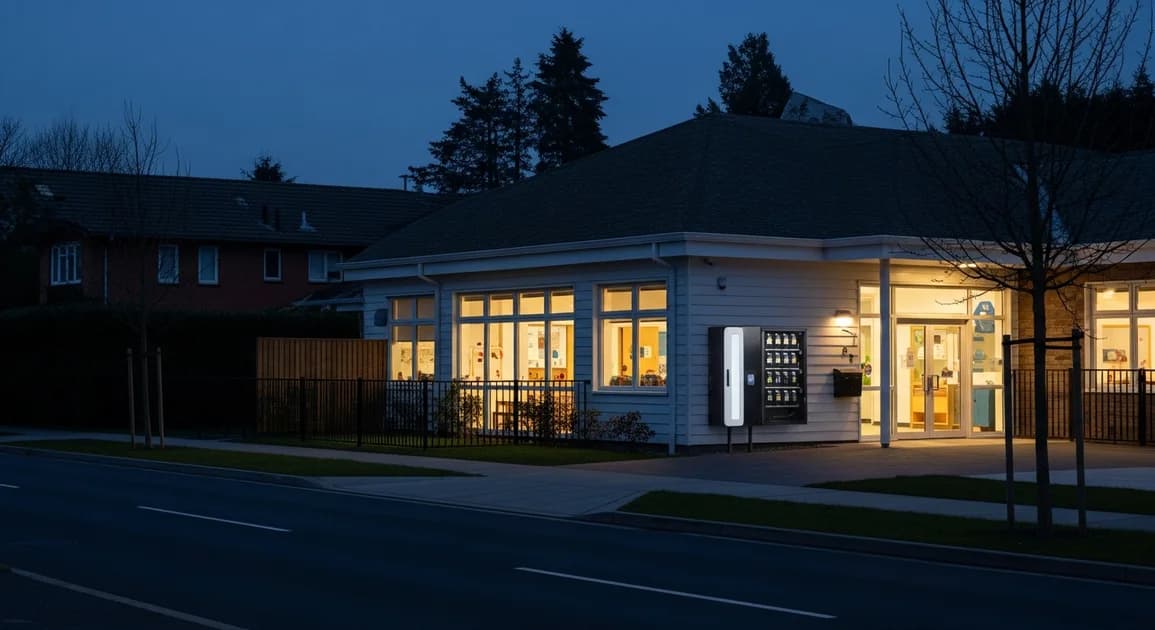
The following is a composite illustration, not a specific client, drawn from the loads we see at Houston centers. Picture a mid-size daycare on a July afternoon: two infant rooms, a nap room, a kitchen refrigerator holding labeled bottles and a child's medication, badge-access doors, and central air working hard against the heat. When the grid drops, all of it stops at once, and the clock starts on both temperature and milk.
With a battery system covering the safety-critical subset, the director keeps the infant and nap rooms cool on dedicated circuits, the refrigerator cold, the exits lit, and the doors and phones live. Parents get called, children stay protected, and the center can make a calm decision instead of an emergency one.
Beryl showed why this is not hypothetical. In the second week of that outage, reporters documented a one-year-old with sweat dripping down his face and families struggling to keep medication cold, during highs near 90 degrees (Texas Tribune, 2024). For families with the youngest children, see our guide on [INTERNAL-LINK: battery backup for families with newborns in Houston → /blog/battery-backup-families-newborns-houston].
How much battery does a childcare center need?
More than a home, and often more than one unit. Central air conditioning is the dominant electrical load in most commercial and institutional buildings, and running it for a whole center is beyond a single residential-class controller. The realistic approach is to protect the safety-critical circuits first, then scale up if you want broader coverage.
Here is the honest hardware picture. Our modular system uses 9 kWh nominal battery modules (8.76 kWh usable each), stacking to 45 kWh on one controller rated 11.5 kW continuous and 17.1 kW surge, with a 10-year warranty on the battery and controller. One unit can carry a critical-loads plan for infant-room climate, refrigeration, lighting, and access. A larger center pursuing broader coverage typically needs multiple units or a commercial design in the 30 to 80 kWh range.
[INTERNAL-LINK: see commercial battery options and sizing → /plans/commercial]
The right first question is which circuits must stay live, not how many kilowatt-hours. Our guide on [INTERNAL-LINK: commercial battery backup for Texas businesses → /blog/commercial-battery-backup-texas-businesses] walks through that load-priority process, and for the heat side, [INTERNAL-LINK: how to keep a building cool during a Houston outage → /blog/keep-house-cool-houston-power-outage] covers practical steps.
Battery backup and your emergency preparedness plan
It fits naturally alongside the plan Texas already asks you to have. Your §746.5201 emergency plan covers how you evacuate, relocate, and shelter children (26 TAC §746.5201, Texas HHSC). Backup power is the piece that buys time before any of that becomes necessary, keeping the building safe enough that a calm relocation, rather than an urgent one, is even an option.
When we design for a Houston center, we start from that plan and work backward to the circuits that keep children safe and staff able to act. The system is silent, wall-mounted, and recharges automatically, so it is not one more thing for an already busy director to manage.
[INTERNAL-LINK: talk through a childcare backup plan → /home-backup-planner?source=blog&slug=battery-backup-houston-daycare-childcare-centers]
Prefer to talk it through? Call Eos at 713-207-2222 for a same-week Houston commercial site survey.
Frequently asked questions
Does Texas require daycares to have backup power?
No. Texas minimum standards require areas to be "well heated, lighted, and ventilated" (26 TAC §746.3407) and an emergency preparedness plan (§746.5201), but neither mandates backup electricity. Backup power is a practical way to keep meeting the safe-environment duty, not a legal requirement. Confirm with your licensing representative.
Why is a power outage dangerous for young children?
Children regulate body temperature less well than adults and have lower sweat rates, so they overheat faster in a hot building (AAP HealthyChildren, 2026). In a Houston summer outage, an unpowered center heats quickly, and infants are affected first.
What happens to refrigerated milk and medication in an outage?
They warm up and their safe window shrinks. Breast milk and many medications should stay around 40 degrees Fahrenheit or below (CDC), and refrigerated milk keeps only about four days even when cold. A battery keeping the refrigerator running protects both.
How big a battery does a childcare center need?
It depends on which loads you protect. A critical-loads plan covering infant-room climate, refrigeration, lighting, and door access can start with one 45 kWh unit. Broader or full-facility coverage typically needs multiple units or a commercial design around 30 to 80 kWh. We size it to your center.
Will one battery system run the whole daycare?
Usually not the entire building, including all central air. One residential-class controller is built to carry the safety-critical circuits. For whole-facility coverage we design a larger multi-unit or commercial system, sized honestly to your actual loads.
This article is general information for Houston childcare operators and reflects Eos specifications as of July 2026. It is not medical, legal, or licensing advice, and the case is a composite illustration, not a specific client. It does not promise a specific runtime or safety outcome. Confirm licensing requirements with Texas HHSC and your licensing representative, and medical questions with a qualified professional.