Sigenergy Home Battery Review for Texas Homes: A Houston Installer's Take

Sigenergy Home Battery Review for Texas Homes: A Houston Installer's Take
The Sigenergy SigenStor is the platform we install, so this review comes from installing it in Houston homes, not from a spec sheet alone. It earns that place on three things: a genuinely modular design that scales from one small home to a large one, strong power for Texas air conditioning, and a real vehicle-to-home path that most competitors do not offer. It is also a newer brand in the U.S. with a shorter track record here than Tesla or Enphase, and that is worth saying plainly. Here is the balanced take.
Key Takeaways
- SigenStor is a modular "5-in-1" system combining a solar inverter, battery, EV charging, energy management, and backup in one stack (Sigenergy, 2026).
- In our Texas config, each battery module is 9 kWh nominal (8.76 kWh usable), stacking to 45 kWh on one controller rated 11.5 kW continuous and 17.1 kW surge.
- The optional Sigen DC charger is bidirectional up to 25 kW, so a compatible EV can back up your home, which the Powerwall and Enphase batteries do not offer (Solar Choice, 2026).
- The battery and controller carry a 10-year warranty with at least 70% capacity retention (Solar Choice, 2026).
- Honest caveat: Sigenergy is newer in the U.S. with fewer local reviews than Tesla or Enphase, though it ranked the top battery brand in Australia by installed capacity in 2025 (SolarQuotes, 2026).
[INTERNAL-LINK: get a Sigenergy system quote for your Houston home → /home-backup-planner?source=blog&slug=sigenergy-home-battery-review-texas]
Is the Sigenergy home battery a good fit for Texas homes?
For many Texas homes, yes, with eyes open. It fits best if you want to start at one size and scale later, if you run heavy air conditioning that needs real surge power, or if you drive an EV and want it in your backup plan. The modular design and the 11.5 kW controller handle those needs well.
It is a weaker fit if brand track record is your top priority. Tesla and Enphase have far larger U.S. install bases and longer field histories. Sigenergy is growing fast, but in the U.S. it is still the newer name, and some buyers prefer the most-installed option. Both positions are reasonable.
What is the SigenStor, and how is it built?
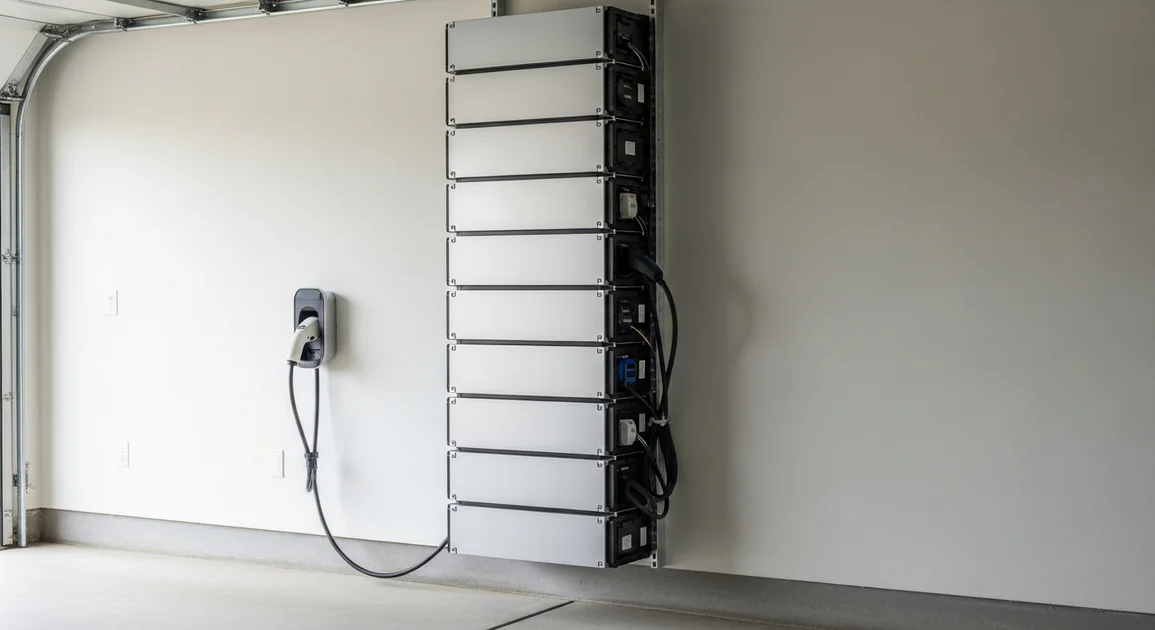
The SigenStor is a modular, stackable system that Sigenergy markets as a "5-in-1," combining a solar inverter, battery, EV DC charging, an energy management system, and backup in one cabinet (Sigenergy, 2026). Instead of separate boxes for each function, it consolidates them, which makes for a cleaner install and simpler expansion.
In the configuration we install in Texas, each battery module is 9 kWh nominal and 8.76 kWh usable, and modules stack to 45 kWh on a single controller. The plug-and-play modules use LFP chemistry, and you add capacity by adding modules rather than replacing the system. For the full spec sheet, see our [INTERNAL-LINK: technical specifications page → /specifications].
Power and Texas-heat performance
Power is a strength. The controller delivers 11.5 kW continuously and 17.1 kW of surge for 10 seconds, which is enough to start a central air conditioner, the load that trips up undersized systems in a Texas summer. Round-trip efficiency is cited as high across reviews, roughly 90% or better, though the exact figure varies by source and how it is measured, so we treat it as strong rather than precise.
On heat, the battery is rated to operate up to about 55 degrees Celsius, or 131 Fahrenheit (Sigenergy datasheet, 2025), which covers Houston ambient extremes. Honestly, sustained operation near the top of that range engages thermal management and can derate output, which is normal for any battery but worth planning shade and placement around.
The V2X advantage: your EV as backup
This is where Sigenergy stands apart. The optional Sigen DC charging module is truly bidirectional, offered in 12.5 kW and 25 kW versions, so a compatible electric vehicle can power your home during an outage, not just charge from it (Solar Choice, 2026). Because it is DC-coupled, it avoids extra conversion losses, and it comes in CCS1 and NACS versions for U.S. vehicles.
Two honest notes. The charger is an optional add-on with a shorter 3-year warranty than the 10-year battery, and it only works if your specific EV supports vehicle-to-home. When it fits, though, turning a 60 to 100 kWh car battery into home backup is a real advantage the Powerwall and Enphase systems do not match.
[INTERNAL-LINK: see the full technical specifications → /specifications]
What are the honest considerations before you buy?
A credible review names the trade-offs. Sigenergy is a newer entrant in the U.S. with fewer local installer reviews than Tesla or Enphase, so if you want the largest track record, that counts against it. In fairness, it ranked the top battery brand in Australia by installed capacity in 2025 (SolarQuotes, 2026), so it is proven at scale, just newer here.
There was also a voluntary recall in Australia in November 2025 covering some single-phase controllers whose AC plug could overheat on improperly installed units; Sigenergy replaced affected units and extended warranty (SolarQuotes, 2025). It underlines that install quality matters, which is exactly why we commission every system carefully. The warranty terms also vary by component, as the chart shows.
[INTERNAL-LINK: talk to a certified Houston installer → /home-backup-planner?source=blog&slug=sigenergy-home-battery-review-texas]
So who is the Sigenergy battery right for?
It is a strong pick for a homeowner who values modular scaling, wants headroom for air conditioning, and either drives an EV now or plans to, since the V2X path is a genuine edge. If you want a system that grows one module at a time and consolidates solar, storage, and EV charging in one cabinet, it is hard to beat on design. In practice, that scalability is the feature homeowners tell us they appreciate most a year or two after the install.
It is a weaker match if you want the single most-installed U.S. brand above all else, in which case the Powerwall or Enphase may suit you better. For that side-by-side view, our [INTERNAL-LINK: best home battery brands for Texas roundup → /blog/best-home-battery-brands-texas] compares the field.
Prefer to talk it through? Call Eos at 713-207-2222 for a same-week Houston consultation.
Frequently asked questions
Is the Sigenergy battery reliable?
It uses LFP chemistry with a 10-year, 70%-retention warranty on the battery and controller (Solar Choice, 2026), and ranked the top battery brand in Australia by installed capacity in 2025. It is newer in the U.S., so it has fewer local reviews than Tesla or Enphase, which is a fair thing to weigh.
How does it handle Texas heat?
The battery is rated to about 131 degrees Fahrenheit (Sigenergy, 2025), which covers Houston extremes. Sustained operation near that ceiling engages thermal management and can derate output, so shaded or indoor placement is ideal, which is how we usually install it.
Can it use my EV as backup?
Yes, with the optional bidirectional DC charger, up to 25 kW, if your EV supports vehicle-to-home (Solar Choice, 2026). It is a real differentiator, but it is an add-on with a shorter 3-year warranty and depends on your vehicle.
How does it compare to a Tesla Powerwall?
Both are strong. Sigenergy adds modular scaling and bidirectional EV charging; the Powerwall has a larger U.S. install base. Our best-brands roundup covers the head-to-head in detail.
What is the warranty?
10 years on the battery and controller with at least 70% capacity retention, 5 years on the gateway, 3 years on the EV charger, and 2 years on sensors (Solar Choice, 2026).
This review reflects the Sigenergy SigenStor platform as Eos installs it in Texas, with specifications current as of July 2026. Some manufacturer figures vary by module and region; the numbers here reflect our U.S. configuration, and specs should be confirmed for your system.