Power Went Out in Your House? Here’s How to Fix It — and Stop It Happening Again
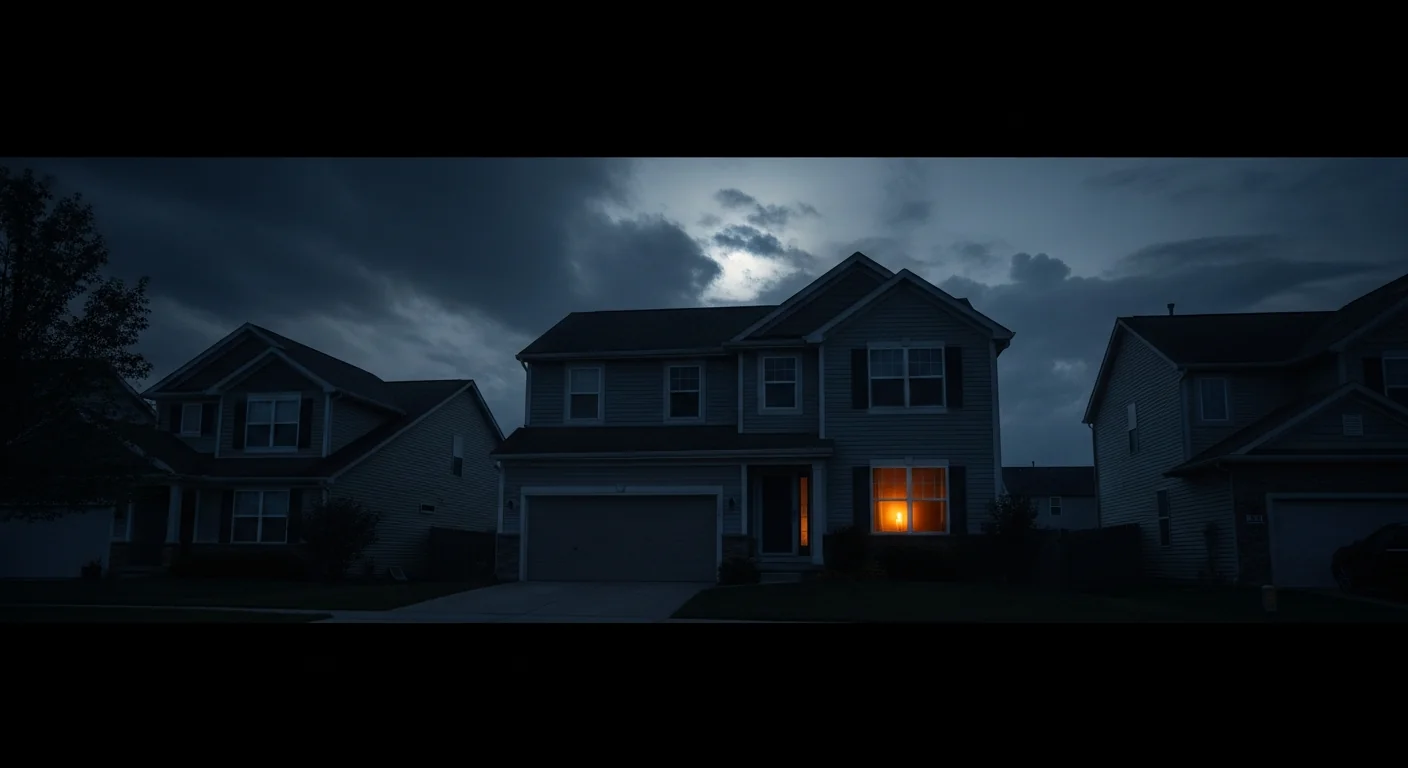
Power Went Out in Your House? Here’s How to Fix It — and Stop It Happening Again
The power went out. You’re standing in the dark, wondering if it’s your breaker or the whole neighborhood — and you’re not sure who to call first.
Here’s the situation: 1 in 4 U.S. homeowners experienced at least one complete power outage in the past year (U.S. Census Bureau, 2024). In 2024, the average outage stretched to 11 hours — the worst in a decade (EIA, 2025). Most people waste the first 20 minutes on the wrong call, the wrong breaker reset, or the wrong person.
This guide walks you through the two-minute diagnosis, the step-by-step fix, the most common reasons power keeps going out, and — when you’re ready — the one upgrade that makes future outages irrelevant.
Read more about the residential backup power solution that keeps your home running whether it’s your breaker or the grid.
Key Takeaways – 28.3% of U.S. homeowners had a power outage last year; the 2024 average hit 11 hours — the highest in a decade (EIA, 2025) – Most “no power in house” situations are a tripped main breaker, a tripped GFCI outlet, or a utility issue — diagnosable in under 2 minutes – 80% of major outages are weather-caused; recurring partial outages usually trace back to a GFCI trip, overloaded circuit, or loose neutral wire – Whole-home battery backup keeps your home running through both types of failure — switching in 20 milliseconds, automatically
Is It Your Breaker or the Utility? How to Tell in 2 Minutes
Before you do anything else, figure out whether the problem is inside your home or outside it. The Census Bureau’s 2024 survey found 28.3% of homeowners experienced a complete outage — but that number blends utility failures, circuit trips, and GFCI faults together. The fix is completely different depending on which one you’re dealing with.
Here’s the two-minute check:
Step 1 — Look at your neighbors. Do they have power? If houses on your street are dark, it’s almost certainly a utility outage. Skip straight to reporting it. If your neighbors are lit up, the problem is inside your home.
Step 2 — Check your electric meter. Walk outside and look at your utility meter. If the display is dead or showing dashes, the utility has cut power at the meter — either due to a fault on their line or, rarely, an account issue. That’s not your breaker.
Step 3 — Open your main panel. Your electrical panel is usually in a garage, utility closet, or basement. Look at the main breaker — the large double-pole switch at the top. If it’s in the middle “half-off” position, that’s a trip. Push it fully off, then firmly back on.
Step 4 — Check GFCI outlets. Lost power in one room but the panel looks fine? A GFCI outlet may have tripped. These are the outlets with the small Test/Reset buttons — kitchens, bathrooms, garages, laundry rooms, and exterior outlets all require them by code. One tripped GFCI can cut power to several outlets or an entire room downstream.

What most guides skip: In homes built after 2000, AFCI (arc-fault circuit interrupter) breakers can trip and look identical to a normal breaker in the on position — they just have a small test button on the face. If you’ve reset the main breaker and still have no power on a circuit, look for any breaker with a button and press it. Most homeowners don’t know these exist until an electrician points them out.
One reliable rule: full blackout, neighbors have power → main breaker first. Partial outage — one room, one circuit, a specific set of outlets → GFCI and AFCI.
How to Fix a Power Outage in Your House — Step by Step
Most home power outages that aren’t caused by the utility can be fixed in under 10 minutes without calling anyone. Work through the panel systematically — random breaker flipping wastes time and can mask the real fault.
Step 1: Reset the main breaker. Find the large double-pole breaker at the top of your panel. If tripped, it’ll be in the center position — not fully off, not fully on. Push it firmly to off, then back to on. You’ll feel and hear a click.
Step 2: Reset individual breakers. Scan the panel for any breaker that isn’t fully aligned with the others. Tripped breakers sit at a slight angle. Push each one fully off, then back on. Don’t skip the double-pole breakers (240V circuits for dryers, AC units, water heaters).
Step 3: Reset every GFCI outlet in the house. Don’t only check the room with no power. GFCI outlets are often daisy-chained — one tripped outlet in the garage can black out bathroom circuits two rooms away. Press the Reset button firmly on every GFCI you can find: kitchen, bathrooms, garage, laundry room, outdoors.
Step 4: Check AFCI breakers. Any breaker with a small test button on its face is an AFCI or combination AFCI/GFCI breaker. Cycle it fully off, then back on after pressing the test button.
Step 5: If the panel looks fine, report to your utility. Every major U.S. utility has an outage map online and a report-by-text option. Check the app before calling — during major storms, hold times can run hours.
Step 6: Stay safe while you wait. Keep the refrigerator closed — it holds safe temperature for about 4 hours. Don’t run a generator, grill, or camp stove indoors under any circumstances; carbon monoxide is odorless and kills fast. Keep a battery flashlight accessible.
Read more: what to have ready during a power outage — the complete survival kit.

Why Does Power Keep Going Out? The Most Common Causes
80% of all major U.S. power outages are caused by weather events — and weather-related outages have roughly doubled over the past decade, climbing from an average of 67 major events per year in the 2000s to 150+ per year today (Climate Central, 2024). But when your power randomly went out in one part of the house — or keeps going out on the same circuit — the grid isn’t your problem.
If the grid is fine but your power keeps going out on the same circuit, here are the real culprits:
Overloaded circuit. A 15-amp or 20-amp circuit can only carry so much load. Adding a space heater, window AC, or other high-draw appliance to a circuit that’s already near its limit trips it every time. Move devices to other circuits. If that doesn’t help, an electrician can add a dedicated circuit.
Loose neutral wire. This causes the strangest symptoms — lights flickering, partial rooms going dark, outlets that work sometimes and not others. A loose neutral at the panel, the meter socket, or a junction box creates resistance that makes voltage fluctuate. It’s also a fire risk. An electrician finds and fixes it in under an hour.
Aging breakers. Breakers have a service life. Panels more than 25–30 years old — especially Federal Pacific or Zinsco panels — are known to fail silently. A breaker that looks “on” but won’t hold load is a real hazard and worth a professional inspection.
The pattern most homeowners miss: if your power randomly went out in one specific part of the house (bathrooms, kitchen, garage exterior outlets) and the panel looks normal, GFCI is almost always the answer. Most GFCI outlets feed several downstream outlets via the same circuit leg. A single tripped GFCI in one bathroom can black out outlets in a completely different room — because most people don’t know which outlets share which circuit.
How Long Will the Power Be Out?
In 2024, U.S. electricity customers averaged 11 hours without power — the worst in over a decade, driven almost entirely by three hurricanes: Beryl, Helene, and Milton (EIA, 2025). Those three storms alone accounted for 80% of all outage hours nationwide that year. Strip them out and the underlying trend is still climbing year over year.
For utility outages, your best real-time signal is your utility’s outage map. Most update every 15 minutes during active events. The realistic range for suburban and urban outages is 2–6 hours; rural outages after major storms can stretch to days.
What to protect while you wait: – Refrigerator: Door closed, safe for about 4 hours – Freezer: 24 hours if half full, 48 hours if packed — don’t open it – Medical equipment: If anyone in your household depends on powered devices, identify a backup location before an outage, not during one
See the complete guide: what to have ready during a power outage.
Don’t Wait for the Next Outage
Find out what a whole-home battery backup would cost for your home — and what monthly payments look like with in-house financing.
How to Stop Power Outages from Disrupting Your Home
You can fix a tripped breaker in five minutes. You can’t fix the grid. So what’s the actual answer?
Surge protection is the baseline. A whole-home surge protector ($100–$300 installed at the panel) protects appliances from voltage spikes when grid power restores after an outage. It’s not backup power — but it prevents the secondary damage that often follows a blackout.
A UPS (uninterruptible power supply) keeps computers, routers, and small devices running for 15–60 minutes. Useful for graceful shutdowns and ride-through gaps. Not useful for keeping the house running. See our guide on how long a UPS battery lasts and when to upgrade to a real backup system.
Whole-home battery backup is the permanent solution. When your power goes out — whether it’s a grid failure or your own panel — a whole-home battery system switches to stored energy in 20 milliseconds. Your lights don’t flicker. Your refrigerator doesn’t pause. Your HVAC keeps running. You’ll probably only find out the grid went down by checking the utility app the next day.
A 10 kWh system covers essential home loads — refrigerator, lights, Wi-Fi, furnace fan — for 10–12 hours. Pair it with solar and it recharges during daylight, making multi-day outages manageable. An optional V2X module can pull from a compatible EV’s 60+ kWh battery, extending that window to three days or more without any manual steps.
The homeowners who make the switch most often describe the same thing: the first time after installation that the grid goes down and nothing in the house changes. No scrambling for flashlights. No lost food. No neighbor’s generator running at 2 AM. The outage that would have been an event becomes something they only notice on the utility’s outage map the next morning.

Explore the full residential battery backup solution — including in-house financing.
Stop losing power when everyone else does. Get a free home assessment and find out exactly what a whole-home battery covers for your property — with in-house financing that fits your budget. Schedule Your Free Assessment →
See What Kept Your Neighbors’ Lights On
Eos installs home battery systems with same-week availability and in-house financing.
Frequently Asked Questions
Why did only part of my house lose power?
A partial outage — one room, one circuit, or a set of outlets — almost always means a tripped GFCI outlet or a tripped AFCI breaker, not a utility issue. Check every GFCI outlet (the ones with Test/Reset buttons) in kitchens, bathrooms, garages, and outdoors. One tripped GFCI can cut power to several rooms via shared circuits. If GFCI resets don’t fix it, look in your panel for any breaker with a small test button and cycle it off, then back on.
What should I do first when the electricity goes out in my house?
Determine whether it’s your home or the grid: look to see if neighbors have power and check your utility’s outage map. If it’s your home, check the main breaker and reset any tripped individual breakers. Then find and reset GFCI outlets throughout the house. If the panel looks normal and the utility shows no outage, call a licensed electrician. For what to keep ready during any outage, see our complete power cut survival kit guide.
Why does my power keep going out on the same circuit?
Recurring trips on one circuit usually mean the circuit is overloaded, a GFCI or AFCI device on it is faulty, or the breaker itself has weakened with age. Try moving devices to other circuits first. If it keeps tripping under a normal load, the breaker likely needs replacement — a 30-minute job for a licensed electrician. Homes with panels older than 25 years are worth having professionally inspected. Read also: battery backup systems for homes and businesses.
How do I prevent power outages from affecting my home permanently?
You can’t stop the grid from failing, but you can make it irrelevant. A whole-home battery backup system switches to stored power in milliseconds — automatically, silently, with no startup lag. It handles both utility failures and internal panel issues, since it maintains power across your home’s circuits regardless of what’s happening outside. For grid outages measured in hours, a 10–20 kWh system is sufficient. For multi-day resilience, solar recharging and an optional V2X module extend that window to days. Explore the full solution at eos-e.com/residential.
Conclusion
When the power goes out, the first two minutes matter most. Check the main breaker, reset the GFCIs, confirm whether it’s your home or the grid, and go from there. Most issues you can fix yourself. The ones you can’t — a loose neutral, failing breakers, an aging panel — are worth getting right, because they’ll keep coming back.
The longer-term question isn’t how to fix the next outage. It’s whether you want to keep being affected by them at all.
A whole-home battery doesn’t fix the grid. It just makes the grid optional. The power goes out — yours doesn’t. That’s the difference.
Talk to our team about sizing and financing a system for your home →