Generac vs Powerwall vs Enphase: Which Wins in Texas? (2026)

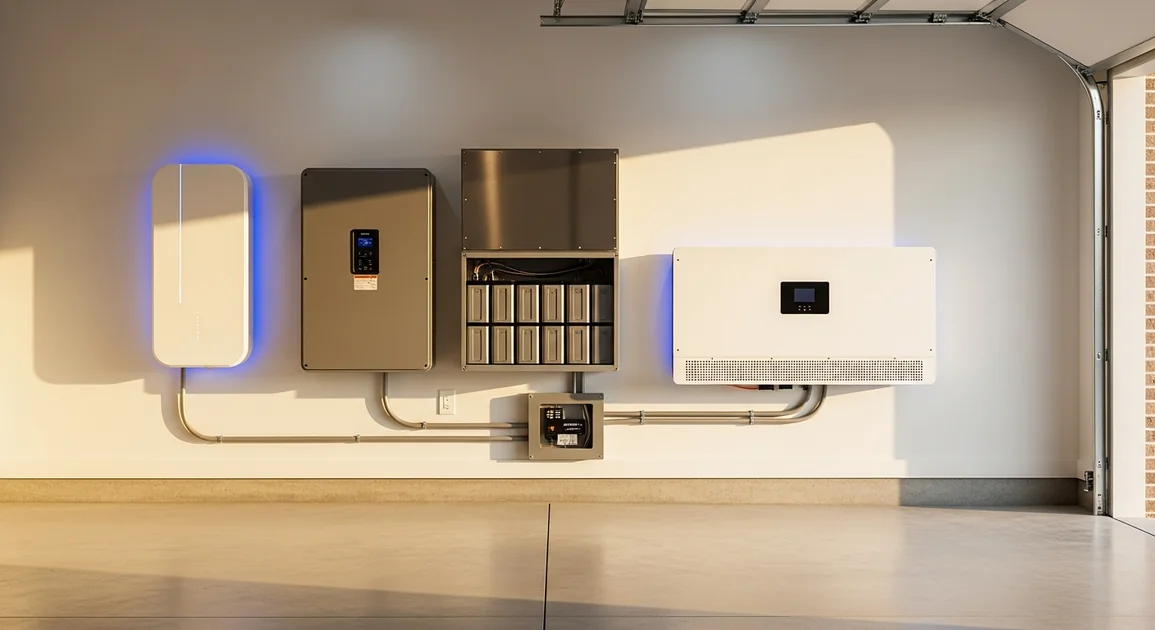
Hurricane Beryl left 2.6 million Texas customers without power in July 2024 (EIA, 2025). Texas electricity prices are up 35% over the past five years (Texas Tribune, April 2026). When you call a Houston installer, three brands come up in almost every quote: Tesla Powerwall 3, Enphase IQ 5P, and Generac PWRcell. They're all solid systems. But they make very different tradeoffs, and those tradeoffs matter more in Texas than in most states.
This post isn't a spec sheet walkthrough. It's a scenario guide. By the end, you'll know which battery fits your home, your existing equipment, and your outage risk.
Key Takeaways
- Texas averaged 11 hours without power per customer in 2024, nearly double the prior decade (EIA, 2025)
- Tesla Powerwall 3 wins for most Houston-area homes: best single-unit capacity and widest installer network
- Enphase IQ 5P wins if you already have Enphase microinverters or want the longest warranty (15 years)
- Generac PWRcell is the only system that recharges from a standby generator natively
- Average installed battery cost in Texas is $1,344/kWh, above the $855/kWh national median (EnergySage, 2026)
Why Texas Is a Harder Test for Home Batteries
Texas averaged 11 hours of outages per customer in 2024, nearly double the prior decade's average. Hurricanes Beryl, Helene, and Milton accounted for 80% of all U.S. hours without electricity that year (EIA, 2025). That number alone reframes why battery selection matters here more than it does in most other states.
Citation capsule: Texas power customers lost an average of 11 hours to outages in 2024, nearly double the prior decade's annual average, according to the U.S. Energy Information Administration (2025). Hurricanes Beryl, Helene, and Milton alone accounted for 80% of all U.S. hours without electricity that year.
Three factors stack against home batteries in Texas that don't exist at the same intensity anywhere else.
Grid isolation. ERCOT operates without interconnections to neighboring states. When demand spikes or a major generator trips offline, Texas can't pull emergency power from Louisiana or New Mexico. Outages after a large storm run longer here. Recovery is slower. That means your battery needs to cover a longer gap, not just a few hours.
Sustained summer heat. LFP batteries (used in Powerwall 3 and Enphase IQ 5P) degrade significantly above 45°C (113°F), with capacity fade accelerating above 35°C during storage (MDPI Applied Sciences, 2025). Houston exterior wall temperatures regularly exceed those thresholds from June through September. This isn't a theoretical problem. It affects long-term capacity and cycle life.
Coastal humidity and salt air. Battery enclosures mounted outdoors on Gulf Coast properties face corrosion pressure that interior or shaded installations don't. It's a small factor in the short term, but it matters over a 10 to 15-year ownership horizon.
Texas is set to overtake California as the largest residential battery storage market in 2026 (Electrek/SEIA, 2026). More installers, more options, and more competitive pricing are coming. But the fundamental physics of heat, isolation, and storm risk aren't changing.
How Do the Three Batteries Compare on Specs?
One number matters more than any other on a spec sheet: usable capacity, not rated capacity. Generac's NMC chemistry and 80% depth-of-discharge cap mean a 17.1 kWh rated pack delivers about 13.7 kWh usable. That's roughly equal to one Powerwall 3 at 13.5 kWh with 100% depth of discharge.
| Spec | Tesla Powerwall 3 | Enphase IQ 5P | Generac PWRcell |
|---|---|---|---|
| Usable capacity | 13.5 kWh | 5 kWh/unit (stackable) | 8.6 to 17.1 kWh |
| Continuous power | 11.5 kW | 3.84 kW/unit | 6.7 kW (max config) |
| Battery chemistry | LFP | LFP | NMC |
| Depth of discharge | 100% | 100% | 80% |
| Coupling type | AC + DC hybrid | AC (microinverter only) | DC |
| Operating temp ceiling | 122°F | 131°F | 140°F |
| Warranty | 10 yr / 70% capacity | 15 yr / 6,000 cycles | 10 yr throughput |
| Generator integration | No | No | Yes (native) |
Sources: Tesla Energy Library (2025), Enphase product page (2025), Generac spec sheet (2025).
Our take: The "140°F ceiling" Generac spec gets cited as a Texas advantage in almost every comparison article. Nobody explains the offset: NMC chemistry makes Generac more sensitive to sustained high-temperature cycling than LFP, and the 80% depth-of-discharge cap means you're paying for capacity you can't use. At equivalent usable kWh, Powerwall 3 and Enphase IQ 5P both deliver more value in a Texas summer.

What Does Each System Really Cost in Texas?
Average installed cost in Texas is $1,344/kWh, well above the $855/kWh national median (EnergySage, April 2026). That gap matters. A system that looks competitive on a national pricing article may look different once you add Texas labor rates, permitting fees, and CenterPoint interconnection requirements.
Citation capsule: Texas homeowners pay an average of $1,344 per usable kWh for residential battery storage, compared to the national median of $855/kWh, according to EnergySage (April 2026). Installed costs range from $11,500 to $16,500 for a single Tesla Powerwall 3, $14,000 to $25,000 for a Generac PWRcell, and $15,000 to $17,000 for two Enphase IQ 5P units.
The cost-per-usable-kWh is the honest normalized comparison. At the midpoint of each range, Powerwall 3 comes in around $1,040/usable kWh. Two Enphase IQ 5P units run closer to $1,600/usable kWh. Generac's range is wide because the modular cabinet architecture, where battery modules and the inverter are separate components, adds installed cost versus the integrated designs of Powerwall 3 and Enphase IQ 5P.
Pricing note: The figures below represent installed costs in Texas before any applicable incentives. Quotes vary significantly by home complexity, panel upgrades required, and installer. Get at least two quotes before committing.
Why is Generac's range so wide? The modular architecture is the main reason. You buy the battery cabinet, the battery modules separately, and the PWRmanager controller if you want generator integration. Each component adds to the quote. A small Generac system (8.6 kWh) can be cost-competitive with Powerwall 3. A fully loaded system (17.1 kWh with PWRmanager) can push past $25,000 depending on the installer and any required panel work.
Heat Performance: What the Spec Sheets Don't Tell You
LFP batteries degrade significantly above 45°C (113°F), with capacity fade accelerating above 35°C during storage, according to peer-reviewed research published in Applied Sciences (MDPI, 2025). Both Powerwall 3 and Enphase IQ 5P use LFP. Generac uses NMC, which has a higher rated operating ceiling but worse real-world heat cycling performance.
What does this mean in practice? Houston exterior walls facing west or south regularly hit surface temperatures above 130°F from June through September. A battery mounted directly on that wall, even if the ambient air temperature is "only" 100°F, is absorbing radiant heat on top of that. Spec sheet operating ceilings assume the battery enclosure, not the wall behind it.
Enphase's distributed architecture offers a real advantage here. The IQ 5P batteries sit inside the home (typically in the garage or utility room). The microinverters handle outdoor exposure on the roof, but the battery modules themselves stay in a climate-controlled or at least shaded environment. That's a meaningful difference compared to a wall-mounted Powerwall or Generac enclosure outside.

From the field: When we quote battery installations in Houston, one of the first things we check is where the main electrical panel is and what the wall exposure looks like. A west-facing exterior wall in Houston gets direct afternoon sun from June through September. That's meaningful thermal stress on any battery chemistry. We always recommend mounting inside the garage or on a shaded wall. It adds a few feet of conduit, but it's worth it for battery longevity.
The installer best practice applies to all three brands: shade the battery enclosure. Never mount in direct west-facing sun in Texas. It's a small installation decision with a real impact on the 10 to 15-year capacity trajectory of the system.
Which Battery Is Right for Your Home?
There's no single winner. The right battery depends on your existing solar setup, your outage risk level, and how long you need to run on backup. Here are four scenarios that cover most Houston-area homes.
Scenario 1: You Already Have Enphase Microinverters
Winner: Enphase IQ 5P.
This is the only battery that integrates natively with Enphase microinverters. Adding Powerwall 3 or Generac PWRcell to an Enphase solar system requires an additional AC-coupled inverter, which adds cost and a potential failure point. If your home is already Enphase, stay in the ecosystem. The math is straightforward.
Enphase ecosystem note: Enphase IQ batteries work exclusively with Enphase microinverters. If your solar panels use a string inverter from SolarEdge, SMA, Fronius, or any other brand, Enphase IQ is not compatible without a full inverter replacement. Confirm your inverter brand before requesting an Enphase quote.
Scenario 2: You're Installing New Solar or Have No Existing Equipment
Winner: Tesla Powerwall 3.
Best single-unit usable capacity (13.5 kWh), built-in hybrid inverter, and AC+DC coupling flexibility. Tesla and Enphase combined held 84% of U.S. home battery market share in H1 2025 (pv magazine USA, 2025). More installers means shorter lead times and easier service when something needs attention. For a new installation with no existing equipment constraints, Powerwall 3 is the default recommendation in the Houston metro.
Scenario 3: You're in a Rural Area or Face Multi-Day Outage Risk
Winner: Generac PWRcell.
This is the only major residential battery that recharges natively from a standby generator via the PWRmanager. Neither Powerwall 3 nor Enphase IQ 5P can be recharged from a generator. If you're in a rural Texas county where outages after a major storm run five to seven days, and solar generation isn't reliable during a storm, Generac's generator integration is the difference between having power and not.
What's the tradeoff? Higher installed cost, NMC chemistry, and a smaller installer network. You're paying for capability that most urban and suburban homeowners don't need. But for the rural property owner with an existing Generac standby generator, it's the right call.
Scenario 4: You Want Modular Scalability
Winner: Enphase IQ 5P.
Each unit is 5 kWh. Start with one, add more as your budget allows. The 15-year warranty (6,000 cycles) is the longest of the three by five years. For homeowners who want to phase in storage capacity over time, rather than committing to a full system upfront, Enphase's modular approach fits better than the single-unit Powerwall or Generac's cabinet architecture.
Installer perspective: Across our Houston-area installations, the most common reason homeowners choose Generac PWRcell over Powerwall 3 isn't the specs. It's that they already have a Generac standby generator in the yard and want a single-brand energy system they can manage together. The second most common reason: the home is in a rural area outside the CenterPoint service territory where post-storm restoration takes longer.
Generator Integration: The Case for Generac
Neither Tesla Powerwall 3 nor Enphase IQ 5P can be recharged from a standby generator. Generac PWRcell can, natively, through the PWRmanager system. U.S. residential battery storage reached 3.1 GWh in 2025, a 51% year-over-year increase (SEIA, 2026). Most of that growth came from battery-only systems. But for a specific segment of Texas homeowners, generator pairing remains the deciding factor.
Here's how the Generac ecosystem works. The PWRcell battery stores energy from solar or the grid. The PWRgenerator is Generac's natural gas standby generator. The PWRmanager controller coordinates the two: when the battery drops below a set threshold and solar isn't producing, it starts the generator automatically and routes power to recharge the battery and run the home simultaneously. It's a fully automated loop.
Who does this matter for? Three types of homeowners: those in rural Texas counties where storm restoration takes five or more days, those with large homes that can't run meaningfully on 13 to 14 kWh for multiple days, and those who already own a Generac standby generator and want to integrate it into a smarter energy system.
The tradeoff is real. NMC chemistry, a higher installed cost, and a smaller installer network are all genuine disadvantages compared to Powerwall 3. And the hybrid generator-battery system adds maintenance complexity. If you don't need multi-day autonomy, Powerwall 3 covers most Houston-area homes at lower cost.
Installer Availability and Lead Times in Houston
Tesla Powerwall held 59% of U.S. home battery market share in H1 2025. Tesla and Enphase combined held 84% (pv magazine USA, 2025). Installer availability in the Houston metro follows that market share closely.
More certified Powerwall installers means more pricing competition, shorter lead times, and a larger pool of technicians familiar with the equipment. That matters when something needs attention three years into ownership. A niche brand with limited local presence can leave you waiting longer for service.
How do you verify a certified installer? Tesla maintains a searchable database of Powerwall certified installers on its website. Enphase has its own Installer Network directory. Generac authorizes PWRcell dealers separately. Before signing a contract, confirm the installer holds current certification for the brand you're buying.
Permitting in the Houston metro requires a CenterPoint Energy interconnection application for most battery installations. The timeline varies by project, but expect two to six weeks for approval on a straightforward residential installation. Your installer should handle this process, but it's worth confirming during the quote stage.
Eos installs all three brands across the Houston metro area, including Sugar Land, Katy, The Woodlands, Pearland, and Friendswood. Eos is a certified installer for Powerwall, Enphase, and Generac PWRcell. If you want a side-by-side quote comparing all three for your specific home, that's exactly what a free consultation is for.
Frequently Asked Questions
Which home battery has the longest warranty?
Enphase IQ 5P carries a 15-year warranty covering 6,000 cycles. Both Powerwall 3 and Generac PWRcell carry 10-year warranties. For a 20-year solar investment, the extra five years on the Enphase warranty is meaningful, especially when paired with panels that carry a 25-year production guarantee.
Does Tesla Powerwall 3 work without solar panels?
Yes. Powerwall 3 charges from the grid and operates as a standalone backup power source without solar. It doesn't require Tesla solar equipment. It can also accept AC input from a generator for manual recharging, though it doesn't have the automatic generator integration that Generac PWRcell offers natively through the PWRmanager.
Can I add more Enphase IQ 5P batteries later?
Yes. Enphase IQ 5P units are fully modular. Start with one 5 kWh unit and add more as your budget allows, up to the limit of your electrical panel and Enphase microinverter capacity. This phased approach is a genuine advantage for homeowners who want to start small and expand over time without replacing any existing equipment.
Why does Generac PWRcell cost more than Powerwall 3?
Generac's higher installed cost comes from its modular cabinet design (battery modules and inverter are separate components), the PWRmanager generator integration hardware, and a smaller installer network that limits pricing competition. At equivalent usable kWh, Generac typically runs $300 to $500/kWh more than Powerwall 3 in Texas, based on installer quotes in the Houston metro.
What is the best battery for ERCOT grid outages in Texas?
For short outages (one to three days): Tesla Powerwall 3 covers most Houston-area homes. For extended outages (five or more days): Generac PWRcell paired with a standby generator is the only configuration that recharges itself natively when solar isn't available. Texas averaged 11 hours of outages per customer in 2024, with some rural counties seeing multi-day events after major storms (EIA, 2025).
The Bottom Line
All three systems work. The decision comes down to your home's specific situation.
- Powerwall 3 wins for most Houston-area homes: best capacity per unit, widest installer network, and the lowest installed cost per usable kWh.
- Enphase IQ 5P wins if you already have Enphase microinverters or want a 15-year warranty with modular scalability. Start with one unit, add more over time.
- Generac PWRcell wins for rural properties or anyone who needs native standby generator integration for multi-day outages. It's a premium you pay for a capability the others can't match.
Texas heat, ERCOT grid isolation, and hurricane season make these tradeoffs real, not theoretical. Getting the right system installed correctly matters more here than in most places.
Eos installs all three brands across the Houston metro area. If you want a side-by-side quote for your home, start with a free consultation.