Battery Backup for Houston Gyms: Keep the Doors Open

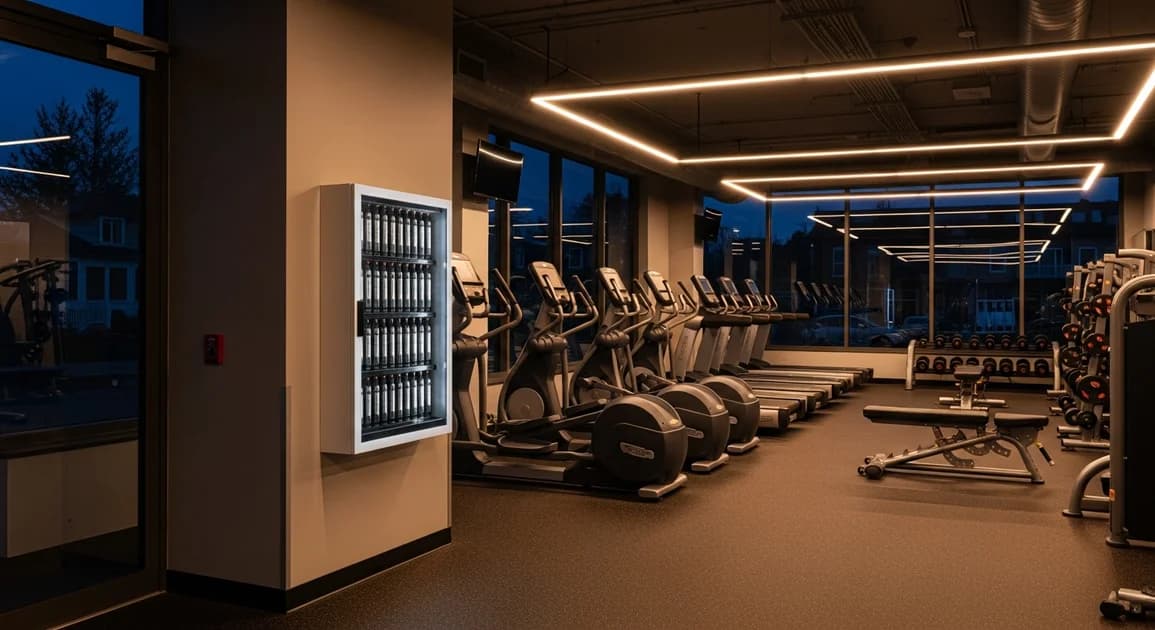
Battery Backup for Houston Gyms and Fitness Studios: Keeping the Doors Open
When the power drops at a Houston gym, the problem is bigger than a paused workout. The air conditioning stops in a building full of people exerting themselves in the Texas heat, the keycard doors and cameras go down, the registers cannot ring a sale, and the smoothie cooler warms. A 24-hour gym that goes dark loses access, safety, and revenue at once. Here is what battery backup can realistically protect, and how to size it honestly.
Key Takeaways
- US fitness-facility membership hit a record 77 million in 2024 (Health & Fitness Association, 2025), so an unreliable gym has plenty of competition to lose members to.
- Losing AC is a safety issue: high humidity blocks the body's main cooling path, sweat evaporation (OSHA), and exertion in heat is a recognized medical risk (ACSM, 2023).
- Hurricane Beryl left about 2.2 million CenterPoint customers without power on July 8, 2024 (Houston Public Media, 2024), with about 226,000 still out eight days later in 90-degree heat (Texas Tribune, 2024).
- HVAC is the dominant load in public-assembly buildings like gyms (EIA CBECS, 2018), so full central AC needs more than one small unit.
- Honest sizing: one controller protects critical circuits. Full-facility HVAC means multiple units or a commercial design.
[INTERNAL-LINK: get a commercial backup quote for your gym → /home-backup-planner?source=blog&slug=battery-backup-houston-gyms-fitness-studios]
Can a battery keep a Houston gym open during an outage?
Yes, for the circuits that keep members safe and the business running. A properly sized system can hold a ventilation and cooling zone on a right-sized circuit, keep keycard access and cameras live for a 24-hour facility, power the registers, keep the lights on for free-weight safety, and keep the smoothie cooler cold. That keeps the doors open and the space safe. What one small system will not do is run an entire gym's central air as if nothing happened.
That honesty matters. Protect the right circuits and a gym stays open and safe while competitors close. Promise whole-building AC from a small cabinet and you set up a letdown. We size for the first outcome.
Why a gym without AC is a safety issue, not just comfort
Because exercising in a hot, unventilated building is genuinely risky. The Occupational Safety and Health Administration notes that high humidity makes it hard for the body to cool itself through sweating (OSHA), and the CDC explains that once air temperatures climb past about 95 degrees with high humidity, the body's cooling routes become minimal (CDC). A gym in a July outage becomes exactly that environment.
That is why exertional heat illness has formal medical attention: the American College of Sports Medicine treats it as a recognized risk during training and competition (ACSM, 2023). For a gym owner, keeping some cooling and ventilation running is a duty-of-care decision, not a luxury.
The hidden risk: humidity, equipment, and mold
When the AC stops in a hot Houston building, humidity climbs fast, and that threatens more than comfort. The Environmental Protection Agency advises keeping indoor humidity below 60%, ideally between 30% and 50% (EPA), and warns that mold can take hold on damp materials within 24 to 48 hours. In a gym packed with upholstered equipment, mats, and mirrors, rising humidity is a slow attack on your assets.
Keeping a dehumidification or ventilation circuit on backup protects the building and the equipment, not just the members. The chart shows the humidity band the EPA recommends and where trouble begins.
What Hurricane Beryl meant for Houston gyms
It meant more than a week of no power for many. Beryl knocked out electricity to about 2.2 million CenterPoint customers when it hit on July 8, 2024 (Houston Public Media, 2024), and about 226,000 were still without power eight days later, with temperatures sitting in the 90s (Texas Tribune, 2024). For a gym, that is eight-plus days of no HVAC, no door access, and a spoiled smoothie bar.
A closure that long does real damage. Members who cannot get in start looking elsewhere, and in a market with record membership and plenty of options, a stretch of dark days is exactly when loyalty gets tested. Our guide on [INTERNAL-LINK: the cost of business interruption from a Texas power outage → /blog/business-interruption-power-outage-cost-texas] covers that broader math.
A composite look: a studio through a multi-day outage
The following is a composite illustration, not a specific client, drawn from the loads we see at Houston fitness facilities. Picture a boutique studio and 24-hour gym: keycard entry, a wall of cardio consoles, a free-weight floor, two registers, security cameras, and a smoothie cooler, all running on central air against a Houston afternoon. When the grid drops, every one of those stops together.
With a battery system on the critical subset, the owner keeps a cooling and ventilation zone alive, the doors and cameras live, the registers working, the floor lit, and the cooler cold. Members can still train safely, the 24-hour access still works, and the business keeps earning instead of refunding. That is what backup buys: continuity, not just convenience.
How much battery backup does a gym actually need?
More than a home, and usually more than one unit for full coverage. HVAC is the dominant electrical load in public-assembly buildings like gyms (EIA CBECS, 2018), so running an entire central system is beyond a single residential-class controller. The realistic plan protects the safety-critical circuits first, then scales for more.
Here is the honest hardware picture. Our modular system uses 9 kWh nominal battery modules (8.76 kWh usable each), stacking to 45 kWh on one controller rated 11.5 kW continuous and 17.1 kW surge, with a 10-year warranty on the battery and controller. One unit can carry a critical-loads plan: a cooling zone, access control, cameras, POS, and lighting. A larger gym wanting broad coverage typically needs multiple units or a commercial design in the 40 to 100 kWh range.
[INTERNAL-LINK: see commercial battery options and sizing → /plans/commercial]
The right first question is which circuits must stay live, not how many kilowatt-hours. Our guide on [INTERNAL-LINK: commercial battery backup for Texas businesses → /blog/commercial-battery-backup-texas-businesses] walks through that load-priority process, and members with a home setup may like our take on [INTERNAL-LINK: backing up a home gym, Peloton, or treadmill in Houston → /blog/battery-backup-home-gym-peloton-treadmill-houston].
Staying open protects membership and reputation
Reliability is part of the product now. With a record 77 million Americans holding fitness memberships in 2024 (Health & Fitness Association, 2025), members have choices, and a gym that stays open and comfortable through a Houston outage earns trust that a competitor loses. The 24-hour access members pay for is only real if the power behind the keycard is real.
When we design for a Houston gym, we start from the circuits that keep members safe and the doors open, then size up from there. The system is silent, wall-mounted, and recharges automatically, so it protects the business without becoming another thing for a busy owner to manage.
[INTERNAL-LINK: talk through a gym backup plan → /home-backup-planner?source=blog&slug=battery-backup-houston-gyms-fitness-studios]
Prefer to talk it through? Call Eos at 713-207-2222 for a same-week Houston commercial site survey.
Frequently asked questions
Can a battery keep my gym's air conditioning running?
It can run a right-sized cooling and ventilation zone, not usually an entire central HVAC plant from one small unit. HVAC is the largest load in gym-type buildings (EIA CBECS, 2018), so full-facility AC needs multiple units or commercial sizing. We design the cooling scope around what keeps members safe.
Why is losing AC in a gym a safety problem?
Because exercising in heat and humidity is risky. High humidity blocks sweat cooling (OSHA), and exertional heat illness is a recognized medical risk (ACSM, 2023). In a Houston summer outage, an unventilated gym gets dangerous, not just uncomfortable.
What loads should a gym prioritize for backup?
A cooling and ventilation zone, keycard and door access for 24-hour facilities, security cameras, point-of-sale, lighting for free-weight safety, and smoothie-bar refrigeration. These are the safety and revenue circuits. We help you rank them before sizing the system.
How big a battery does a fitness studio need?
It depends on which loads you protect. A critical-loads plan can start with one 45 kWh unit, while broad or full-facility coverage typically needs multiple units or a commercial design around 40 to 100 kWh. We size it to your specific studio.
Does humidity really matter if the AC is only off for a day or two?
Yes. The EPA advises keeping indoor humidity below 60% and notes mold can grow on damp materials within 24 to 48 hours (EPA). A day without dehumidification in a hot gym can threaten mats, upholstery, and equipment, which is why it is worth backing up.
This article is general information for Houston fitness operators and reflects Eos specifications as of July 2026. The case is a composite illustration, not a specific client, and does not promise a specific runtime, safety outcome, or member-retention result. Confirm sizing, electrical code, and permitting for your facility with the appropriate professionals.