Battery Backup for Houston Assisted Living: Life-Safety Continuity

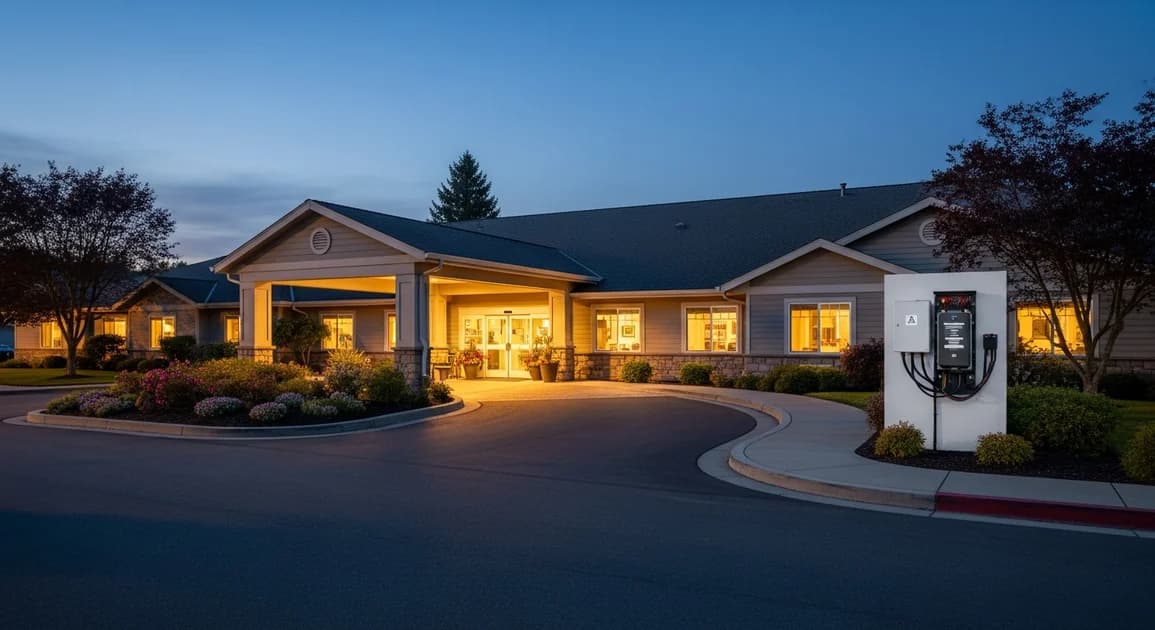
Battery Backup for Houston Assisted Living: Life-Safety Continuity
In a senior-care facility, a Houston outage is a life-safety event. The residents are among the people most vulnerable to heat, and many depend on powered oxygen, refrigerated medication, mobility equipment, and a cooled building to stay safe. When the grid fails in a Texas summer, the risk is immediate. Here is what battery backup can realistically protect, what Texas rules require, and how to size a system honestly.
Key Takeaways
- Texas assisted-living rules require resident-use areas to be kept within a 68 to 82 degree comfort range (26 TAC §553.117, Texas HHSC).
- Adults 65 and older accounted for about 39% of US heat-related deaths from 2004 to 2018, the highest rate of any age group (CDC MMWR, 2020).
- Federal agencies warn that once indoor temperatures reach the mid-90s, electric fans will not prevent heat illness (EPA).
- Hurricane Beryl caused at least 22 Houston-area deaths, more than half tied to the outage and heat, with about 226,000 still without power eight days later (Houston Public Media, 2024).
- Honest sizing: one controller protects a segmented critical zone. A full facility needs commercial sizing and often a generator.
[INTERNAL-LINK: get a commercial backup quote for your facility → /home-backup-planner?source=blog&slug=battery-backup-houston-assisted-living-senior-care]
Can a battery keep a Houston senior-care facility safe during an outage?
Yes, for a segmented set of critical and life-safety loads, sized to the facility. A battery system can hold a cooled resident zone, powered medical equipment like oxygen concentrators, refrigeration for insulin and medications, the nurse-call system, egress lighting, and elevator recall to a landing. That protects the residents most at risk. What one small unit will not do is cool every resident room at once, which is a large, multi-controller job that often includes a generator.
That honesty matters most here, where the stakes are human. We back the loads that keep residents safe first, then design the fuller system around them.
Why an outage is a life-safety issue for seniors
Because older residents are physically less able to withstand heat. Federal agencies note that once indoor temperatures reach the mid-90s, electric fans will not prevent heat-related illness (EPA), and the CDC reports that adults 65 and older had the highest heat-death rate of any age group, about 39% of US heat deaths from 2004 to 2018 (CDC MMWR, 2020). Chronic conditions and common medications make it worse.
Powered equipment raises the stakes further. Electric oxygen concentrators stop the moment power is lost (American Lung Association), and insulin and many medications must stay refrigerated at 36 to 46 degrees (FDA). For a building of residents who depend on these, an outage is a clinical problem, not an inconvenience.
What Texas rules actually require
More than many operators realize, and worth stating precisely. Texas assisted-living rules require resident-use areas to be maintained within a 68 to 82 degree comfort range (26 TAC §553.117, Texas HHSC). Separately, a facility's emergency-preparedness plan must, during a disaster, provide power and safe temperatures in resident areas or relocate residents if it cannot (26 TAC §553.275, Texas HHSC).
What Texas does not currently do is require existing assisted-living facilities to own a generator. A 2025 law, HB 3595, directs the state to develop backup-power design standards, but those apply to new construction permitted on or after September 2026, not the existing stock (Texas Legislature, 2025). So today, meeting the temperature duty during an outage is left to each operator. Confirm your obligations with your licensing representative.
Does Texas require backup power? Florida versus Texas versus federal
They differ sharply, and the distinctions matter. Florida, after residents died at a nursing home that lost cooling during Hurricane Irma in 2017, requires both nursing homes and assisted-living facilities to have generators able to keep temperatures at or below about 80 to 81 degrees for 96 hours. Federally, the CMS Emergency Preparedness Rule requires Medicare and Medicaid nursing homes to have alternate energy sources for safe temperatures, but that rule applies to skilled nursing homes, not to state-licensed assisted living.
Texas sits apart: it sets the 68 to 82 degree duty and an emergency plan but, for existing assisted-living facilities, no generator mandate. The chart shows how closely the temperature lines converge even as the mandates differ.
A composite look: a senior-care facility through a summer outage
The following is a composite illustration, not a specific client, drawn from the loads we see at Houston senior-care sites. Picture an assisted-living building on a July afternoon: residents on oxygen, insulin in the medication fridge, mobility lifts, a nurse-call system, an elevator, and central air holding the heat at bay. When the grid drops, all of it stops, and the people least able to tolerate heat feel it first.
With a battery system on a segmented critical plan, the facility keeps a cooled zone for at-risk residents, the oxygen and medical devices powered, the medication refrigeration cold, the nurse-call system live, and the exits lit. Staff can care for residents and make a calm decision about sheltering or relocating, rather than facing an emergency in the dark.
How much battery does a senior-care facility need?
Usually a large system, and rarely one unit. A full facility runs resident-room HVAC, medical equipment, elevators, and life-safety systems, which is a big, segmented load. The realistic plan protects the critical and life-safety loads first, then scales across multiple controllers, often with a generator for multi-day runtime.
Here is the honest hardware picture. Our modular system uses 9 kWh nominal battery modules (8.76 kWh usable each), stacking to 45 kWh on one controller rated 11.5 kW continuous and 17.1 kW surge, with a 10-year warranty. One controller carries a critical-loads plan: a cooled zone, medical equipment, refrigeration, and the nurse-call system. A full facility typically needs a commercial design in the 150 to 400 kWh range across multiple controllers, frequently paired with a generator.
[INTERNAL-LINK: see commercial battery options and sizing → /plans/commercial]
The right first question is which residents and systems must stay protected, not how many kilowatt-hours. For the family-scale version of these needs, see our guide on [INTERNAL-LINK: battery backup for aging parents with medical needs → /blog/battery-backup-aging-parents-medical-needs], and for clinical settings, [INTERNAL-LINK: battery backup for medical and dental practices in Texas → /blog/battery-backup-medical-dental-practices-texas].
Backup that supports your emergency plan
It strengthens the plan Texas already asks you to have. Your emergency-preparedness plan must keep resident areas safe during a disaster or relocate residents (26 TAC §553.275, Texas HHSC). A battery is the piece that buys time and keeps critical systems running, so a calm, planned relocation stays an option rather than an emergency evacuation in the heat.
When we design for a Houston senior-care facility, we start from resident safety and the life-safety systems, then size up. A battery is silent, fuel-free, and switches over instantly, and it can be paired with a generator for the long runtime a multi-day outage demands. It supports the duty of care a facility already carries, without becoming another thing for staff to manage.
[INTERNAL-LINK: talk through a senior-care backup plan → /home-backup-planner?source=blog&slug=battery-backup-houston-assisted-living-senior-care]
Prefer to talk it through? Call Eos at 713-207-2222 for a same-week Houston commercial site survey.
Frequently asked questions
Does Texas require assisted-living facilities to have backup power?
Not currently for existing facilities. Texas requires resident areas to be kept at 68 to 82 degrees (26 TAC §553.117) and an emergency plan (§553.275), but no generator mandate. A 2025 law adds backup-power design standards for new construction from September 2026. Confirm your obligations with your licensing representative.
Why is a power outage so dangerous for elderly residents?
Because seniors are the most heat-vulnerable group. Adults 65 and older had the highest heat-death rate of any age group (CDC MMWR, 2020), and above the mid-90s, fans do not prevent heat illness (EPA). Many residents also depend on powered oxygen and refrigerated medication.
What resident loads should a facility prioritize for backup?
A cooled zone for at-risk residents, powered medical equipment like oxygen concentrators, medication refrigeration, the nurse-call system, egress lighting, and elevator recall. These are the life-safety and clinical loads. We help you rank them before sizing the system.
How big a battery does a senior-care facility need?
It depends on which loads you protect. A segmented critical-loads plan can start with one 45 kWh controller. A full facility typically needs a commercial design in the 150 to 400 kWh range across multiple controllers, often with a generator for multi-day runtime. We size it to your facility.
Is Texas different from Florida on this?
Yes. After deaths at a Florida nursing home during Hurricane Irma, Florida requires nursing homes and assisted-living facilities to have generators able to hold safe temperatures. Texas requires safe temperatures and an emergency plan but does not currently mandate generators for existing assisted-living facilities.
This article is general information for Houston senior-care operators and reflects Eos specifications as of July 2026. It is not medical, legal, or licensing advice, and the case is a composite illustration, not a specific client. It does not promise a specific runtime or safety outcome. Confirm requirements with Texas HHSC and your licensing or compliance representative, and residents' clinical needs with their care providers.