Virtual Power Plants: A Revolution in the Renewable Energy Sector

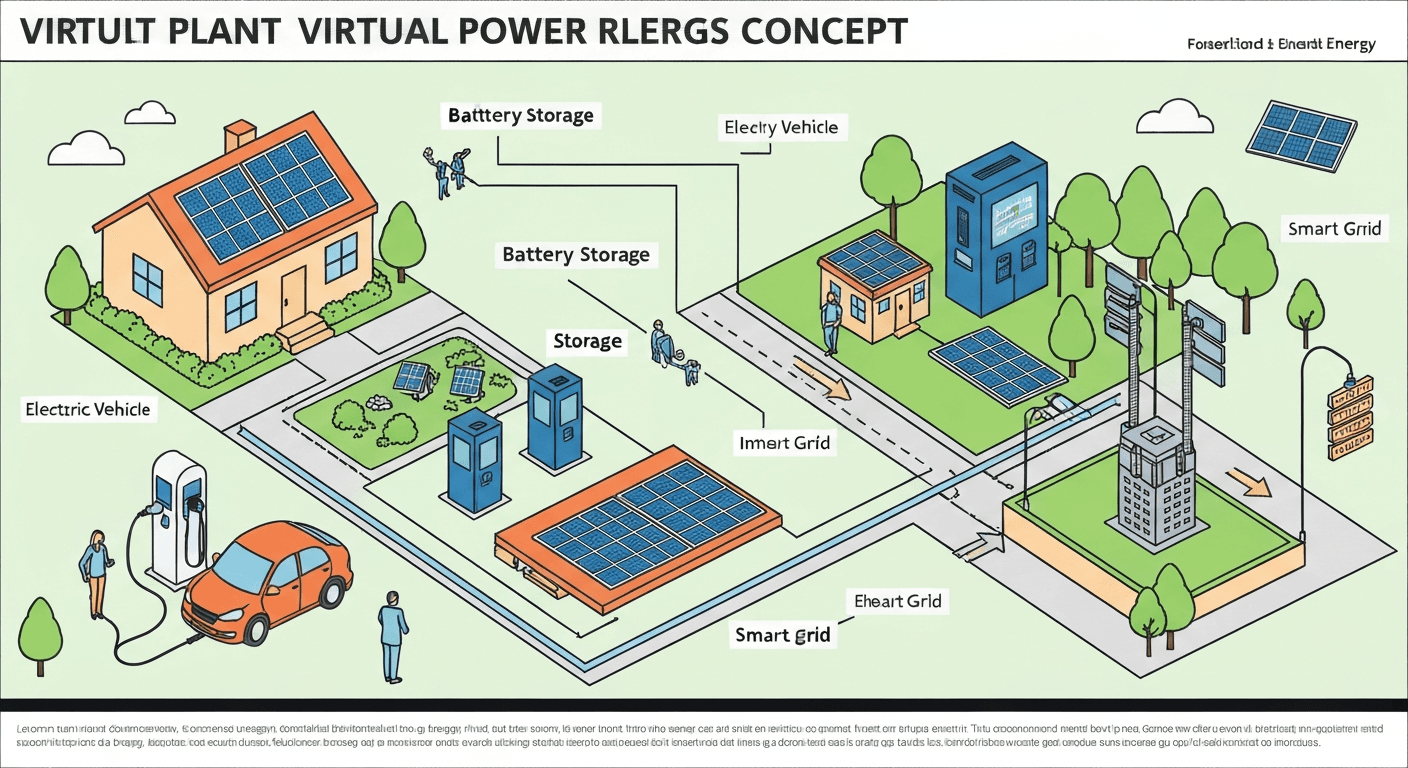
Distributed Generation (DG) of Electrical Energy Generated Through Photovoltaic Panels
According to ABSOLAR (2023), Brazil's solar sector invested R$33 billion in the first half of 2023, accumulating over R$170 billion since 2012. The sector generated R$47.9 billion in taxes and created one million jobs cumulatively.
Photovoltaic generation avoids emitting 42.8 million tons of CO2 in electricity generation, potentially generating carbon market revenue.
The photovoltaic sector represents the fastest-growing generation source in Brazil, serving as the second-largest generation source with 36 GW capacity, representing approximately 16.1% of national electrical production (Exame, 2023).
In September 2023, Brazil exceeded 7 gigawatts of increased installed capacity across 208 newly opened factories. Wind and solar plants accounted for 89.2% of that year's installed capacity growth.
Globally, US$366 billion was invested in renewable energy during 2021 (REN21, 2022), meaning renewable generation sources contributed 69% of new generation capacity increases that year.
According to Naval & Yusta (2021), most countries are transitioning toward retail electricity trading markets, primarily supplied through distributed generation utilizing renewable resources.
To enhance efficiency and mitigate risks from widespread renewable energy integration, system balancing mechanisms are necessary to address intermittency challenges in wind and solar generation. Virtual power plants (VPP) emerge as the solution in this context.
An important VPP advantage involves selling energy on behalf of distributed generation system owners.
Definition of Virtual Power Plants (VPP)
A VPP integrates multiple distributed generation installations managed through a single control system featuring bidirectional communications among components for optimized operation.
VPPs characteristically participate directly in electricity markets, achieving greater economic and operational efficiency through commercial (CVPP) and technical (TVPP) virtual power plant classifications.
More comprehensively, VPPs manage distributed energy resources (DER) including:
- Distributed generation
- Demand response
- Storage systems
- Energy efficiency
- Electric vehicles
Distributed energy resources function across both energy demand and supply dimensions (BRADFORD & HOSKINS, 2013).
Importance of DG in the Context of the Energy Transition
Energy transition transforms the current energy matrix to reduce greenhouse gas emissions, aiming to stabilize global temperatures that could otherwise increase 4 degrees Celsius by century's end.
This requires reducing greenhouse gas-emitting sources (coal, fuel oil, diesel oil) in electricity generation while expanding renewable energy utilization.
Additional extensively discussed possibilities include renewable or zero-carbon hydrogen applications (particularly green and blue hydrogen) in industrial processes and large battery energy storage systems (EPE, 2023).
Developing Distributed Energy Resources
Distributed Generation
A system featuring small-scale generation located proximate to consumption loads, connected directly to distribution networks. Benefits include system stability and reliability, delayed or reduced investment needs in generation and transmission infrastructure, electrical matrix diversification, technical loss reduction, and enhanced consumer participation in system expansion.
Demand Response
The electricity sector requires real-time synchronous coupling between energy generation and consumption. Sudden demand fluctuations can destabilize this balance.
Demand response programs provide benefits including lower tariff rates, increased system reliability, and reduced price volatility. Programs operate through price-based mechanisms (time-varying rates) and tariff incentives, structured as voluntary, mandatory, or equilibrium-marked arrangements.
Storage Systems
Energy storage systems significantly support renewable energy diffusion and market penetration by mitigating intermittency effects. Home installations combining batteries with solar panels enable daytime charging and peak-hour supply, protecting consumers from blackouts while reducing distributor electricity consumption even during nighttime hours (ABSOLAR, 2023b).
Energy Efficiency
Efficiency accomplishes equivalent or greater outcomes with fewer resources while maintaining comfort and quality. Energy efficiency generates identical energy quantities using fewer natural resources or delivers equivalent services consuming less energy. Efficiency represents a critical distributed energy resource; technological developments combining low consumption with intelligent equipment delay infrastructure expansion costs while reducing peak demand values and enhancing system safety and reliability (EPE, 2023).
Electric Vehicles (EV)
Electric vehicle production demonstrates consistent growth and represents a relevant emerging distributed energy resource for microgrids and VPPs. According to Siemens, electric vehicle sales have experienced steady five-year growth. EVs are projected to match internal combustion vehicle sales by 2030 and surpass them by 2040. Increasing EV production and residential battery system integration establish electric vehicles as essential distributed energy resources.
Types of Virtual Power Plants
Virtual power plant commercial variants (VPPCs) concentrate operations on electricity market participation by optimizing production and supply relative to component energy demand. Virtual power plant technical variants (TVPPTs) provide transmission network operator ancillary services, controlling frequency and voltage levels.
According to Naval & Yusta (2021), optimizing control and coordination between generation sources and storage systems enables VPPs to satisfy electricity demand, access traditional energy markets, overcome renewable energy grid integration barriers, and advance sustainable development.
The primary VPP objective involves optimizing different generation facility management, scheduling, and grid stability to maximize financial results. Commercial variants employ models maximizing the difference between energy sales costs and revenues. Some models simultaneously minimize greenhouse gas emissions through multi-objective approaches.
Currently, most countries have implemented electricity market liberalization and competitive opening. Naval & Yusta (2021) documented various markets VPPs can access depending on country-specific regulations.
Contract types vary according to energy dispatch timing.
According to Naval & Yusta (2021), recent years witnessed substantial renewable energy generation plant growth. Favoring these plants' electrical system integration requires market mechanisms providing greater flexibility and improved capability handling renewable generation variability and uncertainty. This should ultimately guarantee electricity supply security. Consequently, ancillary services, service markets, and bilateral contract development has notably expanded.
Trends in VPPs in Brazil
On June 17, 2021, ANEEL published Technical Note No. 0076-2021 investigating regulatory models applicable to Brazilian distributed energy resources, microgrids, and VPPs contexts, considering best international practices and potential electricity sector impacts (ANEEL, 2021).
Prospects suggest inserting VPPs and distributed energy resources in Brazil through electricity sector modernization and sector decarbonization policies.
Brazil's modernization policies include the electric energy market opening, generating increased competitiveness and price attractiveness, conferring consumers greater choice power through free price negotiation.
Beginning 2024, new regulations will allow all consumers connected above 2.3 kilovolts (group A) to select electricity suppliers, adhering to the free energy market. Practically, companies with electricity bills exceeding R$10,000 can switch energy suppliers (Infomoney, 2023).
VPPs represent technology-intensive solutions. Applications developed through artificial intelligence combined with blockchain technology and cloud computing promise transforming business models, offering greater freedom, lower costs, and substantially faster transactions. With these modernization policies and disruptive technology adoption, one anticipates panorama changes among distributors, incorporating energy transition's three Ds: decarbonization, decentralization, and digitalization.
Final Considerations
This study examined energy sector transformation and modernization, emphasizing virtual power plants as innovative solutions optimizing renewable source electrical energy generation and distribution. Through distributed generation from photovoltaic, wind, biomass, and other sources, VPPs represent models capable of efficiently managing distributed energy resources, reducing costs, improving grid stability, and advancing sustainable energy transitions.
The solar energy sector expansion notably generated approximately R$33 billion investments during 2023's first half in Brazil, accumulating over R$170 billion in new investments since 2012 and contributing approximately R$47.9 billion in tax revenues. ABSOLAR estimates that 2024 will produce over 281.6 thousand new sector jobs. Photovoltaic generation contributes reducing 42.8 million tons of CO2 in electricity generation as climate change mitigation (ABSOLAR, 2023).
Globally, electric vehicle production and battery system evolution as critical distributed energy resource components demonstrate exponential growth, suggesting futures where microgrids and VPPs integration could significantly transform distribution structures and energy consumption patterns.
Consistently expanding electric vehicle production, predicted equaling internal combustion vehicle sales by 2030 and surpassing them by 2040, reinforces electric vehicles' relevance as essential distributed energy resources in sustainable energy matrix transitions (Electric Car Future Predictions, n.d.-b).
Finally, the document addresses Brazilian VPP trends, considering electricity sector modernization policies and distributed energy resource and VPP insertion potential in the Brazilian market.
Anticipating significant changes from 2024 onwards through electricity market opening and disruptive technology adoption (artificial intelligence and blockchain) signals profound transformations in the country's energy landscape.
Conclusively, the article solidifies VPPs' positioning as fundamental renewable energy sector revolution pillars.
By leveraging distributed generation, enhancing innovative technology utilization, and promoting sustainable energy resource integration, VPPs represent vital solutions overcoming energy transition challenges.
They represent remarkable advancement toward achieving resilient, efficient, and low-carbon energy futures, marking progressive global sustainability pathways.
References
ABSOLATE. (2023b, November 29). Falling prices and regulation should boost the use of residential batteries. https://www.absolar.org.br/noticia/queda-de-precos-e-regulacao-devem-impulsionar-uso-de-baterias-residenciais/
ABSOLAR (2024). Brazilian Association of Photovoltaic Solar Energy. https://www.absolar.org.br/mercado/infografico/
AGUIAR, FM (2022). "Study for the Application of Virtual Energy Plants in Brazil." http://hdl.handle.net/10183/235937
BRADFORD, T. HOSKINS, A. (2013) Valuing Distributed Energy: Economic and Regulatory Challenges. https://travisbradford.files.wordpress.com/2012/01/de-whitepaper-final-0426.pdf
EPE - Energy Research Company (2023). Climate change and energy transition. https://www.epe.gov.br/pt/abcdenergia/clima-e-energia
Electric car future predictions (n.d.-b). Siemens Resource Center. https://resources.sw.siemens.com/en-US/white-paper-electric-car-future-prediction
ExamE (2023). ESG 2023 Retrospective: the turning point for solar energy in Brazil. https://exame.com/esg/retrospectiva-esg-2023-o-ano-da-virada-para-a-energia-solar-no-brasil/
Infomoney (2023). Opening of the free energy market attracts consumers and moves electricity. https://www.infomoney.com.br/business/abertura-do-mercado-livre-de-energia-atrai-consumidores-e-movimenta-eletricas
Naval, N., & Yusta, J. M. (2021). Virtual power plant models and electricity markets-A review. Renewable and Sustainable Energy Reviews, 149, 111393.
Ntombela, M., Musasa, K., & Moloi, K. (2023). A comprehensive review of the incorporation of electric vehicles and renewable energy distributed generation regarding smart grids. World Electric Vehicle Journal, 14(7), 176. https://doi.org/10.3390/wevj14070176