Power outages are no longer rare events. In many parts of the United States, especially in Texas and Houston, grid instability, extreme weather, and rising energy demand are making reliable power a growing concern.
For homeowners and businesses alike, battery backup systems are becoming one of the most practical ways to protect against outages, reduce disruption, and gain more control over energy use.
This guide walks through how these systems work, when they make sense, how they compare to generators, and what to consider before installing one.
What Is a Battery Backup System
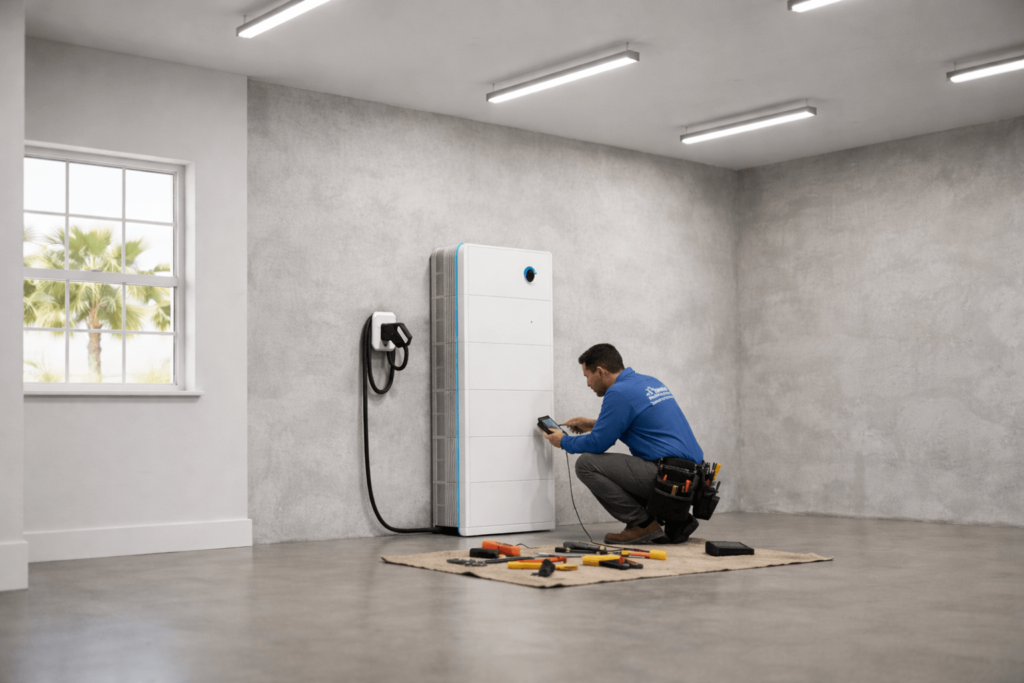
A battery backup system stores electricity and delivers it when your main power source goes down.
Instead of relying on fuel or mechanical engines, it uses stored energy to keep essential systems running automatically when the grid fails.
Most systems include:
- A battery that stores energy
- An inverter that converts stored energy into usable power
- A control system that manages when and how power is used
These systems can work in multiple ways:
- Paired with solar panels
- Charged directly from the grid
- Used as part of a broader backup power solution
For many property owners, the appeal is simple. Instant, quiet, and reliable backup power without the complexity of traditional systems.
Why Battery Backup Systems Matter During Power Outages
Power outages are not just inconvenient. They can be expensive, disruptive, and in some cases, dangerous.
In Texas, outages can happen due to:
- Severe storms and hurricanes
- Heat waves stressing the grid
- Winter freezes impacting infrastructure
- Local distribution failures
In Houston, outages can last hours or even days depending on the event.
A battery backup system helps reduce these risks by:
- Keeping critical systems running
- Preventing food spoilage
- Maintaining internet and communication
- Supporting medical devices if needed
- Avoiding business downtime
Unlike generators, battery systems respond instantly. There is no delay, no startup time, and no need to manage fuel.
Battery Backup for Homes
For residential users, battery backup for home applications is one of the fastest growing segments in energy.
Homeowners are increasingly looking for ways to stay comfortable, safe, and connected during outages.
Whole House Battery Backup
A whole house battery backup is designed to power most or all of your home during an outage.
This typically includes:
- HVAC systems
- Refrigeration
- Lighting
- Outlets and appliances
- Internet and security systems
The size of the system depends on your energy usage and how long you want backup power to last.
For example:
- Smaller systems may support essential loads for several hours
- Larger systems can support full home usage for extended periods
This approach is ideal for homeowners who want minimal disruption during outages.
Battery Backup Without Solar
A common misconception is that battery systems require solar panels.
In reality, battery backup without solar is a practical and widely used option.
In this setup:
- The battery charges from the grid during normal operation
- During an outage, it automatically provides stored power
This makes it a strong option for:
- Homes without solar installations
- Urban properties with limited roof space
- Homeowners looking for a simpler installation
It also allows flexibility. Solar can always be added later if desired.
Generator Alternatives for Homes
Many homeowners compare battery backup vs generator solutions.
Battery systems are often preferred when:
- Quiet operation is important
- Indoor installation is needed
- Maintenance needs to be minimal
- Instant power is required
Generators may still make sense for:
- Very long outages where fuel supply is available
- Lower upfront cost scenarios
However, for many modern homes, battery backup is replacing generators as the primary emergency power backup system.
Battery Backup for Businesses
Power reliability is even more critical for businesses.
Even short outages can lead to:
- Revenue loss
- Operational delays
- Equipment damage
- Customer dissatisfaction
Battery backup for business applications is designed to reduce these risks.
Commercial Battery Backup Systems
Commercial battery backup systems are typically larger and more customizable than residential systems.
They can support:
- Offices
- Retail locations
- Warehouses
- Medical facilities
- Restaurants
- Light industrial operations
These systems can be configured to:
- Power critical systems only
- Support full operations for a limited time
- Integrate with existing energy infrastructure
They are especially valuable in areas with frequent outages or unstable grid conditions.
Business Continuity and Downtime Prevention
For many businesses, the biggest benefit is continuity.
A well designed system can:
- Keep POS systems running
- Maintain refrigeration
- Support security and surveillance
- Prevent data loss
- Avoid costly shutdowns
Even a short outage can cost thousands in lost revenue.
Battery backup systems help avoid that risk.
When Battery Backup Makes Sense
Consider backup power solutions if:
- You rely on constant electricity for operations
- You have experienced outages in the past year
- Downtime directly impacts revenue
- You store perishable goods
- You operate in regions like Houston with weather related risks
Battery Backup vs Generator
This is one of the most common comparisons.
Both provide backup power, but they operate very differently.
Battery Backup Systems
- Instant activation
- Silent operation
- No fuel required
- Low maintenance
- Can be installed indoors
- Scalable over time
Generators
- Require fuel such as gas or diesel
- Produce noise and emissions
- Require regular maintenance
- May have startup delays
- Typically lower upfront cost
From a long term perspective, many homeowners and businesses prefer battery systems for convenience and reliability.
Generators are still used, especially where extended outages are common, but the trend is shifting.
How Much Do Battery Backup Systems Cost
Battery backup cost varies based on several factors.
For residential systems:
- Smaller systems may start around several thousand dollars
- Whole house battery backup systems can range significantly higher depending on capacity
For commercial battery backup systems:
- Costs depend on scale, load requirements, and system complexity
- Projects can range from tens of thousands to much higher
Key factors that influence cost:
- Energy capacity needed
- Duration of backup required
- Installation complexity
- Integration with existing systems
- Whether solar is included
What to Evaluate Before Installing
Before choosing a system, it is important to understand your needs.
Consider:
- What needs to stay powered during an outage
- How long you need backup power
- Your current energy usage
- Space available for installation
- Budget and long term goals
A proper assessment helps avoid overspending or undersizing the system.
Battery Backup Systems in Texas and Houston
Texas has a unique energy landscape.
The grid operates independently and is more exposed to extreme weather events.
In Houston, common challenges include:
- Hurricanes and heavy storms
- Flooding
- Heat driven demand spikes
- Local infrastructure strain
Battery backup systems are particularly valuable in this environment.
They provide:
- Immediate protection during outages
- Greater energy independence
- Resilience during extreme weather
For many property owners, this is no longer a luxury. It is part of a broader strategy for reliability.
Signs You Need Backup Power
You may benefit from a system if:
- You experience frequent outages
- Your area has severe weather risks
- You work from home or rely on connectivity
- Your business cannot afford downtime
- You want more control over your energy
How to Choose the Right Battery Backup System
Choosing the right system is not just about capacity. It is about fit.
Start by defining your priorities.
For homeowners:
- Do you want essential backup or whole house coverage
- How long do you need power during an outage
- Are you planning to add solar later
For businesses:
- Which systems are mission critical
- What is the cost of downtime
- How quickly must operations resume
Decision Support Checklist
- Identify critical loads
- Estimate required backup duration
- Review your energy bills
- Consider future expansion
- Evaluate installation space
- Work with experienced professionals
When to Request a Consultation
It may be time to explore options if:
- You are comparing battery backup vs generator solutions
- You want a clearer estimate of battery backup cost
- You need a tailored solution for your property
- You are planning upgrades or renovations
A consultation typically includes:
- Load analysis
- System sizing recommendations
- Cost estimates
- Installation considerations
This step helps turn a general idea into a clear, actionable plan.
Battery backup systems are quickly becoming a core part of modern energy planning.
For homes, they provide comfort and security.
For businesses, they protect operations and revenue.
In regions like Texas and Houston, where outages are a real and recurring risk, they offer something even more valuable.
Reliability when it matters most.